

Pulmonary Rehabilitation Explainer
Pulmonary rehabilitation is a structured program of exercise, education, and support for people whose lung disease causes difficulties such as breathlessness and reduced activity. It is commonly used in chronic obstructive pulmonary disease, or COPD, and can help people with other long-term respiratory conditions too. Its purpose is to improve function and confidence in daily life. It supports medical treatment rather than replacing medicines or curing the underlying lung disease.
Breathlessness can lead someone to avoid activity. Over time, muscles become less conditioned, making the same task require more effort and feel harder. Rehabilitation works on this cycle with activity matched to the person’s ability. Stronger, better-conditioned muscles can help make everyday movement more manageable. Benefits are often measured through exercise capacity, symptoms, and quality of life rather than expecting damaged lung tissue to return to its previous state.
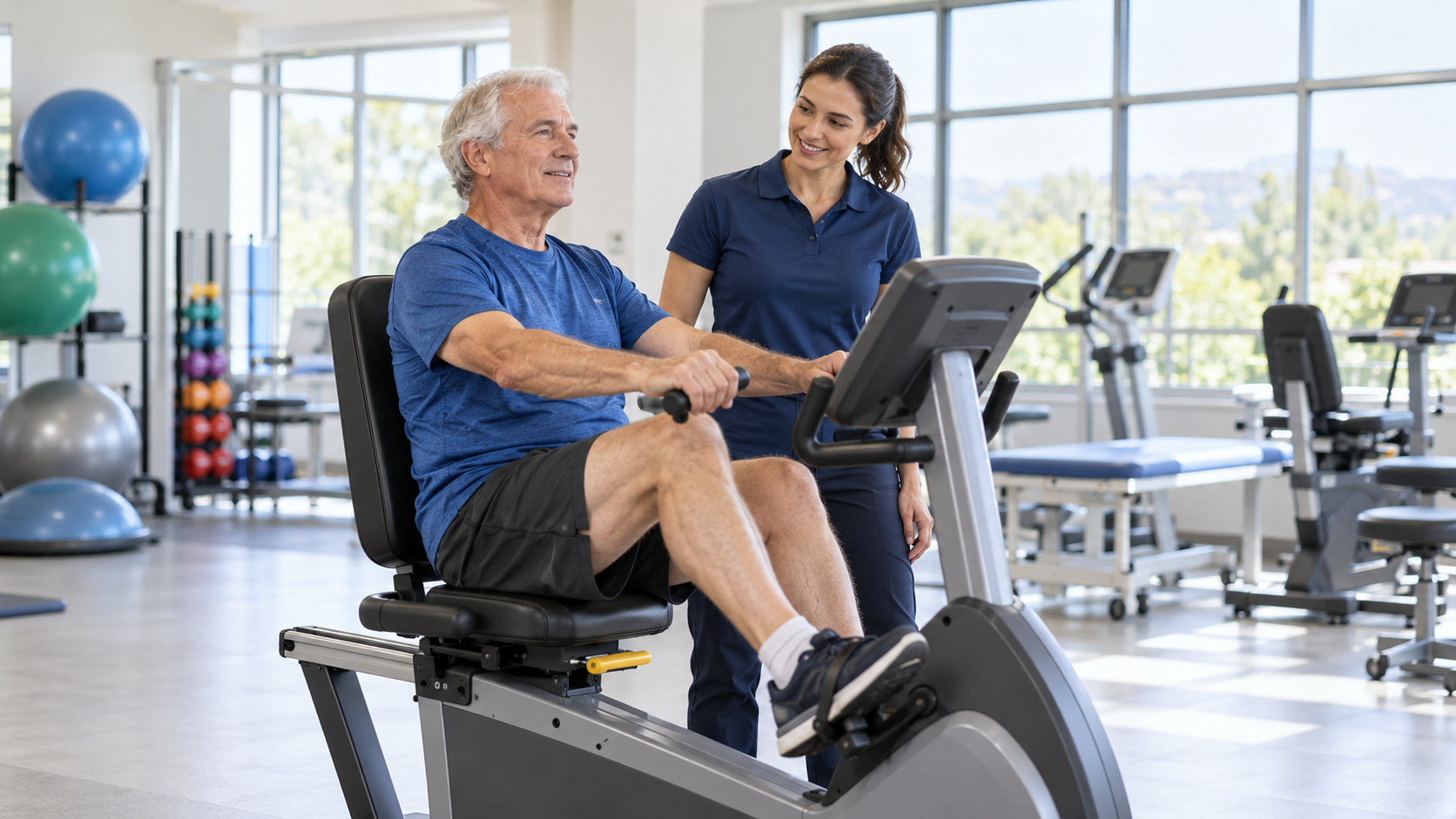
A program begins with assessment so that exercise and education can be tailored. Staff may consider medical history, lung tests, oxygen needs, and a walking or exercise test. Sessions can include walking, cycling, resistance work, breathing strategies, and ways to pace tasks. Teams may involve physiotherapists, nurses, respiratory therapists, exercise specialists, and others. The exact format depends on the service and the person’s condition.
Education addresses the practical work of living with lung disease: using medicines effectively, recognizing worsening symptoms, managing energy, and knowing when to contact the care team. Some programs also offer nutritional and emotional support. Rehabilitation is therefore more than an ordinary gym class. Its value comes from linking activity with clinical assessment and self-management, so improvements can carry over into shopping, stairs, household tasks, and activities that matter to the participant.
Activity in rehabilitation starts at a level the participant can manage and changes as capacity improves. For one person, that may mean short periods of walking; for another, seated or supported exercise. The objective is gradual useful progress, not competition with the rest of a group. Programs can combine endurance and strength work because different daily tasks place different demands on muscles and breathing.
People with breathlessness may feel anxious about activity, especially after an exacerbation or hospital stay. Supervision provides a setting to explore appropriate effort with guidance. Learning about breathing and pacing can make symptoms less frightening. Emotional support and contact with others who have lung disease may also help. These benefits do not imply that breathlessness is imagined; they address the interaction between physical limitations, confidence, and participation.
Assessment can include a six-minute walk test or another measure of exercise capacity, sometimes alongside oxygen monitoring. The results help set an appropriate plan and provide a baseline for later comparison. They are not a contest or a pass-fail judgment about someone’s motivation. Staff also consider other illnesses, joint problems, and practical limitations. A suitable program should adapt to these factors rather than assume the lung diagnosis is the person’s only concern.
Some people need supplemental oxygen during activity and others do not. That decision depends on clinical assessment, rather than breathlessness alone. Participants should use oxygen according to their prescribed plan and discuss any adjustments with the team. New chest pain, marked deterioration, or other concerning symptoms need assessment. Rehabilitation teaches safe participation and recognition of problems; it does not require continuing an exercise regardless of what the body is signaling.
Programs may be delivered in a hospital, community setting, or through selected home or remote arrangements. Access, supervision, and suitability differ. Ask what the course includes, how progress is reviewed, and what support is available between sessions. Transport, scheduling, and caregiving demands can affect attendance and deserve practical discussion. Completing the program is easier when its organization fits the participant’s circumstances as well as their medical needs.
Benefits need ongoing activity and use of the skills learned. Before the course ends, the team can help plan a sustainable routine and explain maintenance options. Follow-up or another course may be useful if circumstances change. The aim is not to eliminate every difficult day, but to preserve function and manage the condition with greater confidence. Progress can mean accomplishing a valued everyday task more comfortably, even when the diagnosis itself remains unchanged.
Explore more "Explainers"
Discover additional explainers across politics, science, business, technology, and other fields. Each explainer breaks down a complex idea into clear, everyday language—helping you better understand how major concepts, systems, and debates shape the world around us.