

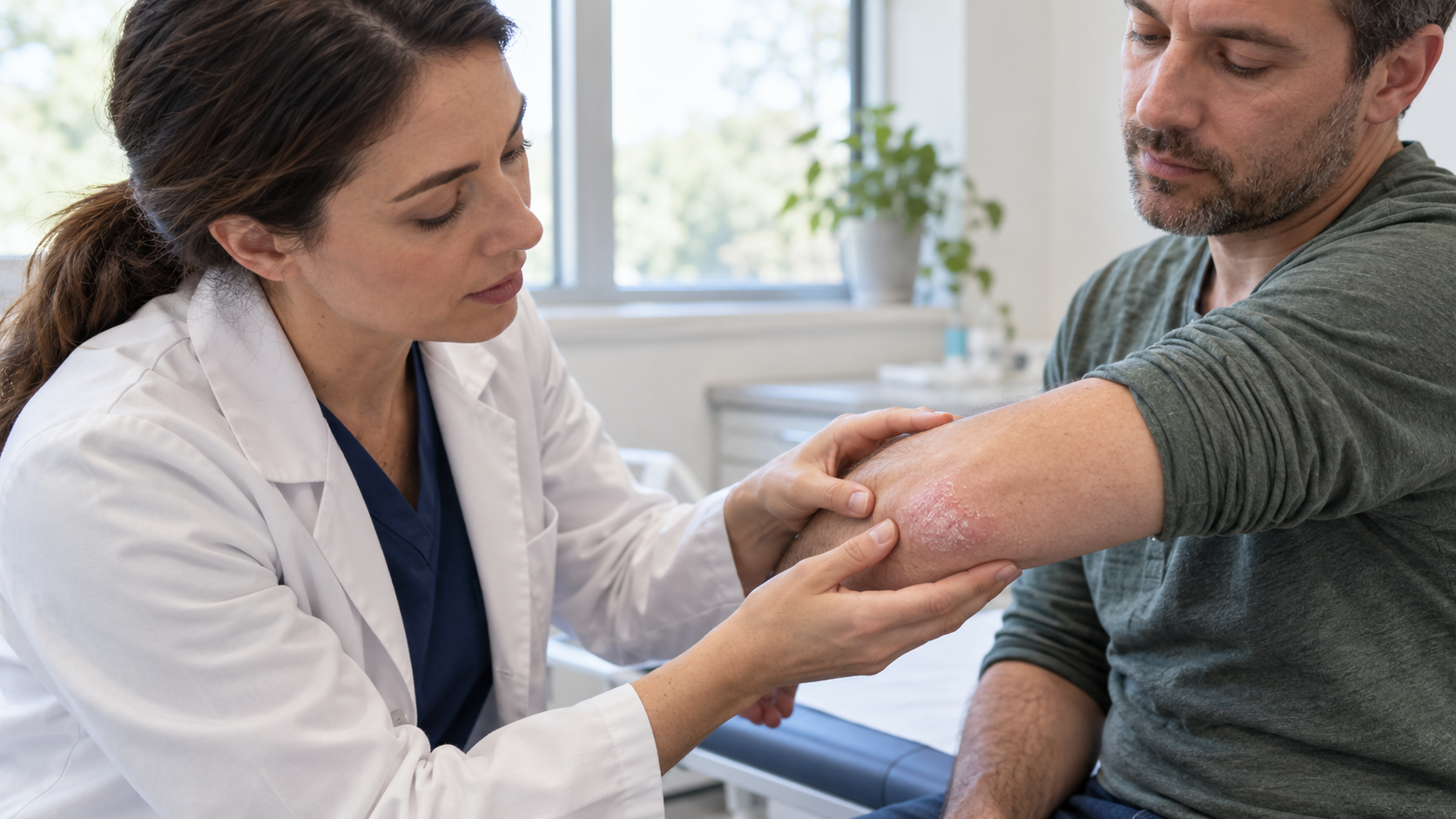
Psoriasis Explainer
Psoriasis is a chronic disease in which abnormal immune activity contributes to skin cells multiplying too quickly. Cells accumulate at the surface, producing inflamed, scaly patches. Plaque psoriasis is the most common form, often affecting elbows, knees, the scalp, or other areas. The appearance varies with the type of psoriasis and skin tone, so one familiar photograph cannot represent how the condition looks on every person.
Psoriasis is not contagious. It cannot be caught through touching someone’s skin or sharing an ordinary social space. Genetic and environmental factors contribute, and symptoms can flare and then become less active. An infection, skin injury, stress, or certain medicines can trigger worsening for some people. A trigger is not the same as a complete explanation of the disease, and experiencing a flare is not evidence of poor hygiene.
Symptoms can include itching, soreness, cracking, and changes in the nails. Their effect depends on location as well as the amount of skin involved. A small affected area on the hands, feet, or genitals can have a substantial impact on function or comfort. Sleep, confidence, and relationships may also suffer. Assessment should consider the person’s experience rather than judging the condition only by how noticeable the patches are to other people.
Diagnosis usually involves examining the skin, scalp, and nails and reviewing the history. Treatment can include preparations applied to the skin, controlled light therapy, or medicines acting throughout the body. The choice depends on disease type, severity, location, previous response, and treatment risks. There is currently no general cure, but effective control is possible. Follow-up also considers joint symptoms and other health concerns that can accompany psoriasis.
A plaque is a raised area of affected skin that may have a pale or silvery scale. The underlying inflammation may look pink or red on lighter skin and can appear differently on brown or black skin. Other psoriasis types can produce small scattered lesions, changes in skin folds, or pustules. These variations make professional assessment useful, especially when a rash resembles eczema, a fungal infection, or another skin condition.
The course can change over time. A person may have relatively clear periods and then need additional treatment during a flare. Scratching or other skin injury can worsen symptoms, and some triggers are easier to modify than others. Tracking a pattern may help, but repeated flares should not be reduced to an instruction to avoid stress. Psoriasis is an inflammatory disease with multiple influences, and treatment can be necessary despite careful self-care.
Topical medicines act on the areas where they are applied. Moisturizers can help dryness, while prescribed preparations target inflammation or cell turnover. Instructions matter because suitability and strength can differ between body sites. A product used on a thick plaque on an elbow may not be appropriate for sensitive skin elsewhere. Ask how much to apply, where to use it, and when to review response rather than improvising between treatments.
Phototherapy uses a controlled ultraviolet treatment under clinical guidance. It is different from using a tanning bed or deliberately burning in the sun. Systemic medicines, including selected biologic treatments, address immune pathways more broadly and may require screening or monitoring. Their benefits and risks are assessed individually. A treatment plan can change when symptoms remain uncontrolled, side effects develop, or circumstances such as pregnancy make a previous medicine unsuitable.
Some people with psoriasis develop psoriatic arthritis, which can cause joint pain, stiffness, or swelling. These symptoms deserve assessment even if the skin disease seems mild. Joint inflammation has its own treatment needs, and delaying evaluation can allow damage. Psoriasis is also associated with other health risks, so routine care may include attention to cardiovascular health and related conditions. Association does not mean every person will develop every complication.
Living with an unpredictable visible condition can affect mental wellbeing. Support from clinicians, peers, or mental health services can be part of care alongside skin treatment. Rapid widespread changes, severe skin inflammation, or new systemic illness warrant urgent medical attention. For everyday management, the plan should be realistic enough to use consistently and reviewed when it is not working. Clearer skin and better comfort matter, but so do sleep, daily function, and confidence.
Explore more "Explainers"
Discover additional explainers across politics, science, business, technology, and other fields. Each explainer breaks down a complex idea into clear, everyday language—helping you better understand how major concepts, systems, and debates shape the world around us.