

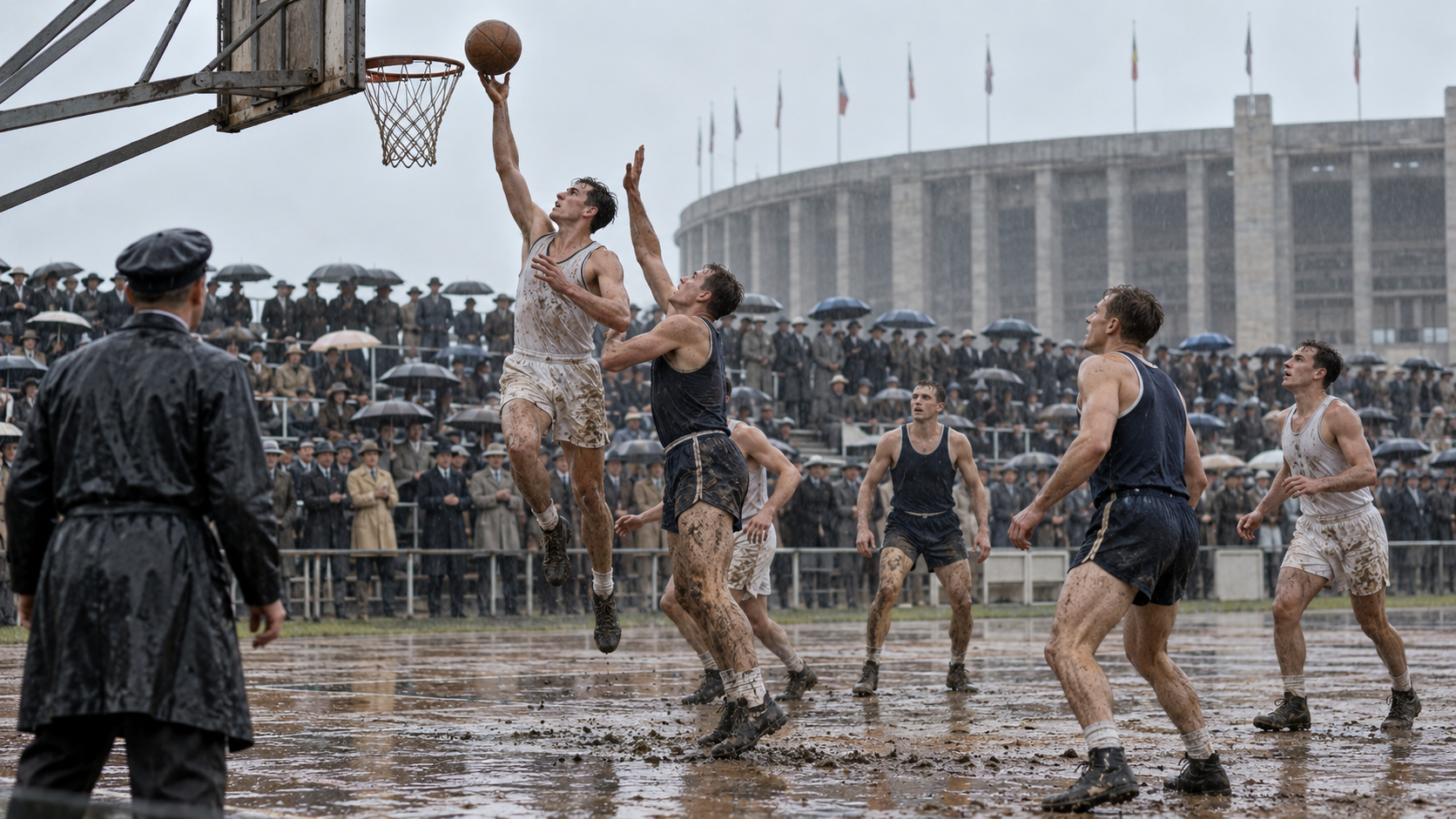
On This Day in Sports: August 14, 1936
On August 14, 1936, the United States defeated Canada 19-8 in Berlin to win the first Olympic gold medal awarded in basketball. The final was played outdoors on a clay tennis court made muddy by steady rain. James Naismith, who invented basketball, attended and presented the medals. The public record fixes the central details with unusual clarity: The United States won 19-8. Canada earned the silver medal. Together, those facts explain why August 14, 1936 stands apart from the ordinary flow of a season and deserves to be remembered as a distinct historical moment.
Basketball had appeared as a demonstration at earlier Games but became a full medal sport in 1936. Twenty-one teams entered the men’s tournament, and organizers converted outdoor tennis courts despite the sport’s indoor origins. Two further details help reconstruct how the achievement unfolded: The final was played outdoors. Rain made the clay court muddy. They move the story beyond a headline by showing the pressure, setting and competitive choices that shaped the decisive action in real time.
Rain turned the final into a low-scoring struggle in which dribbling was nearly impossible. The United States led 15-4 at halftime and protected the advantage through physical play and short passes. Joe Fortenberry led the winners with eight points. The wider context is equally important. James Naismith presented the medals. Basketball debuted as a medal sport in 1936. Those points connect one day’s performance to a longer career, institution or rivalry and clarify why the event continued to matter after the immediate celebration had ended.
The Olympic tournament helped formalize basketball’s international position, and the United States won the first seven men’s titles. Indoor venues replaced the improvised Berlin setting, while Naismith’s presence connected the new medal event to the game’s Massachusetts origins. Seen from today, the milestone remains compelling because it joins a measurable result with the uncertainty of live competition. Nothing about the outcome was guaranteed beforehand. That combination of preparation, opportunity and execution transformed the date from another entry on the schedule into lasting sports history. It also reveals how records and championships depend on teammates, opponents, officials, venues and rules that shape the opportunity. Preserving those surrounding details helps explain both the achievement itself and the reason later generations still discuss it. The date therefore offers a useful window into how sporting excellence is created, witnessed and remembered. Its clearest lessons still reach beyond the final score, connecting preparation and opportunity with the people who preserved the event’s meaning for future audiences.
The United States won 19-8.
Canada earned the silver medal.
The final was played outdoors.
Rain made the clay court muddy.
James Naismith presented the medals.
Basketball debuted as a medal sport in 1936.
Explore more "On This Day in Sports"
Discover more landmark games, records, championships, and turning points from sports history. Each day revisits the athletes, teams, and moments that shaped competition and culture.