

On This Day in Sports: August 19, 1951
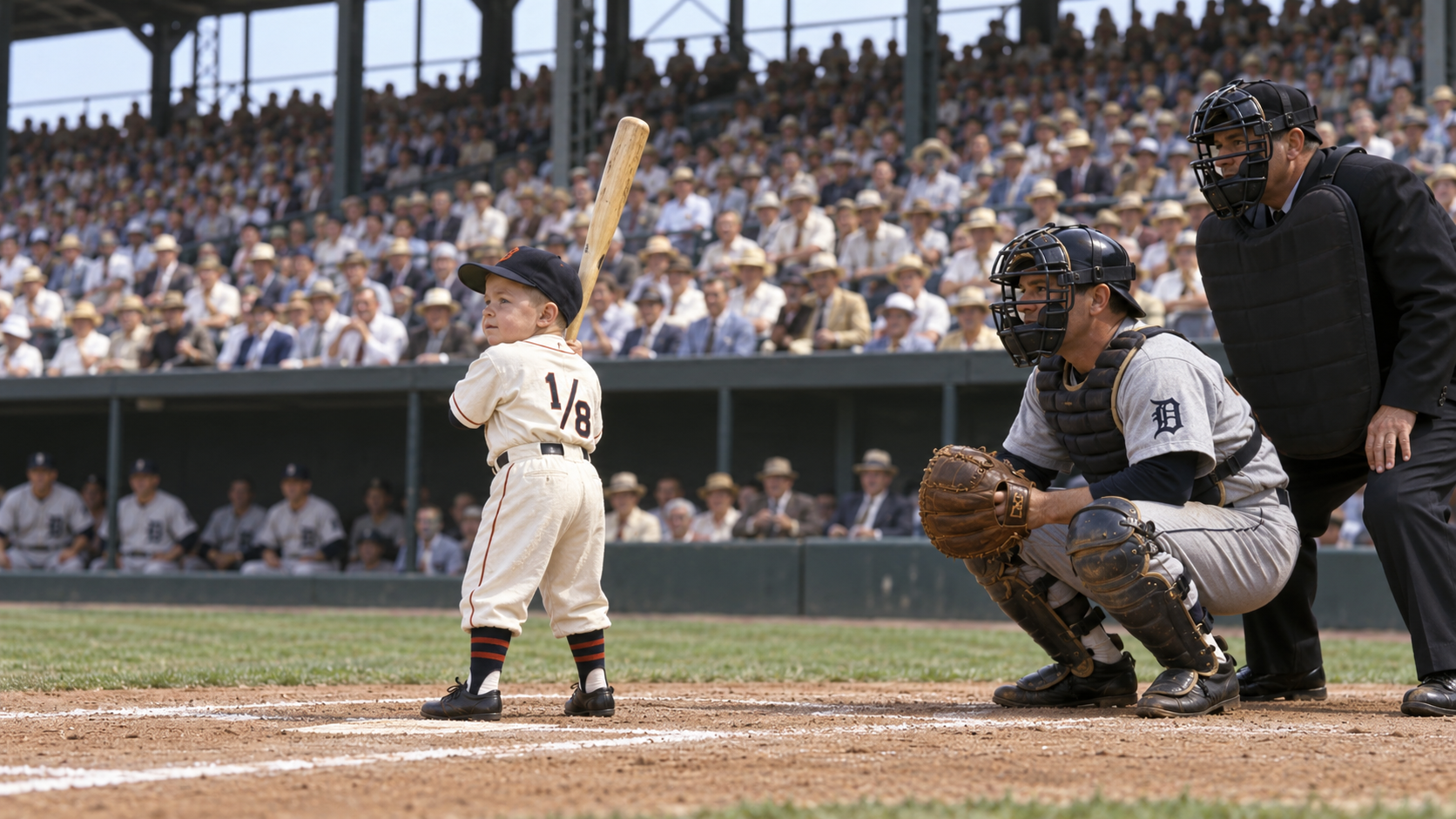
On August 19, 1951, Eddie Gaedel made his only major-league plate appearance for the St. Louis Browns and walked on four pitches. At 3 feet, 7 inches, Gaedel became the shortest player in major-league history. He wore uniform number one-eighth and appeared as a pinch hitter against the Detroit Tigers. The public record fixes the central details with unusual clarity: Gaedel stood 3 feet, 7 inches tall. He wore number one-eighth. Together, those facts explain why August 19, 1951 stands apart from the ordinary flow of a season and deserves to be remembered as a distinct historical moment.
Browns owner Bill Veeck built promotions around spectacle and surprise while his last-place club struggled for attention. He quietly signed Gaedel and filed the contract before a doubleheader celebrating the American League’s fiftieth anniversary. Two further details help reconstruct how the achievement unfolded: Bob Cain threw four balls. Jim Delsing pinch-ran for him. They move the story beyond a headline by showing the pressure, setting and competitive choices that shaped the decisive action in real time.
Gaedel emerged from a cake between games, then was announced as a first-inning pinch hitter. Pitcher Bob Cain could not approach the tiny strike zone and issued four straight balls. Jim Delsing replaced Gaedel as a pinch runner. The wider context is equally important. It was Gaedel’s only plate appearance. The league voided his contract two days later. Those points connect one day’s performance to a longer career, institution or rivalry and clarify why the event continued to matter after the immediate celebration had ended.
American League president Will Harridge voided the contract two days later, leaving Gaedel with a perfect career on-base percentage. The stunt remains the most famous example of Veeck’s effort to blur the line between competition and showmanship. Seen from today, the milestone remains compelling because it joins a measurable result with the uncertainty of live competition. Nothing about the outcome was guaranteed beforehand. That combination of preparation, opportunity and execution transformed the date from another entry on the schedule into lasting sports history. It also reveals how records and championships depend on teammates, opponents, officials, venues and rules that shape the opportunity. Preserving those surrounding details helps explain both the achievement itself and the reason later generations still discuss it. The date therefore offers a useful window into how sporting excellence is created, witnessed and remembered. Its clearest lessons still reach beyond the final score, connecting preparation and opportunity with the people who preserved the event’s meaning for future audiences.
Gaedel stood 3 feet, 7 inches tall.
He wore number one-eighth.
Bob Cain threw four balls.
Jim Delsing pinch-ran for him.
It was Gaedel's only plate appearance.
The league voided his contract two days later.
Explore more "On This Day in Sports"
Discover more landmark games, records, championships, and turning points from sports history. Each day revisits the athletes, teams, and moments that shaped competition and culture.