

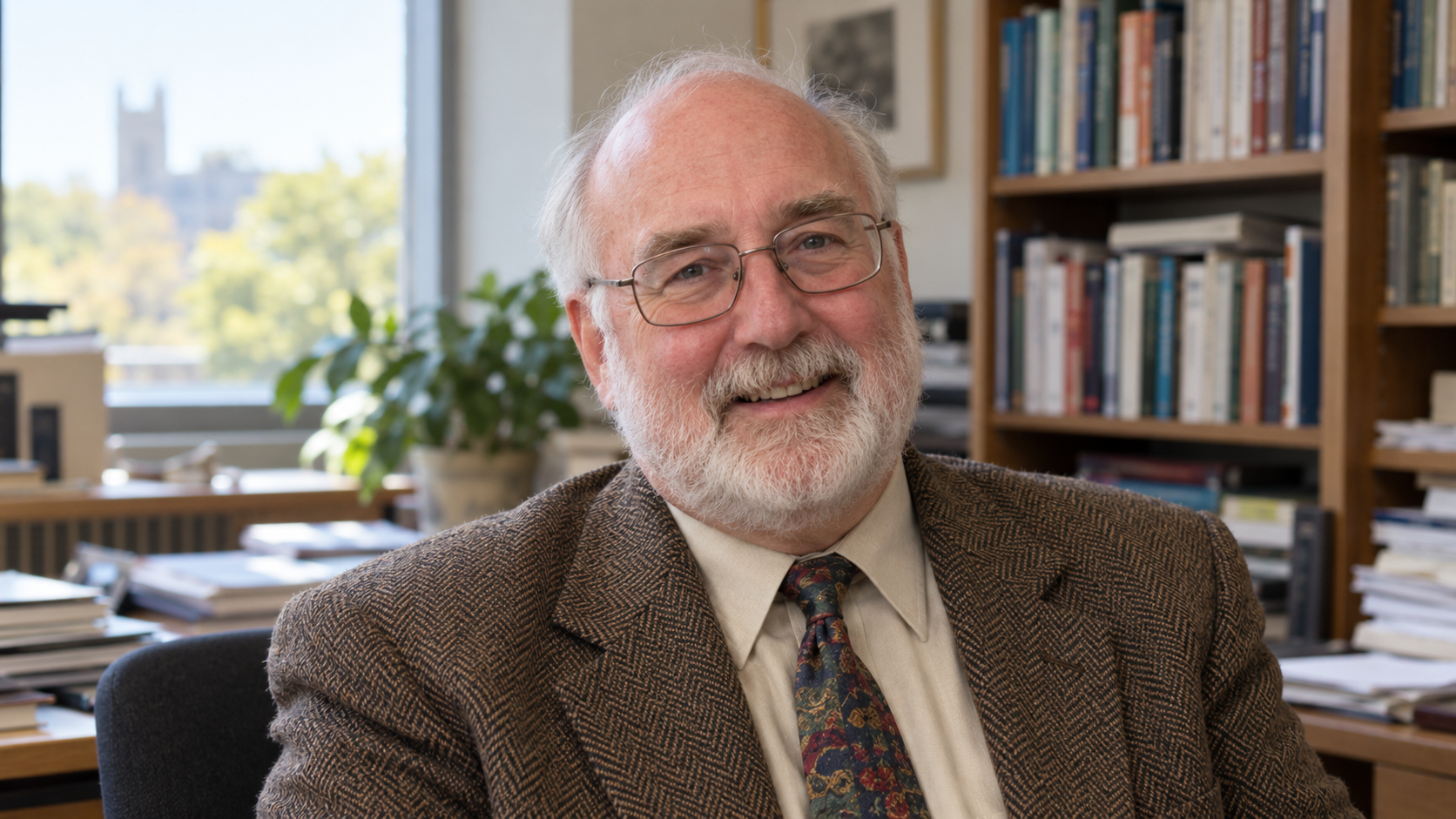
“Good doctors use both individual clinical expertise and the best available external evidence, and neither alone is enough.”
A research result cannot listen to a patient, and a clinician’s experience cannot by itself settle every question about a treatment. This sentence brings those two limits together. It appears in the 1996 BMJ editorial on evidence based medicine by David Sackett, William Rosenberg, J. A. Muir Gray, R. Brian Haynes and W. Scott Richardson. Sackett also included the wording in his sole-authored 1997 article in Seminars in Perinatology, whose abstract is preserved in PubMed. A later Missouri Medicine article quotes the sentence while crediting the earlier editorial. The collective authorship matters: the familiar association with Sackett should not erase the other contributors. Their purpose was to clarify an approach attracting both enthusiasm and criticism. They presented research and experienced judgment as necessary partners in decisions concerning a particular person, responding to fears that evidence would reduce care to an inflexible procedure.
The conjunction gives the quotation its practical force. Expertise helps a clinician recognize a problem, understand the circumstances and judge whether a finding applies. Research supplies a means of checking assumptions that otherwise might rest on habit or confidence. Each can correct weaknesses in the other. The surrounding account also gives attention to patients’ rights and preferences, so individual judgment does not mean simply substituting a doctor’s opinion for a published result. It includes listening and interpretation. Nor does the quotation suggest that every kind of evidence has equal strength, or that experience justifies disregarding reliable findings. The difficult work is deciding how relevant knowledge bears on a particular situation. A useful reading preserves that tension rather than resolving it by treating either a general rule or a personal impression as sufficient in every case.
For an illustrative example, imagine a discussion of two reasonable care options that differ in inconvenience, uncertainty and likely benefit. This is a constructed scenario, not a case reported by the editorial’s authors. Research may help describe expected outcomes, but it does not tell the clinician what a particular person finds manageable or most important. Those priorities emerge through conversation. At the same time, a preference deserves an accurate explanation of the available evidence, so a choice is not built on misleading reassurance. The quotation supports that meeting of information and understanding. It also points toward a continuing responsibility to learn: experience accumulates, while research can challenge something once accepted. Updating knowledge and assessing relevance belong to the same task. Readers can use the sentence to ask better questions about explanations of care: what evidence informs the recommendation, how does it fit this situation, and where do the patient’s own concerns enter the decision? The goal is thoughtful application, with room for uncertainty and individual difference.
The 1996 BMJ editorial has five authors: Sackett, Rosenberg, Gray, Haynes and Richardson. The title acknowledges the shared authorship.
Sackett repeated the sentence in his 1997 sole-authored article. Later medical literature also quotes it and cites the original editorial.
The statement argues that research and clinical expertise need to work together. Evidence may be strong in general while requiring assessment for a particular situation.
Judgment also needs reliable research to challenge assumptions and remain current. Neither side provides a reason to dismiss the other.
The surrounding explanation includes attention to patients’ rights and preferences. Applying knowledge involves understanding what matters to the person receiving care.
The article’s imagined choice between care options illustrates that interpretation. It is not a case described by the original authors or an individual treatment recommendation.
Explore more "Quotes of The Day"
Discover more notable quotes from influential voices across politics, science, business, technology, sports, and culture. Each quote offers insight into how ideas, beliefs, and decisions shape the world around us.