

On This Day in Pop: September 22, 1994
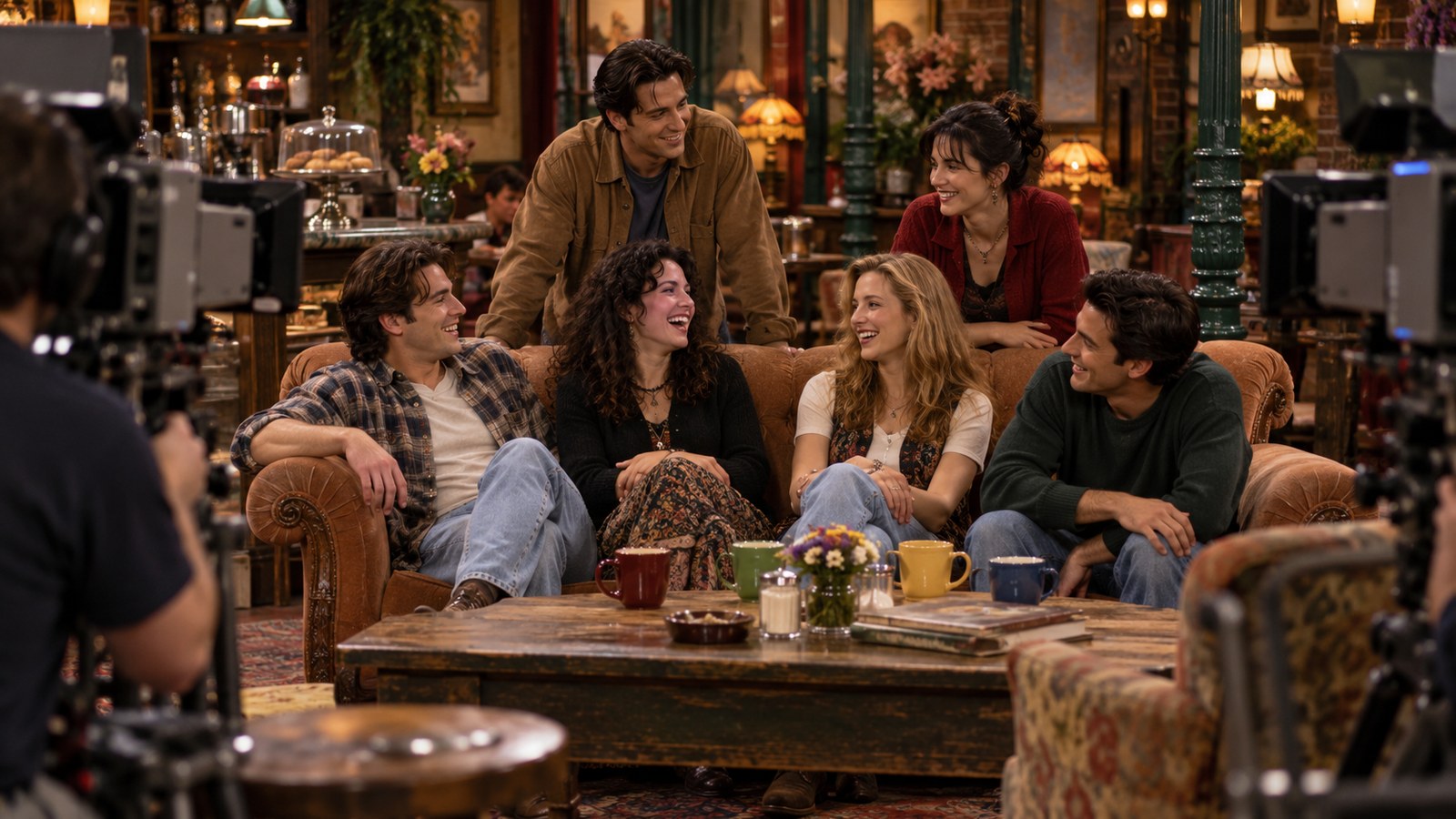
On September 22, 1994, Friends premiered on NBC. Six young adults gathered in a Manhattan coffeehouse as Rachel entered wearing a wedding dress, immediately placing friendship between work, romance and family expectation. The ensemble of Jennifer Aniston, Courteney Cox, Lisa Kudrow, Matt LeBlanc, Matthew Perry and David Schwimmer found a quick shared rhythm. Creators David Crane and Marta Kauffman developed the series around the period when friends can function as a chosen family. Carefully built apartment and café sets created an accessible fantasy of New York life, even when the characters’ housing and leisure exceeded realistic budgets. The date captures the event before later reputation made its consequences look inevitable, when audiences encountered a new release, performance, institution or public loss with only the expectations available at the time.
The show gave network television a durable language for dating, career uncertainty and prolonged young adulthood. Its narrow racial world and some jokes about gender, sexuality and bodies now draw justified criticism, showing how a comfort text can also preserve exclusions of its era. Popular culture is never made by a famous name alone. Writers, producers, technicians, broadcasters, retailers, venues and audiences shape what becomes visible and what survives. Looking at those conditions turns an anniversary from a list entry into a record of choices, limits and competing interests.
Friends ran ten seasons, became a global syndication success and turned hairstyles, phrases and locations into consumer culture. Streaming brought another generation to the series, while Matthew Perry’s death added sorrow to the ensemble’s public memory. That afterlife matters because influence does not move in a straight line. Reruns, reissues, new technology, criticism and community memory can change the meaning of a work long after its first appearance. Durable pop history therefore holds creative achievement beside questions of labor, access, power and representation.
September 22 marks the beginning of a sitcom engineered around chemistry rather than a single lead. Its continued reach reveals the strength of the chosen-family ideal and the importance of revisiting beloved comedy with clearer eyes. Returning to this September date means separating what participants knew then from what later audiences added. Recordings, photographs, broadcasts and recollections keep the moment active, but they also select and reshape it. That distinction protects against hindsight: a chart position, premiere, publication, concert or memorial may become a neat milestone later, but the people present still faced uncertainty. Reading the moment in both directions—through its original conditions and its accumulated meanings—keeps celebration from replacing history. The distance between the immediate event and its continuing interpretation is what makes this episode worth revisiting.
Friends premiered on September 22, 1994.
On September 22, 1994, Friends premiered on NBC. Six young adults gathered in a Manhattan coffeehouse as Rachel entered wearing a wedding dress, immediately placing friendship between work, romance and family expectation.
The NBC sitcom centered six young adults in New York City.
The show gave network television a durable language for dating, career uncertainty and prolonged young adulthood. Its narrow racial world and some jokes about gender, sexuality and bodies now draw justified criticism, showing how a comfort text can also preserve exclusions of its era.
It ran for ten seasons and became a major global syndication success.
Friends ran ten seasons, became a global syndication success and turned hairstyles, phrases and locations into consumer culture. Streaming brought another generation to the series, while Matthew Perry's death added sorrow to the ensemble's public memory.
Explore more of "On This Day ..."
Discover more events from the same date across news, politics, technology, sports, and other fields. Each link highlights significant moments that shaped history on different fronts.