

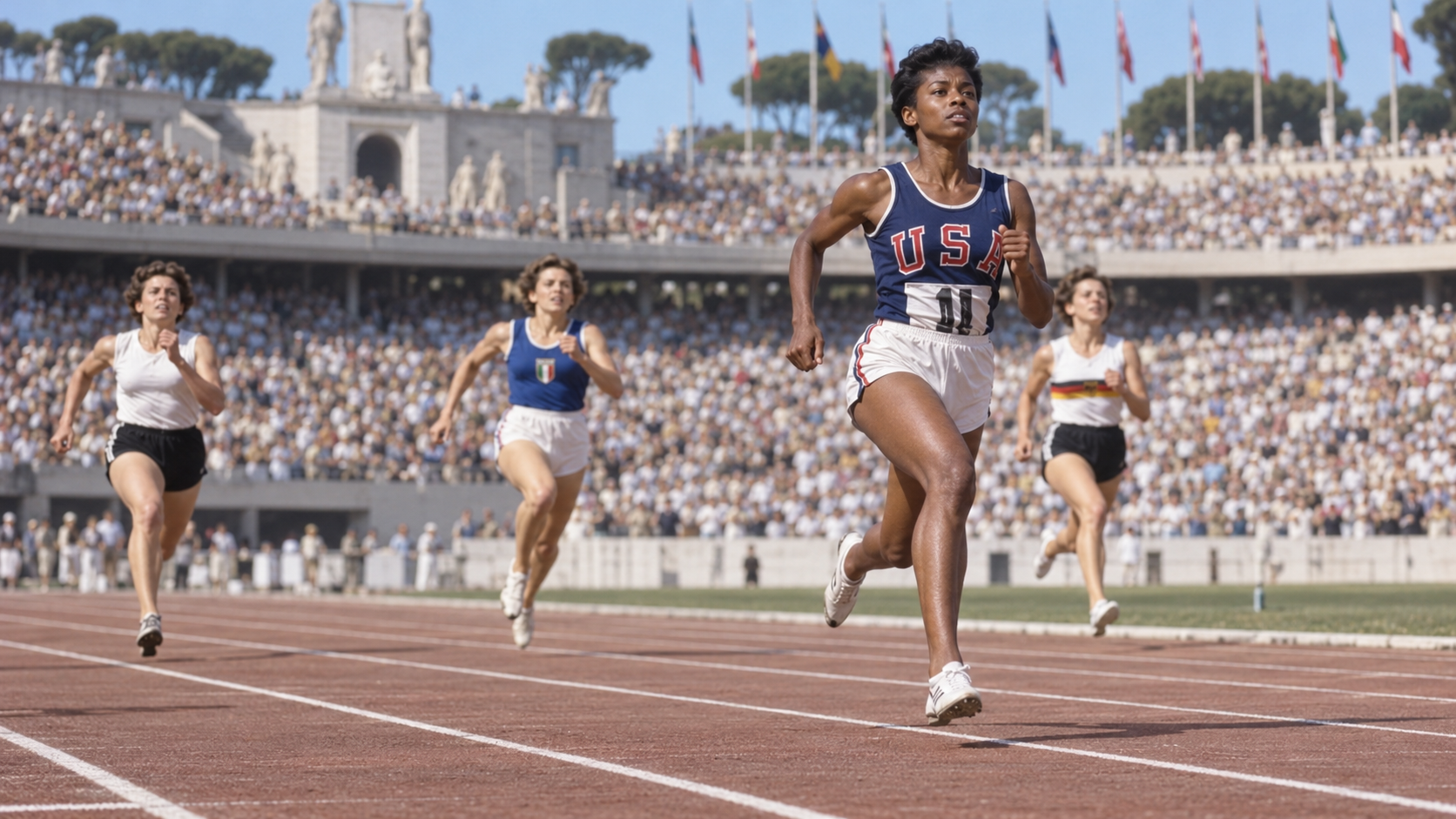
On This Day in Sports: September 2, 1960
On September 2, 1960, Wilma Rudolph won the women’s Olympic 100-meter final at Rome’s Stadio Olimpico. The 20-year-old American finished in 11.0 seconds, though the following wind was too strong for the time to count as a world record, and led Dorothy Hyman and Giuseppina Leone across the line. Rudolph’s winning time was 11.0 seconds. The wind measured above the legal limit. Those details establish the result and its setting, but the day’s importance came from the larger historical pressure surrounding the competition and the people who carried it through.
Rudolph had overcome serious childhood illness and developed into the leading sprinter of Tennessee State’s celebrated Tigerbelles program under coach Ed Temple. She arrived in Rome as a world-record holder in the 200 meters and a favorite in the short sprints. Dorothy Hyman of Britain won silver. Giuseppina Leone of Italy took bronze. Together, those points show how preparation, rules, institutions and public expectations shaped the circumstances before the decisive action began. They also separate the documented background from later legend and retrospective interpretation.
Rudolph accelerated smoothly after the start and separated from the field through the middle of the race. Her margin at the finish confirmed the speed she had shown through the heats despite the pressure of an Olympic final in a packed stadium. Rudolph trained at Tennessee State University. She finished the Rome Games with three gold medals. The immediate result therefore involved more than a single score or statistic: it changed a record, championship, career or institution and gave contemporary audiences a clear reason to understand that the moment was unusual.
She later won the 200 meters and anchored the United States 4-by-100 relay to become the first American woman to take three track-and-field gold medals at one Games. Her career expanded expectations for Black women in international sport. Seen from today, the event remains useful because it connects a measurable sports outcome with the systems around it—teammates, opponents, officials, venues, media and rules. The outcome was not inevitable, and its meaning did not end when play stopped. Preserving the exact date and qualifications helps explain why later generations still return to it. It also prevents a famous image or headline from replacing the fuller story of what actually happened. The best sports history holds achievement and limitation together, showing both the performance itself and the conditions that made it possible. That broader view preserves context without taking attention away from the people who performed under pressure. In that sense, September 2, 1960 still offers a focused view of how athletic excellence, public memory and institutional change can meet in a single day.
Rudolph's winning time was 11.0 seconds.
The wind measured above the legal limit.
Dorothy Hyman of Britain won silver.
Giuseppina Leone of Italy took bronze.
Rudolph trained at Tennessee State University.
She finished the Rome Games with three gold medals.
Explore more "On This Day in Sports"
Discover more landmark games, records, championships, and turning points from sports history. Each day revisits the athletes, teams, and moments that shaped competition and culture.