

On This Day in Sports: September 10, 1960
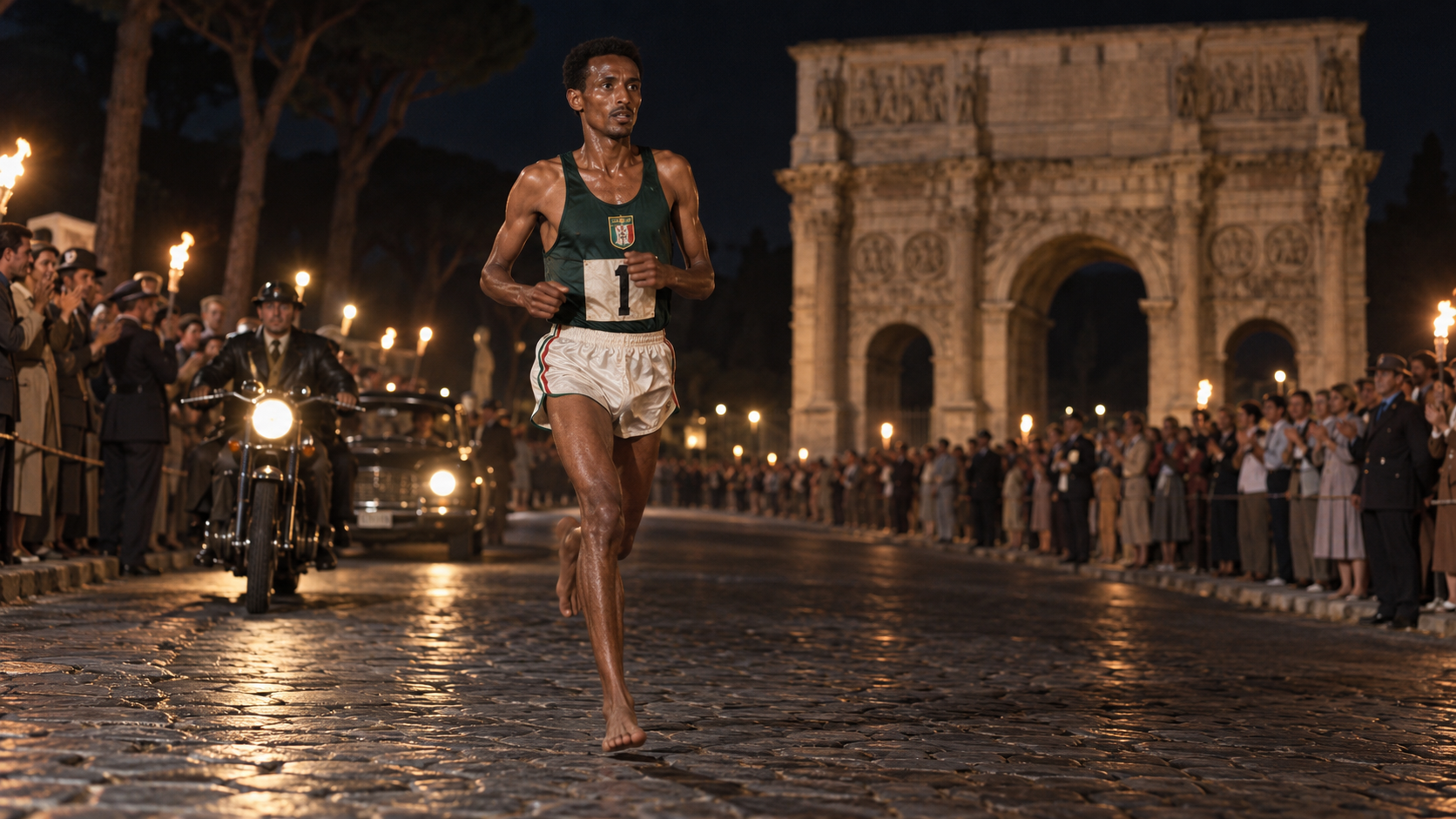
On September 10, 1960, Ethiopia’s Abebe Bikila won the Olympic marathon through the streets of Rome while running barefoot. He finished beneath the Arch of Constantine in 2 hours, 15 minutes, 16.2 seconds, a world-best performance that made him the first Black African athlete to win Olympic gold. Bikila ran 2:15:16.2. The race finished at the Arch of Constantine. Those details establish the result and its setting, but the day’s importance came from the larger historical pressure surrounding the competition and the people who carried it through.
Bikila served in Emperor Haile Selassie’s Imperial Guard and had emerged late as Ethiopia’s Olympic selection. The race started in the evening to avoid the strongest heat and followed a course illuminated by torches along parts of the Appian Way. He competed without shoes. Rhadi Ben Abdesselam earned silver. Together, those points show how preparation, rules, institutions and public expectations shaped the circumstances before the decisive action began. They also separate the documented background from later legend and retrospective interpretation.
Bikila stayed with Morocco’s Rhadi Ben Abdesselam before increasing the pace near the closing kilometers. His light, controlled stride carried him past landmarks tied to Italy’s imperial history and alone to the finish in front of the ancient arch. The marathon was held after sunset. Bikila repeated as champion in 1964. The immediate result therefore involved more than a single score or statistic: it changed a record, championship, career or institution and gave contemporary audiences a clear reason to understand that the moment was unusual.
Four years later in Tokyo, Bikila won again and became the first athlete to repeat as Olympic marathon champion. His Rome victory announced East Africa’s future strength in distance running and became one of the Games’ most enduring images. Seen from today, the event remains useful because it connects a measurable sports outcome with the systems around it—teammates, opponents, officials, venues, media and rules. The outcome was not inevitable, and its meaning did not end when play stopped. Preserving the exact date and qualifications helps explain why later generations still return to it. It also prevents a famous image or headline from replacing the fuller story of what actually happened. The best sports history holds achievement and limitation together, showing both the performance itself and the conditions that made it possible. That broader view preserves context without taking attention away from the people who performed under pressure. In that sense, September 10, 1960 still offers a focused view of how athletic excellence, public memory and institutional change can meet in a single day.
Bikila ran 2:15:16.2.
The race finished at the Arch of Constantine.
He competed without shoes.
Rhadi Ben Abdesselam earned silver.
The marathon was held after sunset.
Bikila repeated as champion in 1964.
Explore more "On This Day in Sports"
Discover more landmark games, records, championships, and turning points from sports history. Each day revisits the athletes, teams, and moments that shaped competition and culture.