

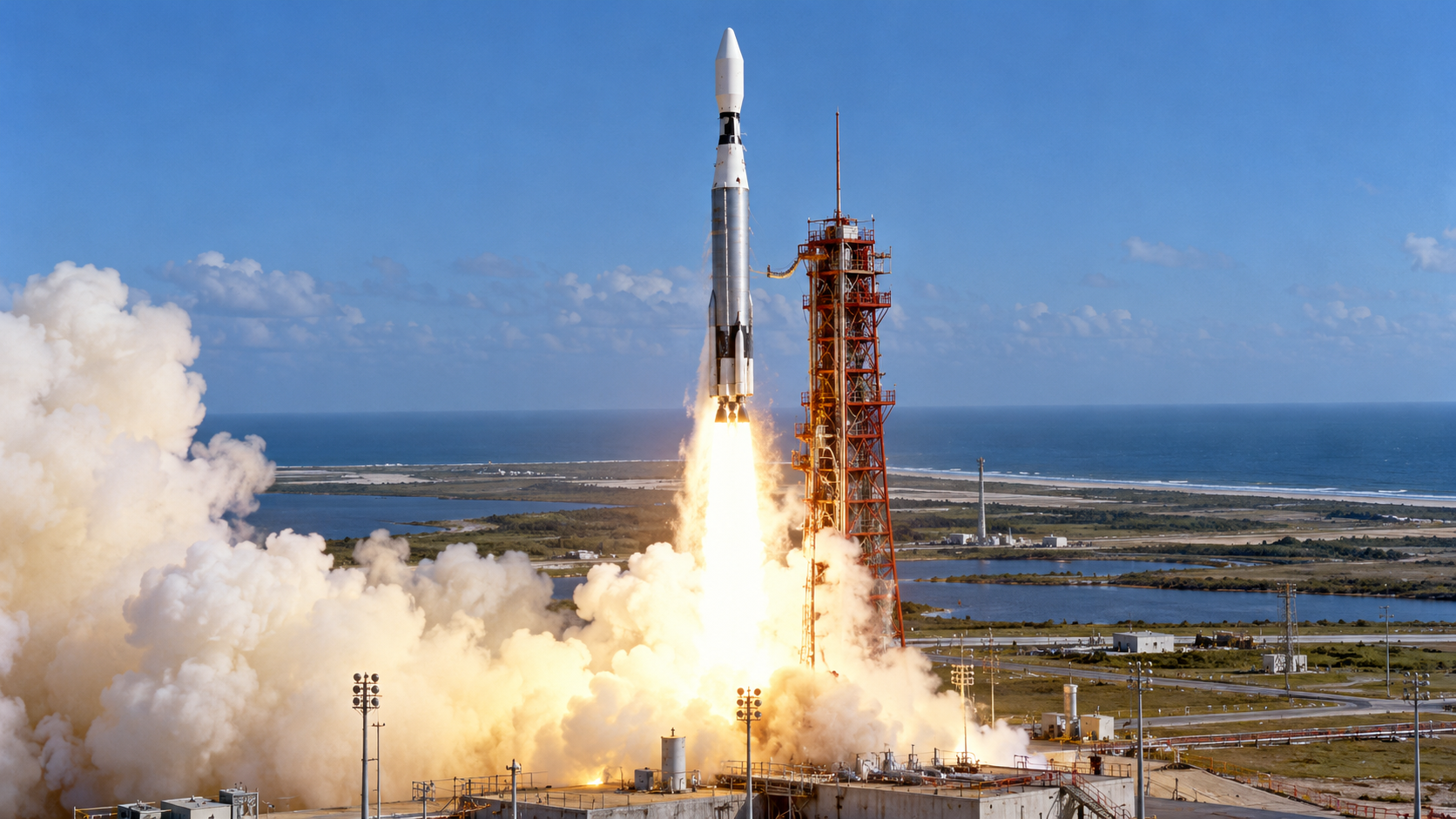
On This Day in Science: January 30, 1964
On January 30, 1964, NASA launched Ranger 6 from Cape Canaveral on an Atlas-Agena B rocket. The spacecraft was the first Block III Ranger, a design simplified around one task: transmit increasingly detailed television images during a final dive toward the Moon. Six cameras, divided into two independent channels, were meant to begin operating minutes before impact and return views far sharper than telescopes on Earth could obtain. Those images would support lunar science and help Apollo planners assess the character of potential landing terrain.
The launch and trajectory went largely as planned, but the camera system failed. Telemetry later indicated that an electrical short occurred during booster separation, when the television subsystem was accidentally powered and arcing damaged its controls. Ranger 6 still completed a precise flight and struck the Moon in Mare Tranquillitatis on February 2, only a short distance from its aim point. Controllers sent the command to start the cameras, but no pictures arrived. The mission achieved navigation and impact while missing its central scientific objective.
Ranger 6 followed five earlier spacecraft that had also failed to deliver the planned lunar observations. The continued setbacks triggered detailed reviews rather than abandonment. Engineers examined test procedures, spacecraft cleanliness, electrical interfaces, and the specific vulnerability that had energized the cameras. Corrections were applied to Ranger 7, which launched in July 1964 and returned more than four thousand close-up images before impact. Rangers 8 and 9 followed with additional successful photography, transforming knowledge of lunar surface texture in the years before Apollo.
The January 30 launch is valuable because it shows how a failed instrument can still produce engineering evidence. The working guidance system demonstrated that the new spacecraft could reach a small target after a multi-day flight, while the silence from the cameras narrowed attention to a particular subsystem and launch event. Success was not guaranteed by repeating the design; it came from diagnosing the interaction, changing hardware and procedures, and testing again. Ranger 6 never sent the images for which it was built, but its accurate impact and investigated failure became part of the path to the first American close views of the Moon. Those later images gave Apollo planners confidence that potential landing areas could be studied at the necessary scale before people arrived. The sequence turned reliability from a slogan into a documented process of correction and retest. Ranger 6 earned its place in that evidence chain despite returning no photographs.
Ranger 6 was designed to transmit pictures during its final minutes, with resolution improving continuously as the Moon approached.
The spacecraft would be destroyed by impact, so all scientific value depended on sending data before contact.
An electrical event during booster separation powered the television system at the wrong time and damaged its controls.
Guidance and navigation still worked, allowing the silent spacecraft to strike the Moon close to its target.
Investigators turned the camera loss into specific design and procedure changes rather than simply repeating the mission.
Ranger 7's success six months later showed how disciplined failure analysis can unlock a stalled exploration program.
Explore more of "On This Day ..."
Discover more events from the same date across news, politics, technology, sports, and other fields. Each link highlights significant moments that shaped history on different fronts.