

On This Day in Sports: November 6, 1869
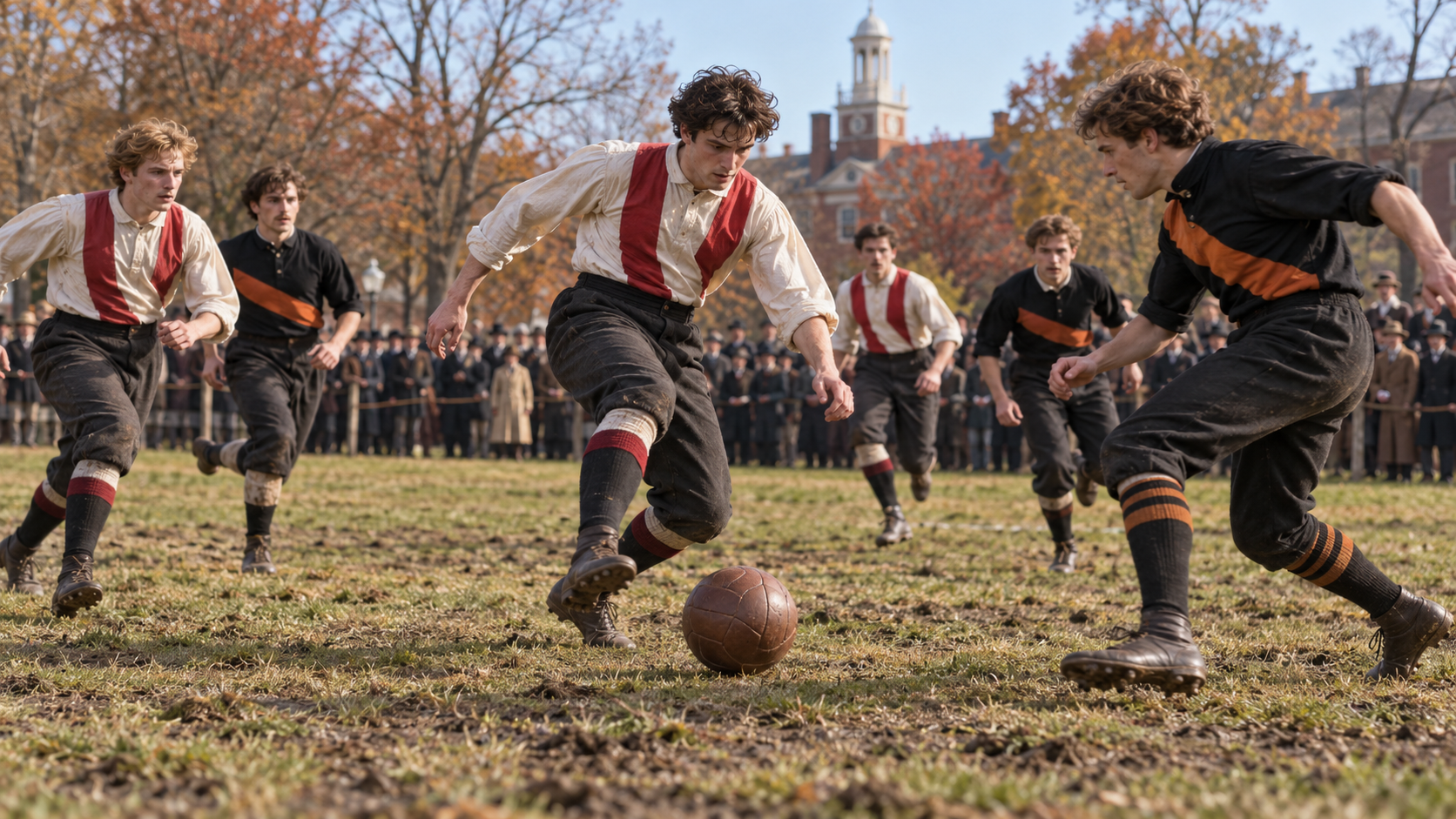
On November 6, 1869, Rutgers defeated Princeton 6-4 in New Brunswick, New Jersey, in the contest widely recognized as the first intercollegiate football game. The match used a round ball and rules closer to association football than the modern American game, yet it began a continuous institutional history. Rutgers won 6-4. The game was played in New Brunswick, New Jersey. Those details establish the result and its setting, but the day’s importance came from the larger historical pressure surrounding the competition and the people who carried it through.
Students from Rutgers challenged the College of New Jersey, later known as Princeton, after the schools had already developed a rivalry in other activities. Each side fielded twenty-five players on a campus plot later associated with College Avenue. Each team used twenty-five players. The ball was round rather than modern football-shaped. Together, those points show how preparation, rules, institutions and public expectations shaped the circumstances before the decisive action began. They also separate the documented background from later legend and retrospective interpretation.
Teams scored by driving the ball through the opponent’s goal, with the winner determined by the first side to reach six goals. Rutgers combined coordinated kicking and formation play to claim the 6-4 result before a small crowd. The rules were closer to soccer than today’s gridiron game. Princeton won the return meeting later that month. The immediate result therefore involved more than a single score or statistic: it changed a record, championship, career or institution and gave contemporary audiences a clear reason to understand that the moment was unusual.
Princeton won a return match two weeks later, and rules changed repeatedly before the sport assumed a familiar form. The November contest nevertheless became college football’s conventional starting point and a reminder that major sports often emerge through gradual adaptation rather than a single finished invention. Seen from today, the event remains useful because it connects a measurable sports outcome with the systems around it—teammates, opponents, officials, venues, media and rules. The outcome was not inevitable, and its meaning did not end when play stopped. Preserving the exact date and qualifications helps explain why later generations still return to it. It also prevents a famous image or headline from replacing the fuller story of what actually happened. The best sports history holds achievement and limitation together, showing both the performance itself and the conditions that made it possible. That broader view preserves context without taking attention away from the people who performed under pressure. In that sense, November 6, 1869 still offers a focused view of how athletic excellence, public memory and institutional change can meet in a single day.
Rutgers won 6-4.
The game was played in New Brunswick, New Jersey.
Each team used twenty-five players.
The ball was round rather than modern football-shaped.
The rules were closer to soccer than today's gridiron game.
Princeton won the return meeting later that month.
Explore more "On This Day in Sports"
Discover more landmark games, records, championships, and turning points from sports history. Each day revisits the athletes, teams, and moments that shaped competition and culture.