

On This Day in Sports: November 7, 1991
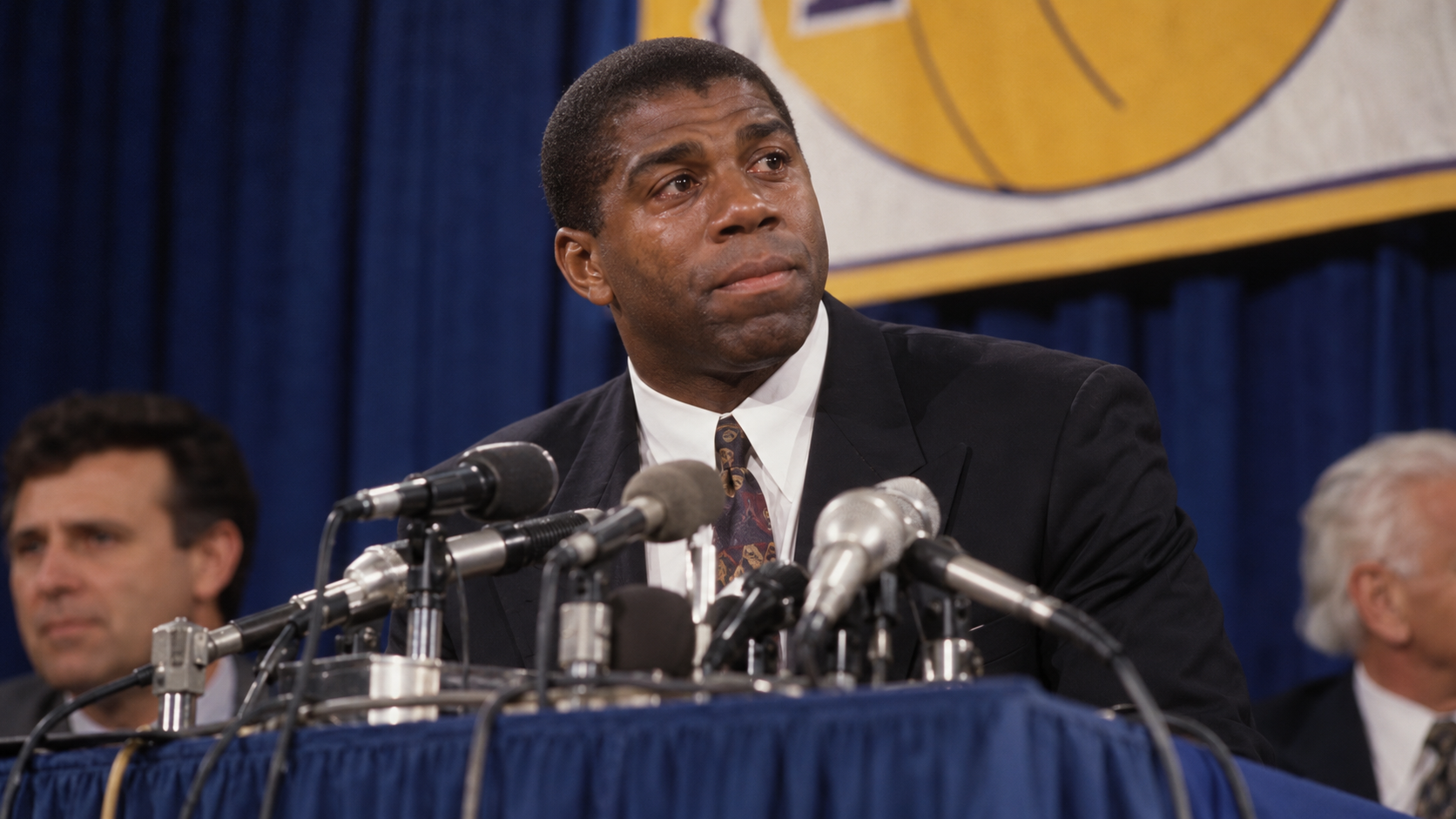
On November 7, 1991, Magic Johnson announced at the Great Western Forum that he had tested positive for HIV and was retiring from the Los Angeles Lakers. The statement shocked the sports world and immediately placed one of basketball’s most visible stars at the center of public discussion about HIV and AIDS. The announcement came at the Great Western Forum. Johnson was 32 years old. Those details establish the result and its setting, but the day’s importance came from the larger historical pressure surrounding the competition and the people who carried it through.
Johnson was 32, had led the Lakers to five championships and had just appeared in the 1991 NBA Finals. Medical understanding and public attitudes toward HIV were still heavily shaped by fear, misinformation and stigma. He had 9,981 career assists at the time. He had won three regular-season MVP awards. Together, those points show how preparation, rules, institutions and public expectations shaped the circumstances before the decisive action began. They also separate the documented background from later legend and retrospective interpretation.
Johnson told teammates before addressing reporters and viewers. He stepped away as the NBA’s career assists leader at the time, with 9,981, and said he intended to fight the virus and work to educate others. He returned for the 1992 All-Star Game. He became a prominent advocate for HIV and AIDS awareness. The immediate result therefore involved more than a single score or statistic: it changed a record, championship, career or institution and gave contemporary audiences a clear reason to understand that the moment was unusual.
He returned for the 1992 All-Star Game, won its MVP award, played on the Olympic Dream Team and later made a brief NBA comeback. His long public life with HIV helped change perceptions of the diagnosis, although access to treatment and prevention remained unequal. Seen from today, the event remains useful because it connects a measurable sports outcome with the systems around it—teammates, opponents, officials, venues, media and rules. The outcome was not inevitable, and its meaning did not end when play stopped. Preserving the exact date and qualifications helps explain why later generations still return to it. It also prevents a famous image or headline from replacing the fuller story of what actually happened. The best sports history holds achievement and limitation together, showing both the performance itself and the conditions that made it possible. That broader view preserves context without taking attention away from the people who performed under pressure. In that sense, November 7, 1991 still offers a focused view of how athletic excellence, public memory and institutional change can meet in a single day.
The announcement came at the Great Western Forum.
Johnson was 32 years old.
He had 9,981 career assists at the time.
He had won three regular-season MVP awards.
He returned for the 1992 All-Star Game.
He became a prominent advocate for HIV and AIDS awareness.
Explore more "On This Day in Sports"
Discover more landmark games, records, championships, and turning points from sports history. Each day revisits the athletes, teams, and moments that shaped competition and culture.