

On This Day in Pop: November 19, 1975
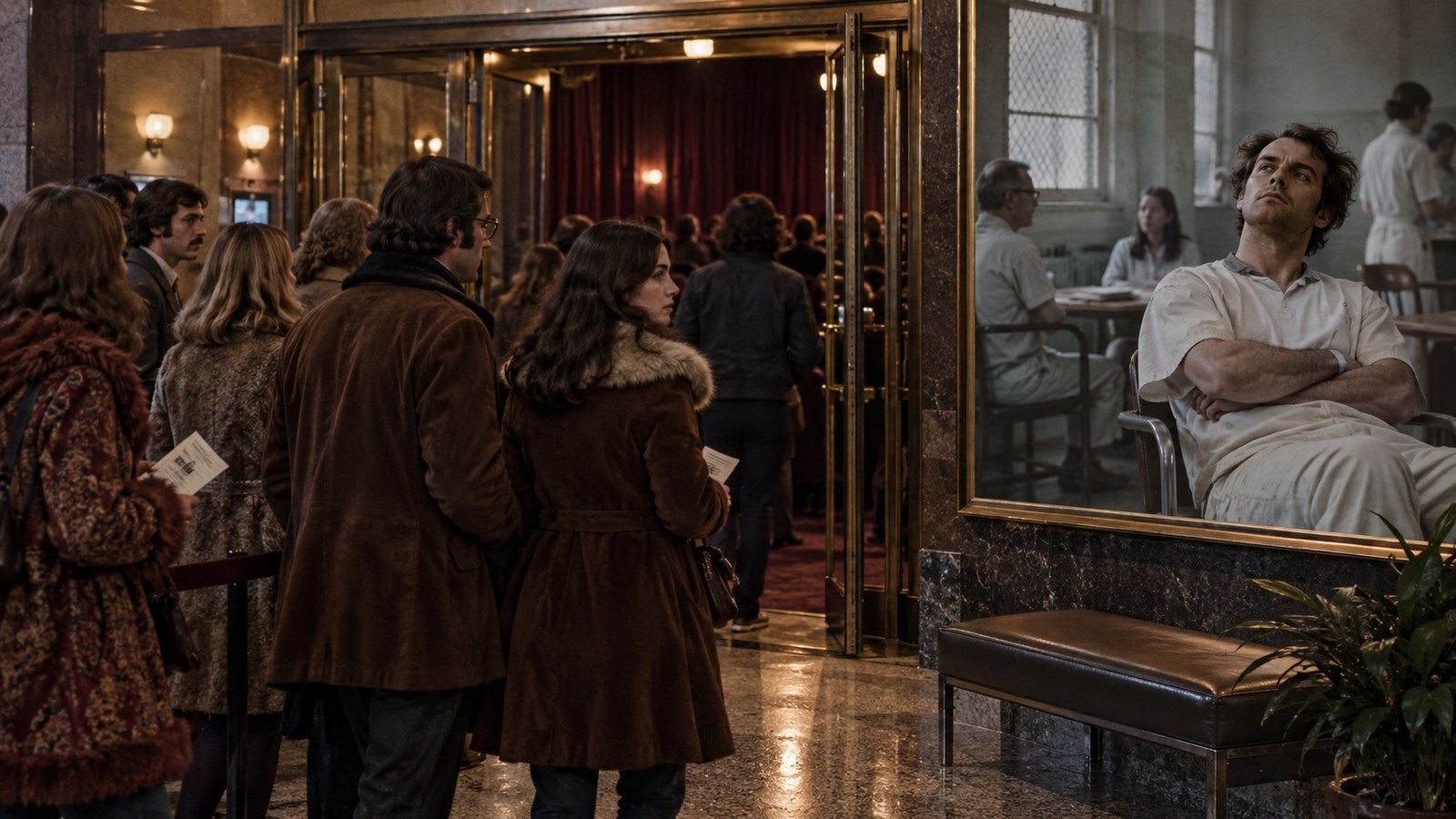
On November 19, 1975, One Flew Over the Cuckoo’s Nest opened in New York and Los Angeles. Miloš Forman’s film followed Randle McMurphy into an Oregon psychiatric hospital ruled by Nurse Ratched, using an ensemble of patients and a controlled institutional setting to examine power, conformity and rebellion. Jack Nicholson and Louise Fletcher led the cast. Kirk Douglas had starred in the Broadway adaptation of Ken Kesey’s novel and retained the film rights before passing the project to his son Michael, who produced with Saul Zaentz. Oregon State Hospital provided a difficult but essential location. The date captures the event before later reputation made its consequences look inevitable, when audiences encountered a new release, performance or institution with only the expectations available at the time.
The release made institutional authority emotionally legible through performance and environment. Its critique remains powerful, while disability advocates and later viewers have questioned whose inner lives receive attention and how psychiatric care is represented. Popular culture is never made by a famous name alone. Writers, performers, producers, technicians, broadcasters, retailers, venues and audiences shape what becomes visible and what survives. Their collaboration also determines which experiments reach the public and which disappear before they can build momentum. Looking at those conditions turns an anniversary from a list entry into a record of choices, limits and competing interests.
The picture became a major commercial success and won the five principal Academy Awards: picture, director, actor, actress and adapted screenplay. Its ensemble helped launch or strengthen several notable careers. That afterlife matters because influence does not move in a straight line. Reruns, reissues, new technology, criticism and community memory can change the meaning of a work long after its first appearance. Durable pop history therefore holds creative achievement beside questions of labor, access, power and representation.
Opening day introduced a film whose cultural force comes from both exhilaration and unease. The central contest invites resistance, but its ending makes clear that charisma alone cannot protect vulnerable people from systems or from one another. Returning to this November date means separating what participants knew then from what later audiences added. Recordings, photographs, broadcasts and recollections keep the moment active, but they also select and reshape it. That distinction protects against hindsight: a chart position, premiere, publication, concert or opening may become a neat milestone later, but the people present still faced uncertainty. Reading the moment in both directions—through its original conditions and its accumulated meanings—keeps celebration from replacing history. The distance between the immediate event and its continuing interpretation is what makes this episode worth revisiting.
The New York and Los Angeles openings were November 19, 1975.
On November 19, 1975, One Flew Over the Cuckoo's Nest opened in New York and Los Angeles. Miloš Forman's film followed Randle McMurphy into an Oregon psychiatric hospital ruled by Nurse Ratched, using an ensemble of patients and a controlled institutional setting to examine power, conformity and rebellion.
Miloš Forman directed the film.
The release made institutional authority emotionally legible through performance and environment. Its critique remains powerful, while disability advocates and later viewers have questioned whose inner lives receive attention and how psychiatric care is represented.
It won the five major Academy Awards.
The picture became a major commercial success and won the five principal Academy Awards: picture, director, actor, actress and adapted screenplay. Its ensemble helped launch or strengthen several notable careers.
Explore more of "On This Day ..."
Discover more events from the same date across news, politics, technology, sports, and other fields. Each link highlights significant moments that shaped history on different fronts.