

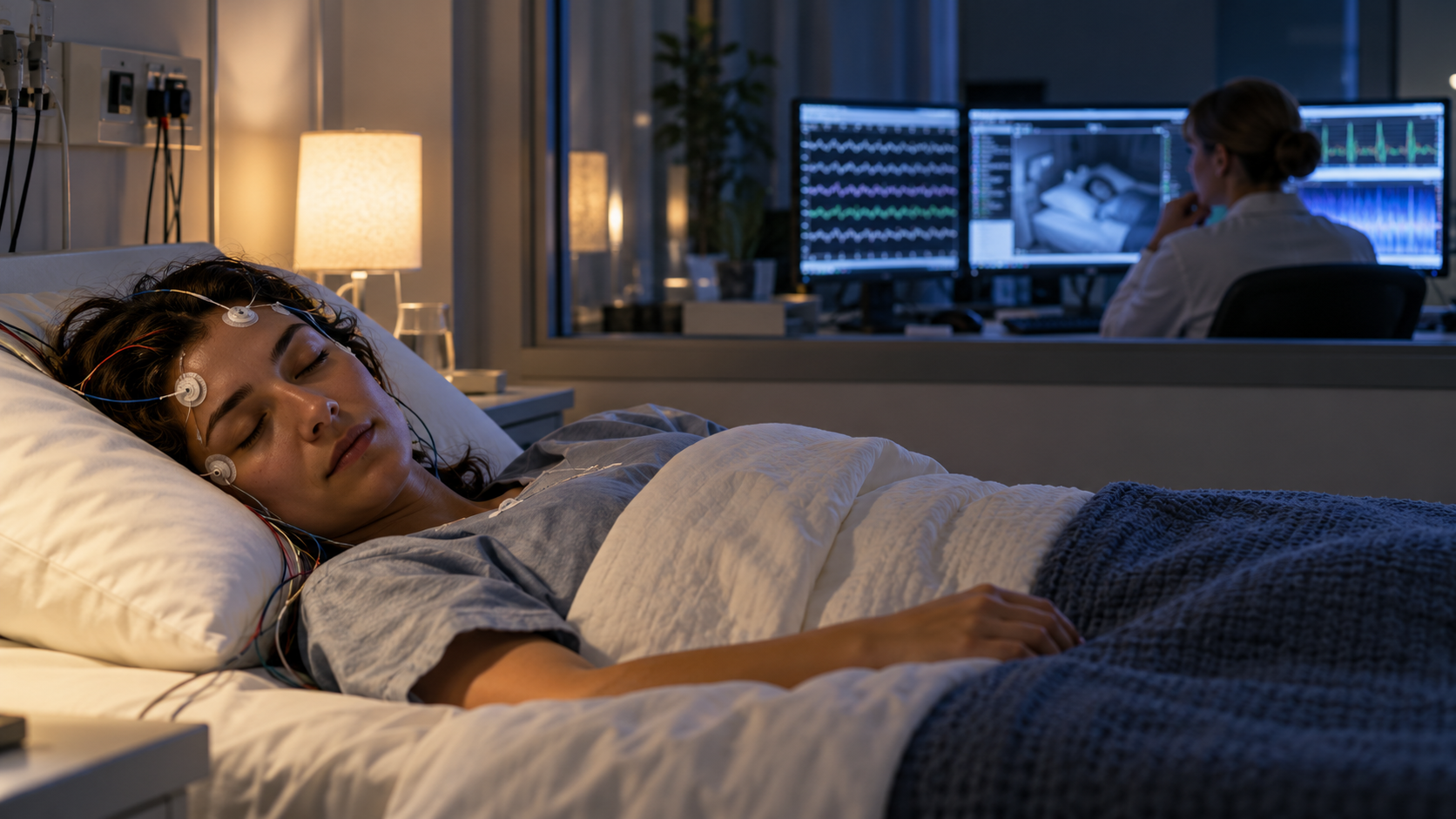
How Sleep Regulates the Body and Brain Explainer
Sleep is an active, regulated state rather than a simple shutdown. Two major systems shape when it occurs. The circadian clock in the brain aligns physiology with the day-night cycle, using light as its strongest timing cue. A separate homeostatic sleep pressure builds during wakefulness and declines during sleep. Their interaction creates the daily pattern of alertness and sleepiness.
During a typical night, the brain cycles through non-rapid-eye-movement sleep and rapid-eye-movement sleep. Non-REM includes progressively deeper stages with slower, more synchronized brain activity. REM sleep has vivid dreaming, rapid eye movements, and temporary suppression of most skeletal muscle activity. Early-night cycles contain more deep non-REM sleep, while REM periods usually lengthen toward morning.
Sleep supports memory and learning by reactivating and reorganizing neural patterns, although different memory types involve different stages and mechanisms. Synaptic connections are adjusted, and the brain’s attention and emotional-control networks recover from sustained wakefulness. Sleep also changes the movement of fluid through brain tissue, a process being studied for its role in clearing metabolic waste.
The rest of the body is coordinated as well. Sleep affects hormone release, glucose regulation, appetite signals, blood pressure, immune activity, temperature, and tissue repair. Repeated sleep restriction can impair reaction time, mood, judgment, and metabolic control. A person may feel partly adapted to too little sleep while objective performance continues to decline.
Good sleep depends on duration, timing, regularity, continuity, and the absence of untreated disorders. Caffeine can temporarily block some effects of sleep pressure but does not replace sleep. Alcohol may hasten drowsiness yet disrupt later sleep. Bright light at night can shift circadian timing, while morning light often helps anchor the clock to a desired schedule.
Sleep needs vary by age and individual, and one restless night is not equivalent to chronic deprivation. Loud snoring with breathing pauses, persistent insomnia, overwhelming daytime sleepiness, or unusual nighttime behaviors can warrant clinical evaluation. Sleep is not wasted time; it is a repeating biological program that coordinates recovery and prepares multiple systems for the next period of wakefulness.
The circadian clock sets daily timing, while homeostatic sleep pressure rises during wakefulness. Their interaction determines when sleep feels possible and necessary.
Light resets the body clock. Caffeine alters the perception of sleep pressure but does not erase the underlying need for sleep.
Non-REM and REM sleep repeat in cycles. Deep non-REM is concentrated earlier, while REM periods usually lengthen later in the night.
Memory, emotion, neural activity, hormones, metabolism, immunity, and cardiovascular regulation all change in organized ways during sleep.
Duration alone is not the whole picture; regular timing, continuity, and freedom from sleep disorders also matter.
Persistent breathing pauses, severe insomnia, or excessive daytime sleepiness deserve professional evaluation rather than self-diagnosis.
Explore more "Explainers"
Discover additional explainers across politics, science, business, technology, and other fields. Each explainer breaks down a complex idea into clear, everyday language—helping you better understand how major concepts, systems, and debates shape the world around us.