

On This Day in Science: March 11, 2011
On March 11, 2011, a magnitude 9.1 earthquake ruptured the seafloor off northeastern Honshu, Japan. Shaking began at 2:46 p.m. local time and continued for several minutes as part of the boundary between the Pacific and Okhotsk plates slipped. The earthquake displaced the ocean and generated a devastating tsunami. Nearly twenty thousand people were killed or remained missing, communities were destroyed, and the Fukushima Daiichi nuclear plant suffered a cascading disaster after flooding disabled critical systems.
The rupture extended along hundreds of kilometers of the Japan Trench. In a subduction zone, one tectonic plate dives beneath another, but friction can lock sections of the boundary while strain accumulates. On March 11, part of the fault moved by tens of meters, including unusually large slip near the trench. That shallow motion lifted and lowered the seafloor, pushing an enormous volume of water outward as tsunami waves.
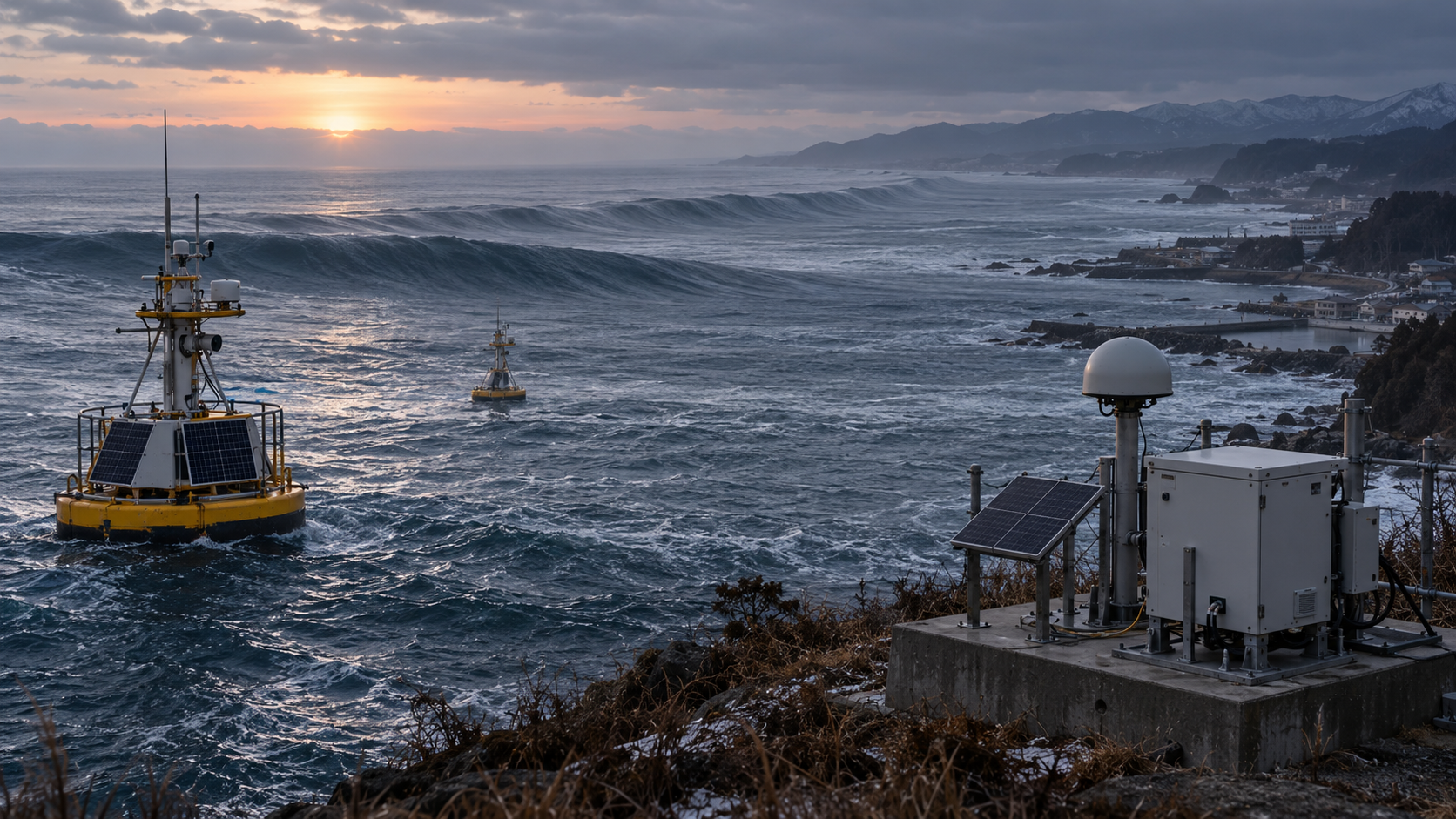
Japan had dense networks of seismometers, GPS stations, tide gauges, and warning systems, yet the event exceeded important planning assumptions. Instruments captured unprecedented detail about ground motion, crustal displacement, and wave propagation. Researchers revised models of how much shallow megathrust faults can slip and expanded offshore monitoring. Engineers and emergency planners also reexamined sea walls, evacuation routes, backup power, and the danger of compound failures.
The anniversary is foremost a remembrance of people and places harmed, not simply a record-setting geophysical event. Scientifically, the data changed understanding of subduction earthquakes around the world. The disaster showed that sophisticated preparedness can reduce risk without eliminating it, especially when an event exceeds the scenarios used in design. Respectful study turns loss into better warnings, infrastructure, and decisions while preserving the human scale behind every measurement. The anniversary also highlights the difference between a first result and a finished understanding. A successful observation can settle one question while opening several harder ones, and even a failed objective can return measurements that reshape later designs. Preserved data, specimens, photographs, and hardware allow new generations to revisit the work with better tools. Science advances through that continuity, where a specific date marks progress without pretending that inquiry stopped there. Its place on the calendar is therefore useful as an entry point, not an endpoint. The people involved worked with the instruments, assumptions, and social conditions of their time, and later research has both extended and corrected their conclusions. Reconstructing the event carefully means separating what was known that day from what became clear afterward. That distinction protects the history from myth while showing how cumulative evidence turns a memorable episode into lasting scientific knowledge. For science history, the episode is also a case study in how evidence moves from an observation or engineered test into a durable body of knowledge. Instruments supplied measurements, specialists debated interpretation, and later work refined what the first result could mean. Archives preserve the early record while new methods let researchers ask different questions of it. That continuing revision is not a weakness in the original achievement; it is the process through which a dated milestone remains scientifically useful.
The earthquake occurred where the Pacific Plate subducts beneath northeastern Japan.
Exceptional shallow slip displaced the seafloor and launched a destructive tsunami.
Waves inundated coastal communities and disabled essential systems at the Fukushima Daiichi nuclear plant.
The combined effects exposed vulnerabilities that individual hazard plans had not fully captured.
Dense Japanese sensor networks recorded the rupture, crustal motion, and tsunami in extraordinary detail.
The evidence reshaped fault models, offshore monitoring, evacuation planning, and infrastructure standards.
Explore more of "On This Day ..."
Discover more events from the same date across news, politics, technology, sports, and other fields. Each link highlights significant moments that shaped history on different fronts.