

On This Day in Science: March 30, 1842
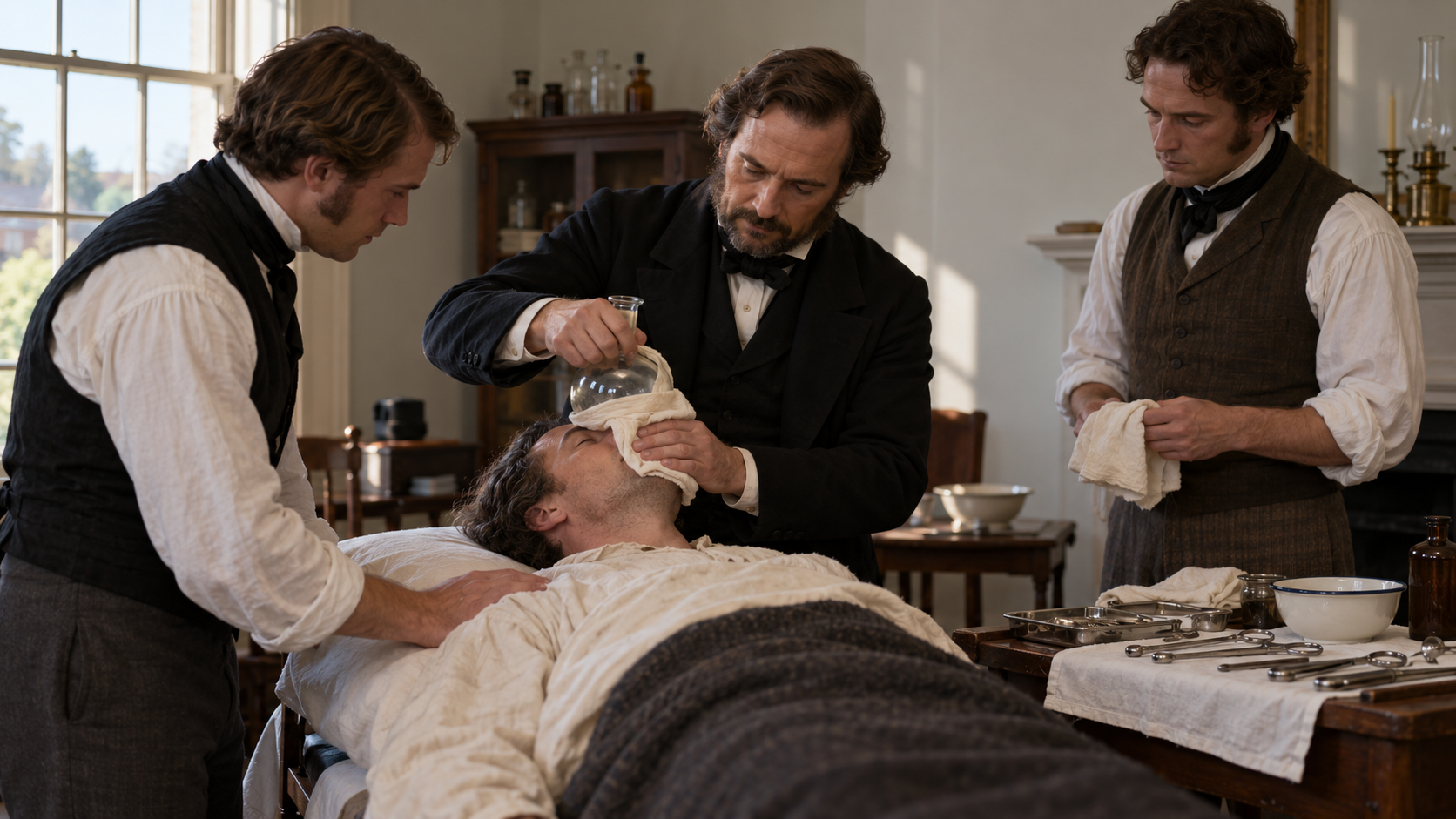
On March 30, 1842, physician Crawford Williamson Long removed a small neck tumor from James Venable in Jefferson, Georgia, after having the patient inhale ether. Venable reported no pain during the procedure. Long had noticed that people injured during recreational “ether frolics” sometimes felt little immediate discomfort and reasoned that the drug might make surgery bearable. He used it again in later operations and childbirth.
Before effective anesthesia, surgeons relied on speed, restraint, alcohol, opiates, or other incomplete methods. Ether depressed awareness and pain when inhaled, but dosage was difficult to control, the vapor was flammable, and airway management remained primitive. Long’s operation showed that deliberate inhalation could separate surgical treatment from conscious agony, creating the possibility of slower and more complex procedures.
Long did not publish his results until 1849. In the meantime, William Morton publicly demonstrated ether anesthesia in Boston in 1846, and news spread rapidly. The delay produced a long priority dispute involving Long, Morton, Horace Wells, and Charles Jackson. Historians distinguish between first use, public demonstration, publication, and widespread adoption, each of which answers a different question about how a medical innovation begins.
Modern anesthesia is a specialty built on monitored breathing, circulation, dosage, pain control, and recovery rather than ether alone. Its history includes many contributors and serious risks as techniques evolved. The March operation remains significant because it documented an early successful use of inhaled ether for surgery. It also shows that discovery requires communication: a result kept local can be historically first without becoming the event that changes practice. Seen across a longer timeline, the event also shows that scientific milestones are junctions rather than isolated beginnings. Earlier experiments, tools, and institutions made the work possible, while later teams tested its limits and carried the result into new settings. What survives is more than an anniversary fact: it is a traceable chain of evidence, correction, and application that allows one moment to remain relevant as knowledge and technology continue to change. The anniversary also highlights the difference between a first result and a finished understanding. A successful observation can settle one question while opening several harder ones, and even a failed objective can return measurements that reshape later designs. Preserved data, specimens, photographs, and hardware allow new generations to revisit the work with better tools. Science advances through that continuity, where a specific date marks progress without pretending that inquiry stopped there. Its place on the calendar is therefore useful as an entry point, not an endpoint. The people involved worked with the instruments, assumptions, and social conditions of their time, and later research has both extended and corrected their conclusions. Reconstructing the event carefully means separating what was known that day from what became clear afterward. That distinction protects the history from myth while showing how cumulative evidence turns a memorable episode into lasting scientific knowledge.
Long administered ether before removing a neck tumor from James Venable.
The patient reported that he did not feel the operation as it occurred.
Ether made longer procedures possible but posed problems of dose, breathing, fire, and recovery.
Modern anesthesia developed through monitoring and specialized control of those risks.
Long waited years to publish, while later public demonstrations spread ether use rapidly.
First use, first demonstration, and first broad adoption became competing historical claims.
Explore more of "On This Day ..."
Discover more events from the same date across news, politics, technology, sports, and other fields. Each link highlights significant moments that shaped history on different fronts.