

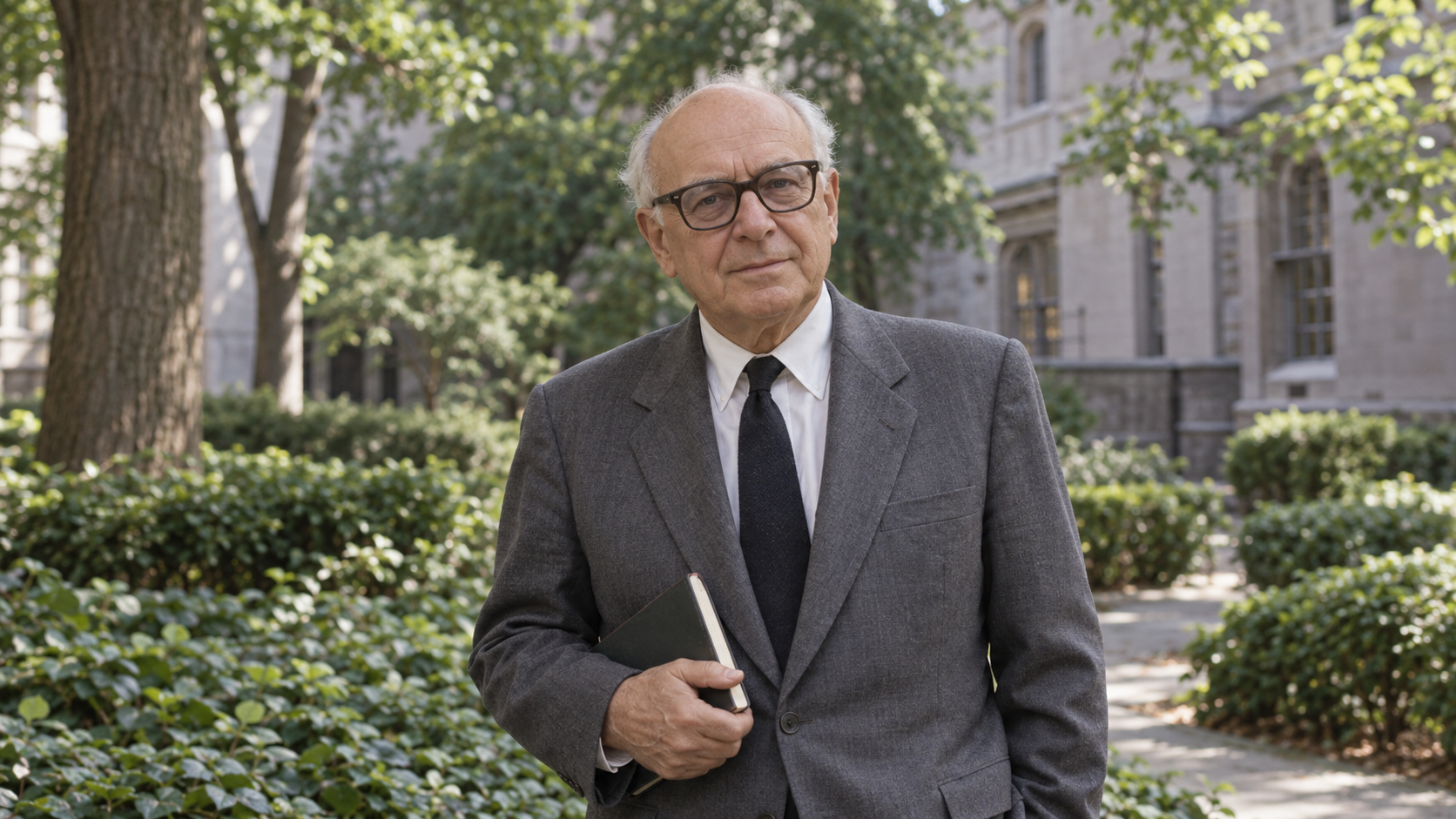
“The concept of perfect and positive health is a utopian creation of the human mind.”
René Dubos challenged an ideal that can sound reassuring until it becomes a demand: health imagined as a permanently flawless condition. In Man Adapting, published in 1965, the microbiologist considered people in relation to changing environments and the difficulties of adaptation. The featured sentence opens a passage that later scholars quoted when discussing health and environmental change. It appears in an Oxford University Press journal essay and in Andrew Price-Smith’s book The Health of Nations, published by MIT Press. The surrounding passage explains why a changing world cannot offer a life entirely free from struggle or disease. Yale University Press’s description of Dubos’s book likewise emphasizes the relationship between people and their biological and social circumstances. Read in that setting, the sentence questions the feasibility of perfection. It does not say that preventing illness or improving treatment is pointless, nor does it make suffering a goal.
An ideal can guide effort and still mislead when treated as a test of personal worth. Imagine someone whose condition requires continuing care. A picture of health that admits only complete freedom from symptoms might make every useful adjustment seem inadequate. Yet relief, a manageable routine or the ability to pursue a valued activity can matter greatly to that person. These situations show one way to read the quotation, not measures supplied by Dubos or instructions for managing an illness. They distinguish an absolute endpoint from changes that make life better. They also leave room for a person to define what improvement means within their circumstances. A service that asks about those priorities can learn something a single general ideal cannot provide. Realistic expectations need not reduce ambition; they can make an ambition specific enough to discuss, review and support.
Dubos’s emphasis on adaptation also invites careful attention to the environment being adapted to. It would be a mistake to turn his argument into a demand that people simply endure harmful conditions. An inaccessible building, an exhausting procedure or an avoidable hazard may call for change in the surroundings rather than greater endurance from the individual. The question becomes what people can reasonably change, what institutions should address and what uncertainties remain. Scientific progress belongs within that inquiry, alongside thoughtful design and humane care. Vulnerability persists even as knowledge improves, so a useful account of health has to make room for both achievement and limits. Dubos’s sentence offers that room without supplying a ready answer to every situation. It asks readers to pursue improvement while remembering that human life unfolds in circumstances that move, and that the value of care cannot depend on delivering perfection.
The featured sentence challenges the attainability of perfect health. Its surrounding passage concerns adaptation in a changing world.
The article distinguishes that argument from abandoning prevention, treatment or the effort to make life better.
The sentence is quoted with attribution to the 1965 book in an Oxford University Press journal essay and in an MIT Press book.
Yale University Press describes the book’s broader concern with adaptation, supporting the context in which the excerpt is read.
The article does not interpret adaptation as a duty to endure every obstacle. Some problems require changes to institutions or environments.
Its examples invite discussion of personal priorities and shared responsibilities; they do not prescribe care for an individual condition.
Explore more "Quotes of The Day"
Discover more notable quotes from influential voices across politics, science, business, technology, sports, and culture. Each quote offers insight into how ideas, beliefs, and decisions shape the world around us.