

On This Day in Science: April 1, 1960
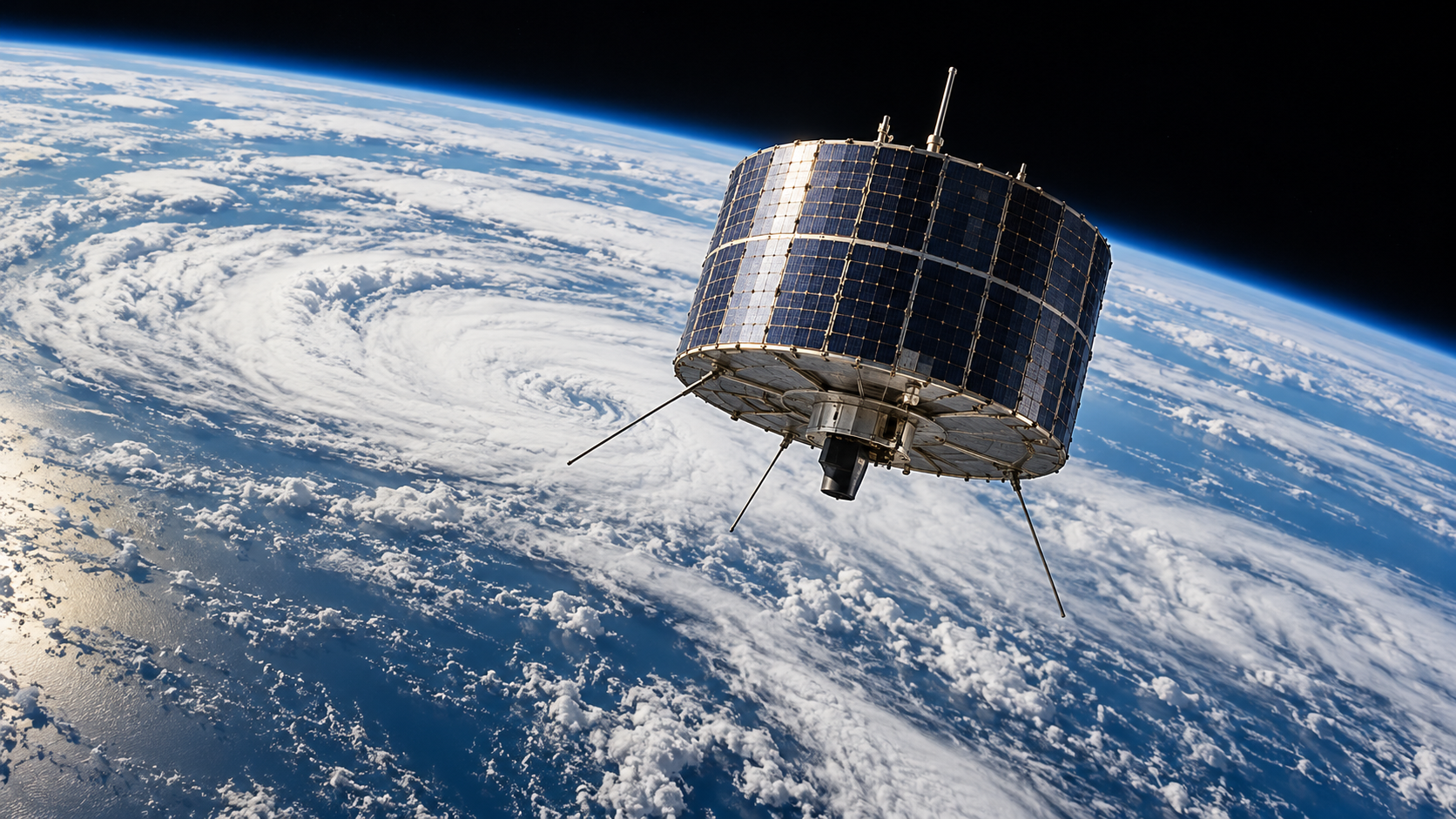
On April 1, 1960, NASA launched TIROS-1 from Cape Canaveral, Florida, aboard a Thor-Able rocket. The squat, drum-shaped Television Infrared Observation Satellite was the first experimental spacecraft built specifically to examine Earth’s weather from orbit. Within hours it returned television pictures of cloud cover, giving meteorologists a new viewpoint above oceans and remote regions that surface stations could not watch continuously.
TIROS-1 carried two vidicon television cameras, magnetic tape recorders, transmitters, and solar cells mounted across its outer shell. The spacecraft spun for stability, so controllers operated the cameras only when they pointed toward sunlit Earth. The early images were coarse by modern standards, yet broad storm spirals, fronts, and cloud bands were recognizable. The experiment tested both the scientific value of orbital imagery and the engineering needed to store and relay it.
The satellite operated for only seventy-eight days but transmitted thousands of pictures. Those observations demonstrated that cloud systems could be followed across national borders and open ocean, improving the context for forecasts assembled from local measurements. Later TIROS and Nimbus spacecraft added infrared sensing, polar coverage, automatic picture transmission, and longer service, establishing the technical lineage of today’s global environmental satellites.
TIROS-1 did not replace weather balloons, ships, radar, or ground stations; it joined them into a more complete observing system. Its launch showed that the scale of weather demanded a planetary view and made routine Earth observation one of the most practical legacies of the early space age. For science history, the event also shows how evidence moves from an observation or engineered test into a durable body of knowledge. Instruments supplied measurements, specialists debated interpretation, and later work refined what the first result could mean. Archives preserve the early record while new methods let researchers ask different questions of it. That continuing revision is the process through which a dated milestone remains scientifically useful. Seen across a longer timeline, scientific milestones are junctions rather than isolated beginnings. Earlier experiments, tools, and institutions made the work possible, while later teams tested its limits and carried the result into new settings. What survives is a traceable chain of evidence, correction, and application that allows one moment to remain relevant as knowledge and technology continue to change. The anniversary highlights the difference between a first result and a finished understanding. A successful observation can settle one question while opening several harder ones, and even a failed objective can reshape later designs. Preserved data, specimens, photographs, and hardware allow new generations to revisit the work with better tools. Science advances through that continuity rather than stopping on a memorable date.
TIROS-1 carried two television cameras that recorded broad cloud patterns from Earth orbit.
Tape recorders stored pictures until the satellite passed within range of receiving stations.
The spacecraft worked for seventy-eight days and returned thousands of useful images.
Its pictures proved that orbital observations could strengthen forecasting over oceans and sparsely monitored regions.
Later satellites added infrared sensing, polar coverage, and continuous operational service.
Modern meteorology still combines satellite data with radar, balloons, aircraft, ships, and surface instruments.
Explore more of "On This Day ..."
Discover more events from the same date across news, politics, technology, sports, and other fields. Each link highlights significant moments that shaped history on different fronts.