

On This Day in Science: May 6, 1994
On May 6, 1994, Queen Elizabeth II and French President François Mitterrand formally opened the Channel Tunnel in ceremonies on both sides of the English Channel. The fixed rail link connected Folkestone in Britain with Coquelles near Calais in France. Its roughly fifty-kilometer route included the longest undersea tunnel section then in operation, turning a centuries-old proposal into working infrastructure.
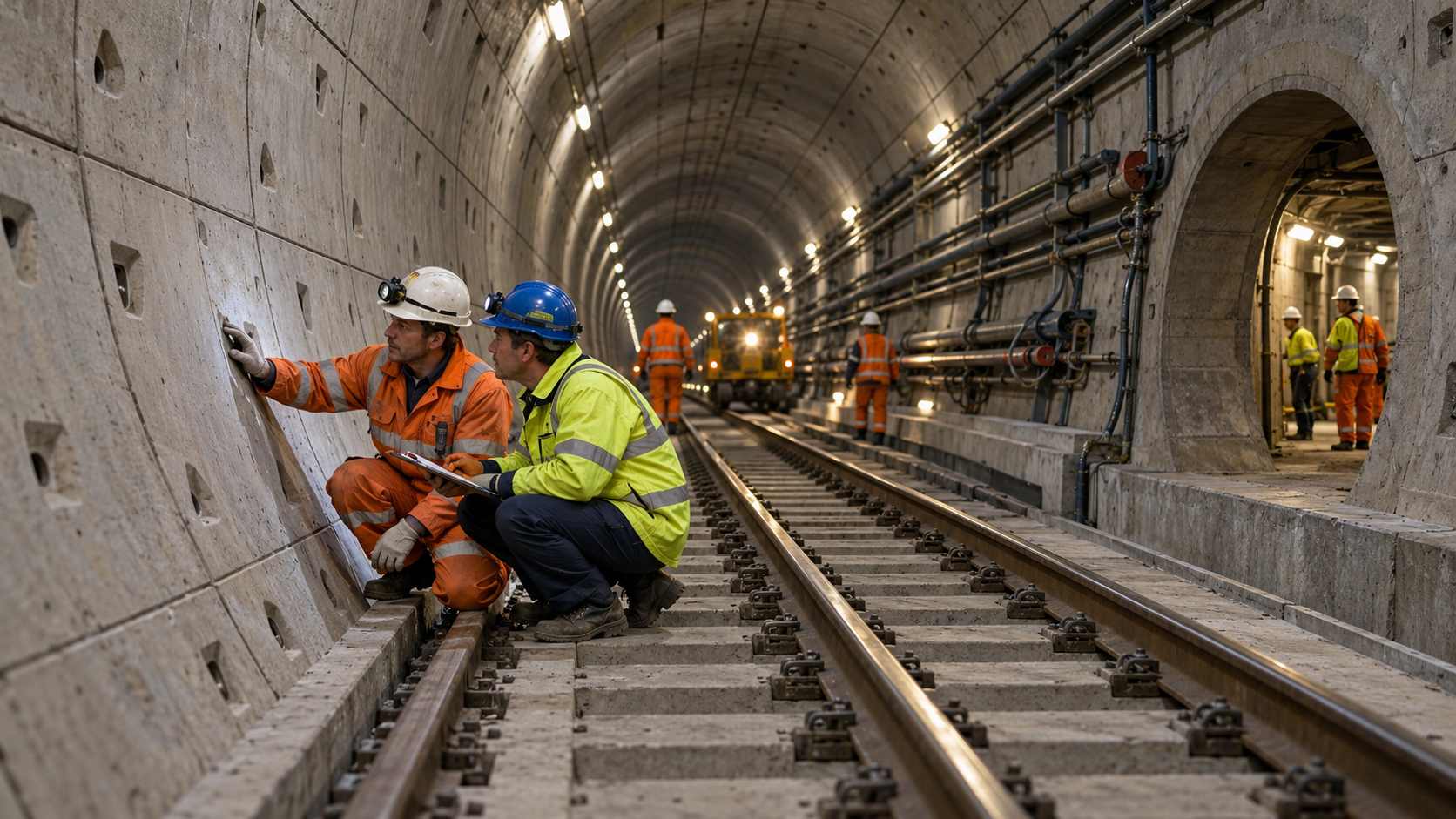
The system consists of two full-size rail tunnels and a smaller central service tunnel connected by cross-passages. Eleven tunnel-boring machines worked through chalk marl beneath the seabed from both coasts. Engineers relied on detailed geological surveys, precise underground alignment, segmental linings, drainage, ventilation, electrical systems, and safety zones designed so maintenance and evacuation could occur without closing the entire link.
British and French crews broke through the service tunnel in 1990, but finishing the railway, terminals, controls, rolling stock, and safety approvals took several more years. The royal opening was ceremonial; freight, vehicle-shuttle, and Eurostar passenger services began in stages later in 1994. That distinction separates construction completion from the operational testing required for regular traffic.
The tunnel changed travel and freight between Britain and continental Europe while remaining a case study in megaproject finance and risk. Its science story lies in applied geology, surveying, pressure management, fire engineering, and the coordination needed to make three long tunnels behave as one safe system. Seen across a longer timeline, scientific milestones are junctions rather than isolated beginnings. Earlier experiments, tools, and institutions made the work possible, while later teams tested limits and carried the result into new settings. What survives is a traceable chain of evidence, correction, and application that allows one moment to remain relevant as knowledge and technology continue to change. The anniversary highlights the difference between a first result and a finished understanding. A successful observation can settle one question while opening several harder ones, and even a failed objective can reshape later designs. Preserved data, specimens, photographs, and hardware allow new generations to revisit the work with better tools. Science advances through that continuity rather than stopping on a memorable date. Its calendar date is an entry point, not an endpoint. The people involved worked with the instruments, assumptions, and social conditions of their time, and later research has both extended and corrected their conclusions. Separating what was known that day from what became clear afterward protects the history from myth and shows how cumulative evidence turns an episode into lasting scientific knowledge. For science history, the event also shows how evidence moves from an observation or engineered test into a durable body of knowledge. Instruments supplied measurements, specialists debated interpretation, and later work refined what the first result could mean. Archives preserve the early record while new methods let researchers ask different questions of it. That continuing revision is the process through which a dated milestone remains scientifically useful.
Two rail bores carry traffic while a central service tunnel supports access and emergencies.
Cross-passages and pressure-relief ducts connect the system at regular intervals.
Engineers selected a relatively impermeable and workable geological layer beneath the seabed.
Surveying from opposite coasts had to bring the boring machines together with high precision.
The May ceremony marked formal completion of the fixed link.
Freight, vehicle, and high-speed passenger services entered operation on later dates.
Explore more of "On This Day ..."
Discover more events from the same date across news, politics, technology, sports, and other fields. Each link highlights significant moments that shaped history on different fronts.