

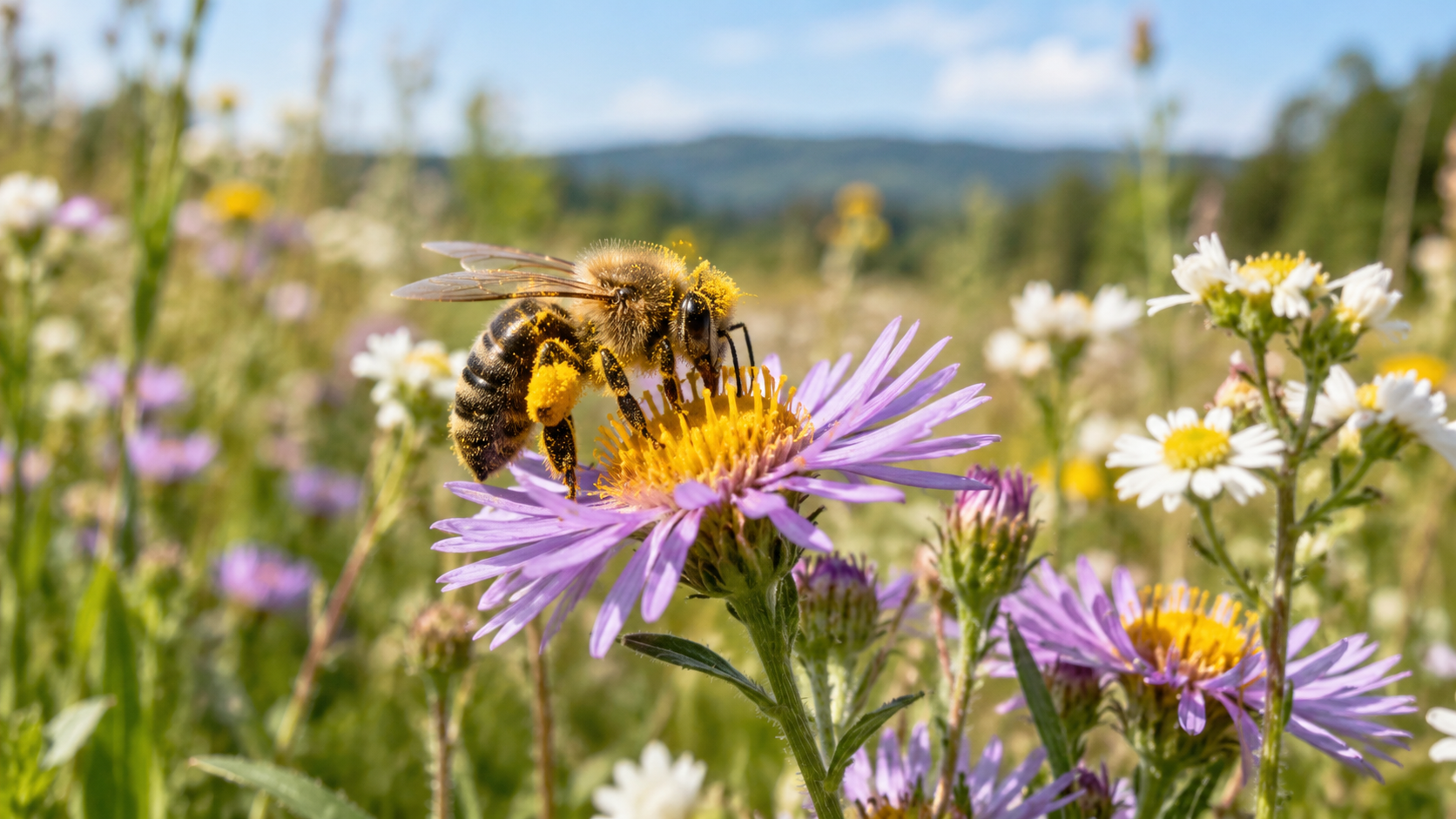
How Pollination Connects Plants and Animals Explainer
Pollination is the transfer of pollen from the anther, where it is produced, to a receptive stigma of the same species. A compatible pollen grain can germinate and grow a tube toward an ovule, allowing sperm cells to reach the egg. Fertilization then begins seed development, and surrounding flower tissue may form fruit. Pollination is therefore a transport step that comes before fertilization, not the same event.
Some plants use wind or water, but many rely on animals. Bees, flies, beetles, butterflies, moths, birds, bats, and other visitors contact pollen while seeking nectar, pollen, oils, scents, or shelter. Grains adhere to hair, feathers, scales, or body surfaces and may be deposited on another flower. The animal often does not intentionally pollinate; the plant benefits from ordinary foraging behavior.
Flowers influence which visitors arrive. Color, ultraviolet patterns, fragrance, shape, temperature, and opening time can guide particular animals. Tubular flowers may fit long tongues or beaks, while broad blossoms provide landing platforms. These relationships are not perfectly exclusive: many plants use several pollinator species, and many animals visit many plants. Networks of interactions make ecosystems more resilient but also complex.
Plants reduce wasted self-pollination in several ways. Male and female structures may mature at different times, sit in positions that contact different parts of a visitor, or occur on separate plants. Chemical recognition can reject pollen from the same individual or close relatives. Other species can self-fertilize when partners or pollinators are scarce, trading genetic variety for reproductive assurance.
Animals gain energy or nutrients, while plants gain movement of genetic material. The relationship shapes food webs because seeds and fruits feed wildlife, plant reproduction maintains habitat, and pollinator larvae may rely on other resources. Crop pollination is valuable, but wild plants and non-bee pollinators are equally important to ecosystem function. Habitat loss, pesticides, disease, and climate shifts can disrupt matching seasons and routes.
Successful pollination depends on more than counting flower visits. Researchers measure whether visitors carry compatible pollen, contact the stigma, and increase seed or fruit production. Conservation therefore protects nesting sites, host plants, diverse flowering periods, and pesticide-safe forage. Pollination connects plant sex, animal movement, seasonal timing, and landscape structure in one ecological process.
Pollination transfers pollen to a compatible stigma; fertilization occurs later after pollen-tube growth.
Animals move pollen incidentally while collecting nectar, pollen, oils, scents, or shelter.
Flower color, scent, shape, timing, and ultraviolet patterns influence which visitors arrive.
Self-incompatibility and separated timing or anatomy can promote cross-pollination.
Pollinator networks support wild plants, crops, habitat, and food webs across landscapes.
Effective conservation protects nesting, forage, host plants, seasonal continuity, and safe habitat.
Explore more "Explainers"
Discover additional explainers across politics, science, business, technology, and other fields. Each explainer breaks down a complex idea into clear, everyday language—helping you better understand how major concepts, systems, and debates shape the world around us.