

How the Carbon Cycle Moves Carbon Explainer
The carbon cycle is the movement of carbon among major reservoirs: the atmosphere, organisms, soil, ocean, sediment, rock, and fossil material. Carbon changes chemical form as it moves. Atmospheric carbon dioxide can become plant tissue, dissolved bicarbonate, carbonate rock, or organic matter. The cycle contains fast biological exchanges measured in days to centuries and slow geological exchanges that operate over thousands to millions of years.
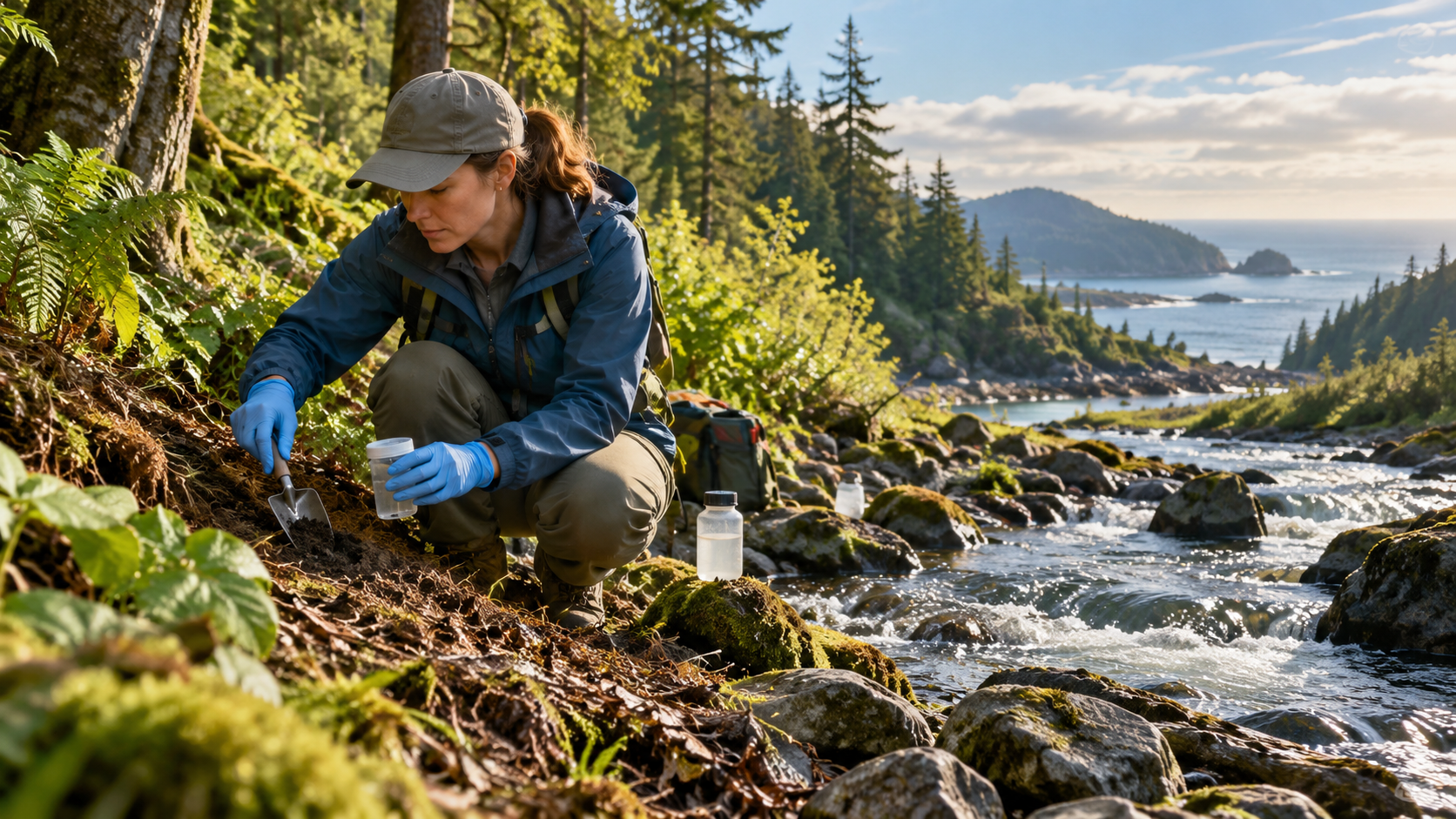
Photosynthesis removes carbon dioxide from air or water and builds energy-rich organic molecules. Plants, algae, and some microbes use that carbon to grow. Respiration by organisms returns carbon dioxide as cells release usable energy from food. Decomposition moves carbon through soils and sediments, where oxygen, moisture, temperature, and microbial communities determine how quickly it returns to the atmosphere or remains stored.
The ocean continuously exchanges carbon dioxide with the air. Dissolved carbon participates in reactions that form carbonic acid, bicarbonate, and carbonate. Phytoplankton incorporate some into organic matter, and marine organisms use carbonate to build shells or skeletons. Sinking particles carry carbon downward, while circulation and upwelling can return deep carbon to the surface and atmosphere.
Over longer periods, weathering of rock consumes atmospheric carbon dioxide through chemical reactions and carries dissolved products to the ocean. Burial can lock carbon in sediments and carbonate rocks. Tectonic processes and volcanoes eventually return some carbon to the atmosphere. This slow cycle helps regulate climate over geological time, but it cannot quickly offset a large modern pulse.
Burning coal, oil, and natural gas moves carbon from long-isolated geological stores into the atmosphere. Cement production, deforestation, and soil disturbance also add carbon dioxide or reduce uptake. Land and ocean sinks absorb part of the added carbon, but not all of it. The resulting rise in atmospheric carbon dioxide warms climate and increases ocean acidity.
Scientists track the cycle with atmospheric measurements, ocean chemistry, ecosystem towers, satellites, inventories, and carbon isotopes. A reservoir can gain carbon in one season and lose it in another, so long records matter. The cycle is not a closed conveyor belt with equal flows at every moment; it is a changing network whose balance determines how much carbon accumulates in the atmosphere.
Carbon moves among air, water, organisms, soils, sediments, rocks, and fuels in many chemical forms.
Photosynthesis stores carbon in biomass; respiration and decomposition return much of it.
Ocean chemistry, biology, sinking particles, and circulation exchange carbon across depths.
Weathering, burial, tectonics, and volcanism make up the much slower geological cycle.
Fossil-fuel use and land change transfer extra carbon to the atmosphere faster than slow sinks remove it.
Measurements and isotopes reveal changing sources, sinks, reservoir sizes, and seasonal exchanges.
Explore more "Explainers"
Discover additional explainers across politics, science, business, technology, and other fields. Each explainer breaks down a complex idea into clear, everyday language—helping you better understand how major concepts, systems, and debates shape the world around us.