

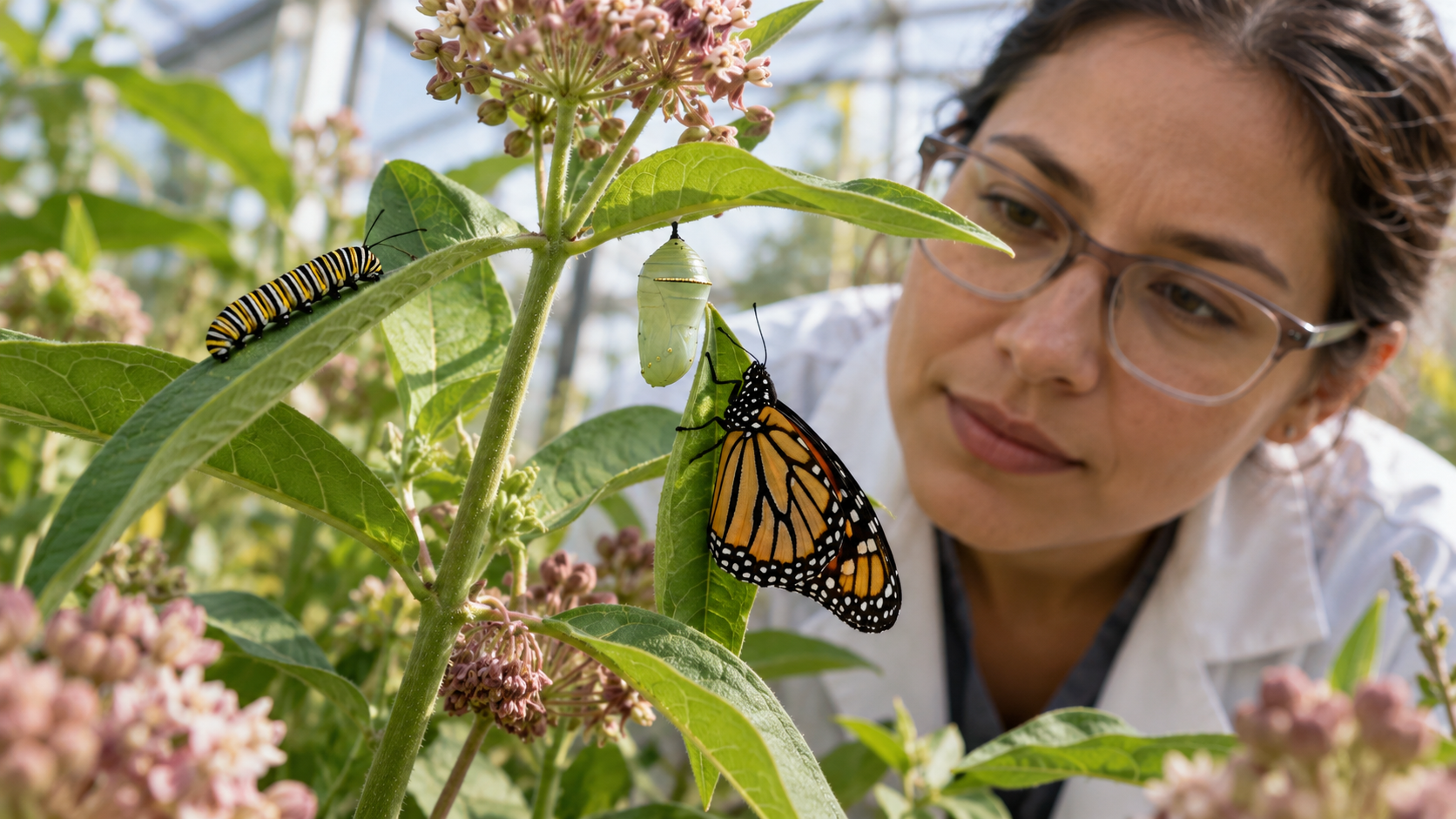
How Insects Transform During Metamorphosis Explainer
Insects grow inside an external skeleton that cannot expand indefinitely, so they molt. Hormones coordinate each molt and the type of body that appears next. In incomplete metamorphosis, an egg hatches into a nymph that resembles a smaller wingless adult and changes gradually through successive instars. In complete metamorphosis, egg, larva, pupa, and adult are distinct stages with different forms and often different jobs.
Ecdysteroid hormones trigger the molting process, while juvenile hormone helps determine the outcome. When juvenile hormone remains high, a growing immature insect usually molts into another immature stage. When it falls, development can shift toward a pupa or adult, depending on the insect group. Environmental cues and nutrition interact with this internal timing system.
Larvae of butterflies, beetles, flies, and many other insects specialize in feeding and growth. They repeatedly shed the old cuticle, expand before the new one hardens, and store resources. Adult structures may begin from groups of precursor cells or tissues that grow during larval life. The larva is not simply a tiny adult hidden inside; development reorganizes the body extensively.
During the pupal stage, many larval tissues are remodeled or broken down while adult muscles, wings, sensory organs, reproductive systems, and other structures develop. The process is controlled, not a complete dissolution into unstructured liquid. Cells die, migrate, divide, and change identity within an organized pupa supplied by stored nutrients and functioning tissues.
At adult emergence, or eclosion, the insect splits the pupal covering, expands folded wings with body fluid, and allows the new cuticle to harden. Adults commonly specialize in dispersal and reproduction, although they may also feed. Separating larval and adult diets can reduce competition within a species and lets each stage exploit a different ecological niche.
Temperature, day length, food, parasites, and hormones affect developmental speed and survival. Some insects pause development in diapause to endure an unfavorable season. Metamorphosis is therefore not one butterfly-specific trick; it is a set of evolved developmental strategies that link growth, seasonal timing, anatomy, behavior, and ecology across the most diverse animal group on Earth.
Because the exoskeleton cannot grow continuously, insects develop through repeated molts.
Ecdysteroids initiate molting while juvenile hormone influences whether the next stage stays immature or becomes adult.
Incomplete metamorphosis produces nymphs; complete metamorphosis separates larval, pupal, and adult forms.
Pupae remodel tissues in a controlled process rather than dissolving into an unstructured mass.
Eclosion expands and hardens the adult body, often shifting the insect toward dispersal and reproduction.
Nutrition, temperature, season, parasites, and diapause influence the timing and success of transformation.
Explore more "Explainers"
Discover additional explainers across politics, science, business, technology, and other fields. Each explainer breaks down a complex idea into clear, everyday language—helping you better understand how major concepts, systems, and debates shape the world around us.