

On This Day in Science: June 18, 2009
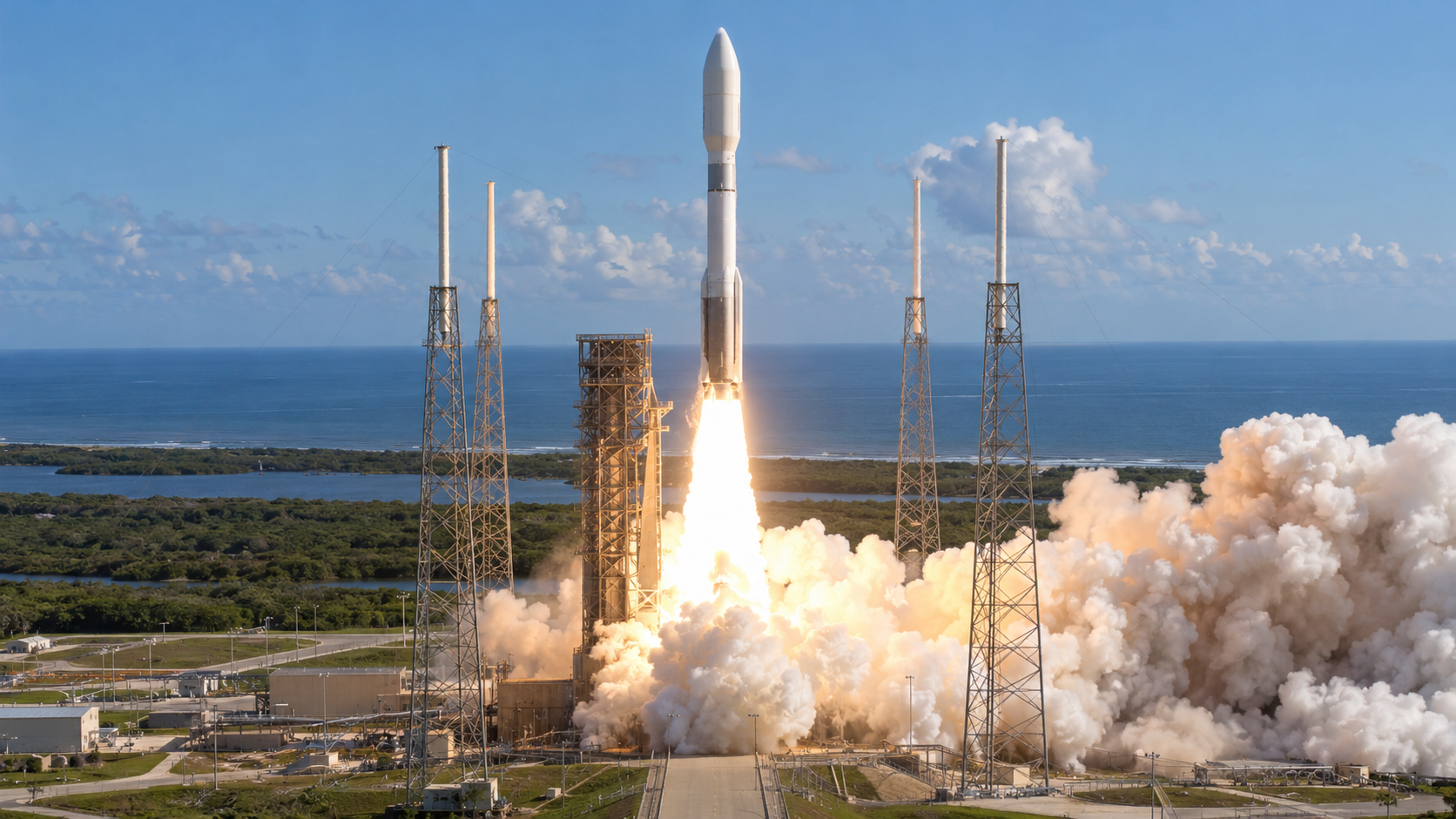
On June 18, 2009, an Atlas V rocket launched NASA’s Lunar Reconnaissance Orbiter and the LCROSS impact mission from Cape Canaveral. LRO entered a polar lunar orbit and began building a detailed record of terrain, temperature, radiation, and surface composition. The mission was intended to support renewed exploration while also addressing fundamental planetary science.
A suite of seven instruments included narrow- and wide-angle cameras, a laser altimeter, a thermal radiometer, a neutron detector, an ultraviolet mapper, a radiation telescope, and a radar technology experiment. Because a polar orbit passes over different longitude on each circuit as the Moon rotates below, LRO could gradually survey nearly the entire surface.
The spacecraft mapped landing hazards, measured permanently shadowed regions, studied polar cold traps, and photographed past exploration sites. Its laser profiles produced precise topography, while repeated imaging revealed new impact craters and surface changes. Temperature and neutron data helped identify environments where water ice could persist.
LRO outlived its original exploration-planning phase and became a long-term lunar observatory. The launch began a data set that lets scientists compare places and years at consistent resolution, linking the practical needs of landing with broader questions about impacts, volatiles, and the Moon’s history. Seen across a longer timeline, scientific milestones are junctions rather than isolated beginnings. Earlier experiments, tools, and institutions made the work possible, while later teams tested limits and carried the result into new settings. What survives is a traceable chain of evidence, correction, and application that allows one moment to remain relevant as knowledge and technology continue to change. The anniversary highlights the difference between a first result and a finished understanding. A successful observation can settle one question while opening several harder ones, and even a failed objective can reshape later designs. Preserved data, specimens, photographs, and hardware allow new generations to revisit the work with better tools. Science advances through that continuity rather than stopping on a memorable date. Its calendar date is an entry point, not an endpoint. The people involved worked with the instruments, assumptions, and social conditions of their time, and later research has both extended and corrected their conclusions. Separating what was known that day from what became clear afterward protects the history from myth and shows how cumulative evidence turns an episode into lasting scientific knowledge. For science history, the event also shows how evidence moves from an observation or engineered test into a durable body of knowledge. Instruments supplied measurements, specialists debated interpretation, and later work refined what the first result could mean. Archives preserve the early record while new methods let researchers ask different questions of it. That continuing revision is the process through which a dated milestone remains scientifically useful.
Cameras, laser ranging, temperature mapping, radiation sensing, and spectroscopy provide complementary measurements.
No single instrument can describe both the shape and physical environment of the lunar surface.
Each circuit crosses near both poles while lunar rotation shifts the ground track.
Over time the pattern produces repeated global coverage and close views of shadowed terrain.
Hazard maps and illumination studies support landing decisions.
The same observations reveal cratering rates, polar volatiles, and geological change.
Explore more of "On This Day ..."
Discover more events from the same date across news, politics, technology, sports, and other fields. Each link highlights significant moments that shaped history on different fronts.