

On This Day in Science: June 20, 1840
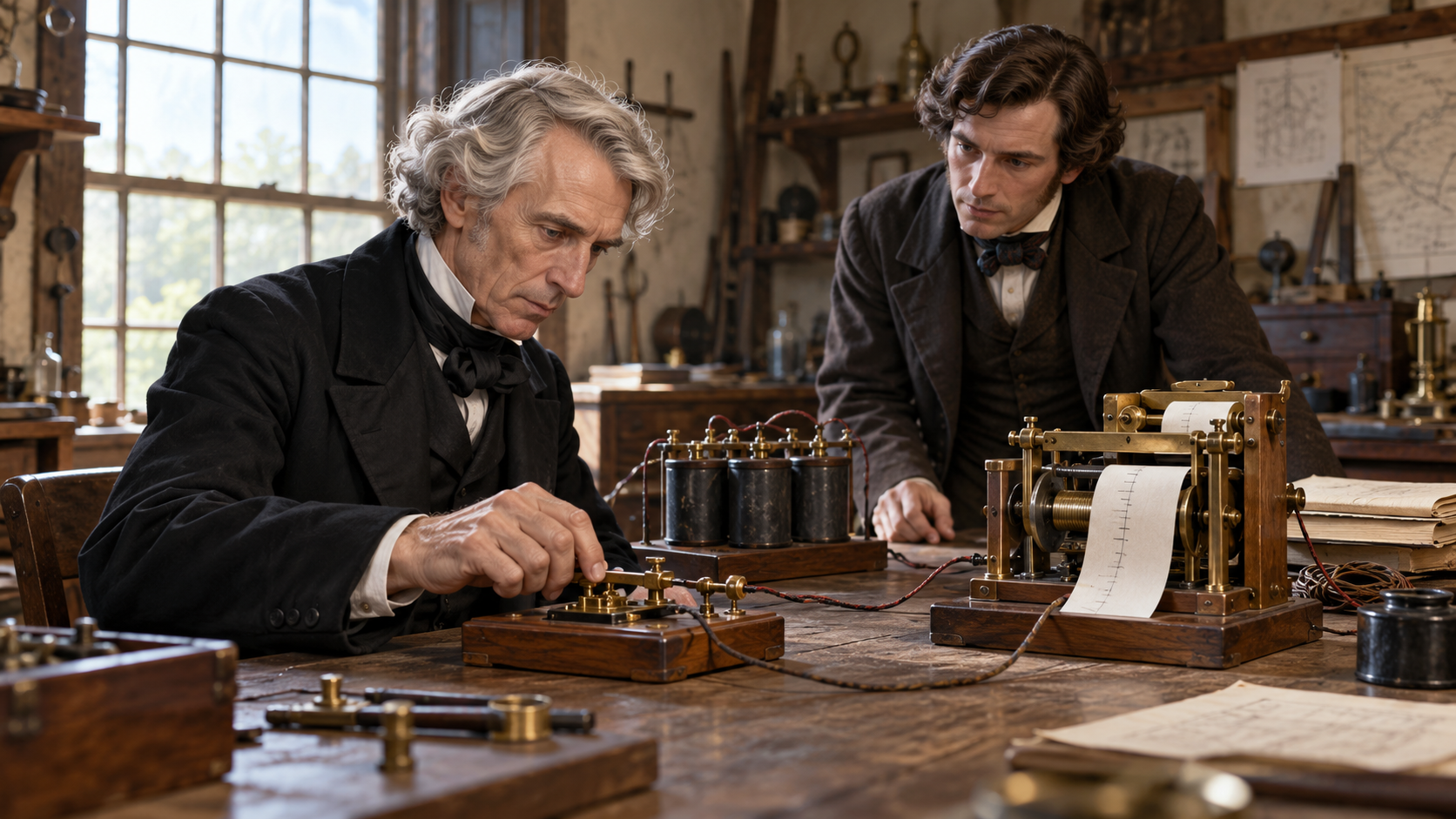
On June 20, 1840, Samuel F. B. Morse received a United States patent for an electromagnetic telegraph system. The apparatus used electrical pulses sent along a wire to control an electromagnet at a distant receiver. Morse worked with Alfred Vail, Leonard Gale, and other collaborators to improve the instruments, circuit, and signaling method that made the system practical.
The patent described transmitting signs by combinations of electrical interruptions and recording them as marks. Early receivers embossed or inked a moving paper strip, although skilled operators later recognized patterns by sound. The familiar code evolved through experimentation and collaboration rather than arriving as a fixed alphabet in one moment.
A patent did not create a functioning network. Morse still needed public support, reliable wire, insulation, relays, trained operators, rights of way, and stations. In 1843 Congress funded an experimental line between Washington and Baltimore, and its successful 1844 demonstration showed how messages could move faster than any train or rider.
Telegraphy separated communication speed from transportation speed and reorganized news, railroads, markets, diplomacy, and daily timekeeping. The June patent marks a legal and technical milestone within a wider international field of electrical communication, not the invention of telegraphy by one person alone. Its calendar date is an entry point, not an endpoint. The people involved worked with the instruments, assumptions, and social conditions of their time, and later research has both extended and corrected their conclusions. Separating what was known that day from what became clear afterward protects the history from myth and shows how cumulative evidence turns an episode into lasting scientific knowledge. For science history, the event also shows how evidence moves from an observation or engineered test into a durable body of knowledge. Instruments supplied measurements, specialists debated interpretation, and later work refined what the first result could mean. Archives preserve the early record while new methods let researchers ask different questions of it. That continuing revision is the process through which a dated milestone remains scientifically useful. Seen across a longer timeline, scientific milestones are junctions rather than isolated beginnings. Earlier experiments, tools, and institutions made the work possible, while later teams tested limits and carried the result into new settings. What survives is a traceable chain of evidence, correction, and application that allows one moment to remain relevant as knowledge and technology continue to change. The anniversary highlights the difference between a first result and a finished understanding. A successful observation can settle one question while opening several harder ones, and even a failed objective can reshape later designs. Preserved data, specimens, photographs, and hardware allow new generations to revisit the work with better tools. Science advances through that continuity rather than stopping on a memorable date.
A key opened and closed an electrical circuit connected to a distant electromagnet.
The receiver converted timed pulses into visible marks or recognizable sounds.
Short and long signal patterns represented letters and numbers.
Morse, Vail, operators, and later international standards all shaped the code used in practice.
Working telegraphy required wires, insulation, relays, stations, capital, and trained people.
Infrastructure turned a laboratory system into a communications industry.
Explore more of "On This Day ..."
Discover more events from the same date across news, politics, technology, sports, and other fields. Each link highlights significant moments that shaped history on different fronts.