

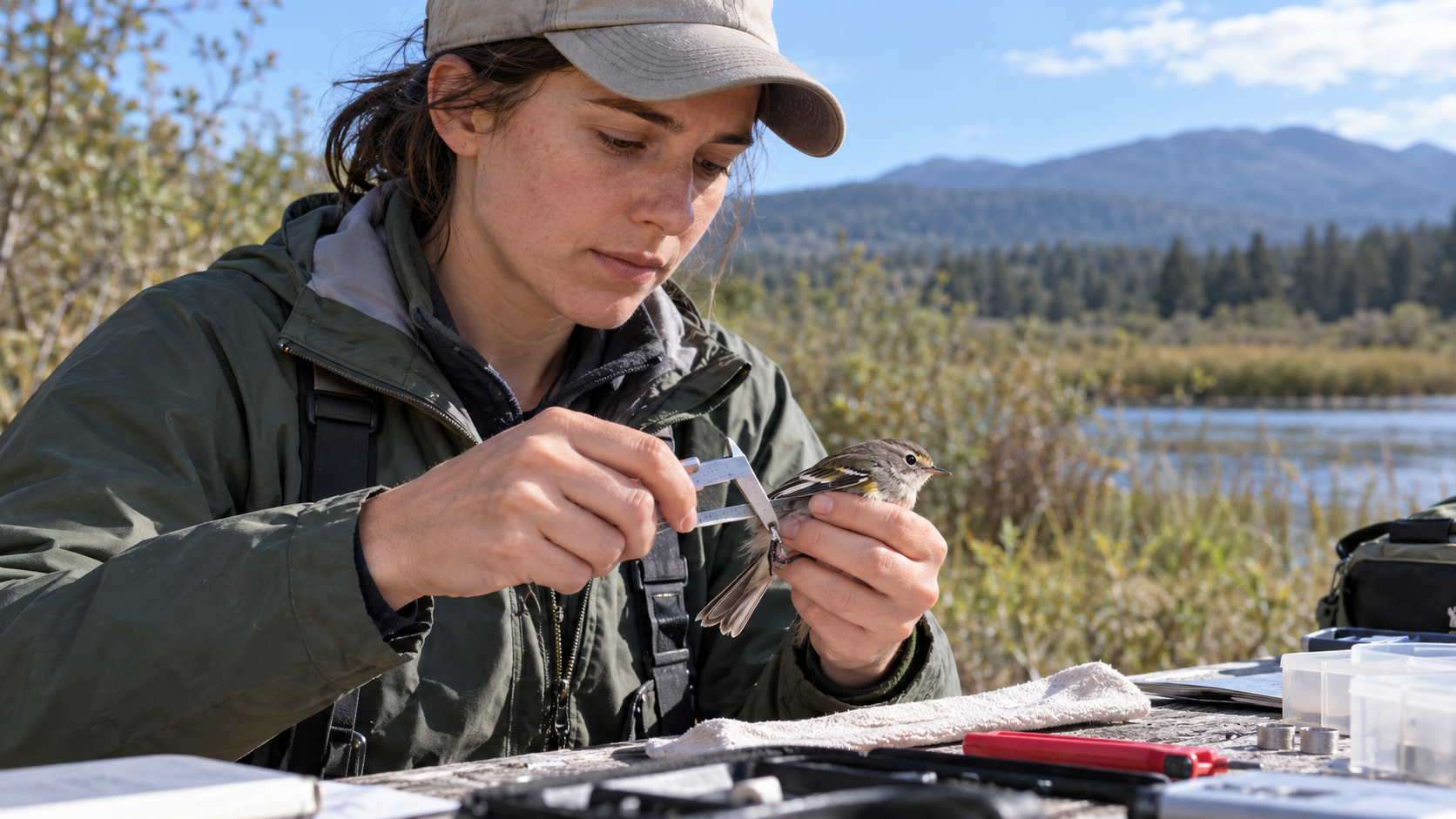
How Natural Selection Changes Populations Explainer
Natural selection occurs when individuals in a population differ, some of those differences are heritable, and the differences influence reproductive success. Individuals do not evolve during their lifetimes in response to need. Instead, variants associated with more surviving offspring become more common across generations. The environment determines which differences matter, so fitness is always relative to a particular place, time, and set of competitors.
Variation arises through mutation, genetic recombination, and movement of genes among populations. Selection acts on phenotypes—the observable traits produced by genes interacting with environment—but evolutionary change is tracked in inherited variants. A larger body, earlier flowering time, or drug-resistance mutation may be favored under one condition and costly under another. Existing variation gives selection material to sort.
Selection can take several forms. Directional selection shifts a trait distribution toward one extreme, stabilizing selection favors an intermediate range, and disruptive selection favors different extremes. Sexual selection reflects differences in mating success. Frequency-dependent selection changes as a trait becomes common or rare. These categories describe patterns, while the underlying causes may include predation, climate, disease, resources, or mate choice.
Adaptations are traits shaped by past selection because they improved reproductive success in ancestral conditions. They are not necessarily perfect. Evolution works with available variation and inherited developmental structures, and every trait may involve tradeoffs. A feature useful for one function can carry a cost elsewhere, while rapidly changing environments can leave populations mismatched to conditions they have not previously encountered.
Selection is not the only evolutionary force. Mutation introduces variants, gene flow moves them, and genetic drift changes frequencies by chance, especially in small populations. These processes can reinforce or oppose selection. A trait may spread because it is linked to another selected variant, and a seemingly beneficial mutation may disappear by chance when rare.
Biologists test selection by measuring trait variation, inheritance, survival, mating, offspring, and changes across generations, often combining field data with experiments and genetic evidence. A story that sounds useful is not enough to prove adaptation. Natural selection matters because it links ecological differences in success to long-term biological change without planning, foresight, or a predetermined goal.
Selection requires heritable variation and consistent differences in survival or reproduction.
It changes populations across generations rather than transforming individuals because they need to adapt.
Fitness is relative to an environment and can change when conditions or competitors change.
Adaptations are constrained by history, available variation, development, and tradeoffs.
Mutation, gene flow, and genetic drift also change populations and can oppose selection.
Evidence requires measured inheritance and reproductive consequences, not a plausible just-so story.
Explore more "Explainers"
Discover additional explainers across politics, science, business, technology, and other fields. Each explainer breaks down a complex idea into clear, everyday language—helping you better understand how major concepts, systems, and debates shape the world around us.