

On This Day in Science: July 11, 1979
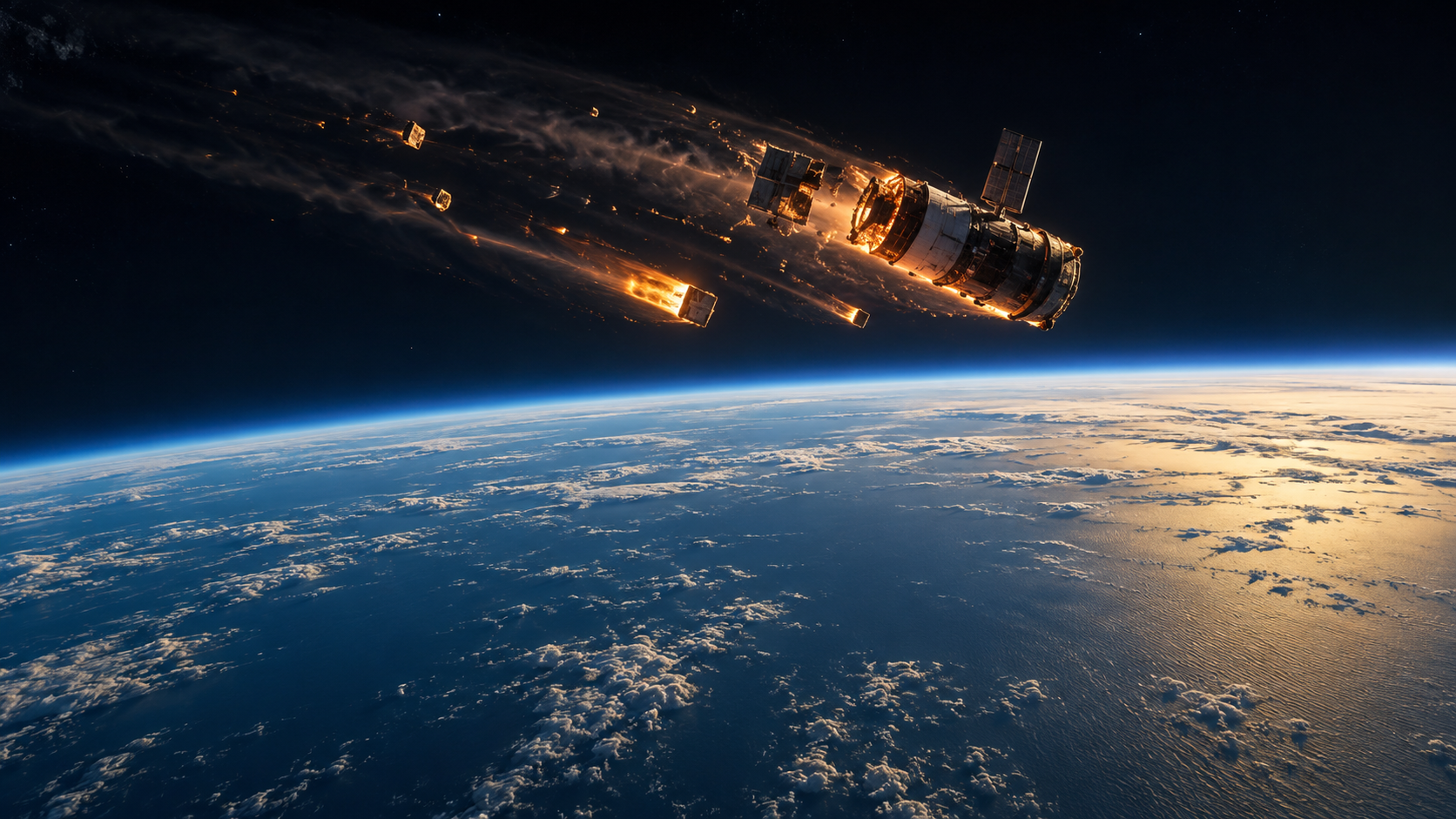
On July 11, 1979, Skylab, the United States’ first space station, reentered Earth’s atmosphere after more than six years in orbit. Atmospheric drag had gradually lowered the uncrewed station, and unexpectedly strong solar activity increased the upper atmosphere’s density. Controllers could influence its attitude but could not raise its orbit or fully determine the impact corridor.
Skylab had hosted three astronaut crews in 1973 and 1974. They repaired launch damage, observed the Sun with the Apollo Telescope Mount, studied Earth, and conducted biomedical and materials experiments during increasingly long missions. Plans to boost or revisit the station with the Space Shuttle were overtaken by shuttle development delays and the station’s faster-than-expected descent.
During reentry, Skylab broke apart over the Indian Ocean. Debris crossed the coast of Western Australia and was recovered near communities including Esperance and Balladonia; no one was injured. The event became a global media spectacle, but it also exposed how little control engineers had over the final path of a massive aging spacecraft.
Modern spacecraft planning places greater emphasis on controlled disposal, passivation, tracking, and casualty risk. Skylab’s fall remains a major case in space-debris policy because a successful research station became, at end of life, a large uncontrolled object whose remains reached inhabited land. The anniversary highlights the difference between a first result and a finished understanding. A successful observation can settle one question while opening several harder ones, and even a failed objective can reshape later designs. Preserved data, specimens, photographs, and hardware allow new generations to revisit the work with better tools. Science advances through that continuity rather than stopping on a memorable date. Its calendar date is an entry point, not an endpoint. The people involved worked with the instruments, assumptions, and social conditions of their time, and later research has both extended and corrected their conclusions. Separating what was known that day from what became clear afterward protects the history from myth and shows how cumulative evidence turns an episode into lasting scientific knowledge. For science history, the event also shows how evidence moves from an observation or engineered test into a durable body of knowledge. Instruments supplied measurements, specialists debated interpretation, and later work refined what the first result could mean. Archives preserve the early record while new methods let researchers ask different questions of it. That continuing revision is the process through which a dated milestone remains scientifically useful. Seen across a longer timeline, scientific milestones are junctions rather than isolated beginnings. Earlier experiments, tools, and institutions made the work possible, while later teams tested limits and carried the result into new settings. What survives is a traceable chain of evidence, correction, and application that allows one moment to remain relevant as knowledge and technology continue to change.
Solar activity heated and expanded the upper atmosphere.
Increased drag pulled Skylab down faster than early forecasts expected.
Controllers could change the station's attitude and slightly alter drag.
They had no propulsion system capable of directing a precise reentry.
Large spacecraft can leave debris that survives atmospheric breakup.
End-of-life planning now treats disposal as part of mission design.
Explore more of "On This Day ..."
Discover more events from the same date across news, politics, technology, sports, and other fields. Each link highlights significant moments that shaped history on different fronts.