

On This Day in Science: July 22, 1962
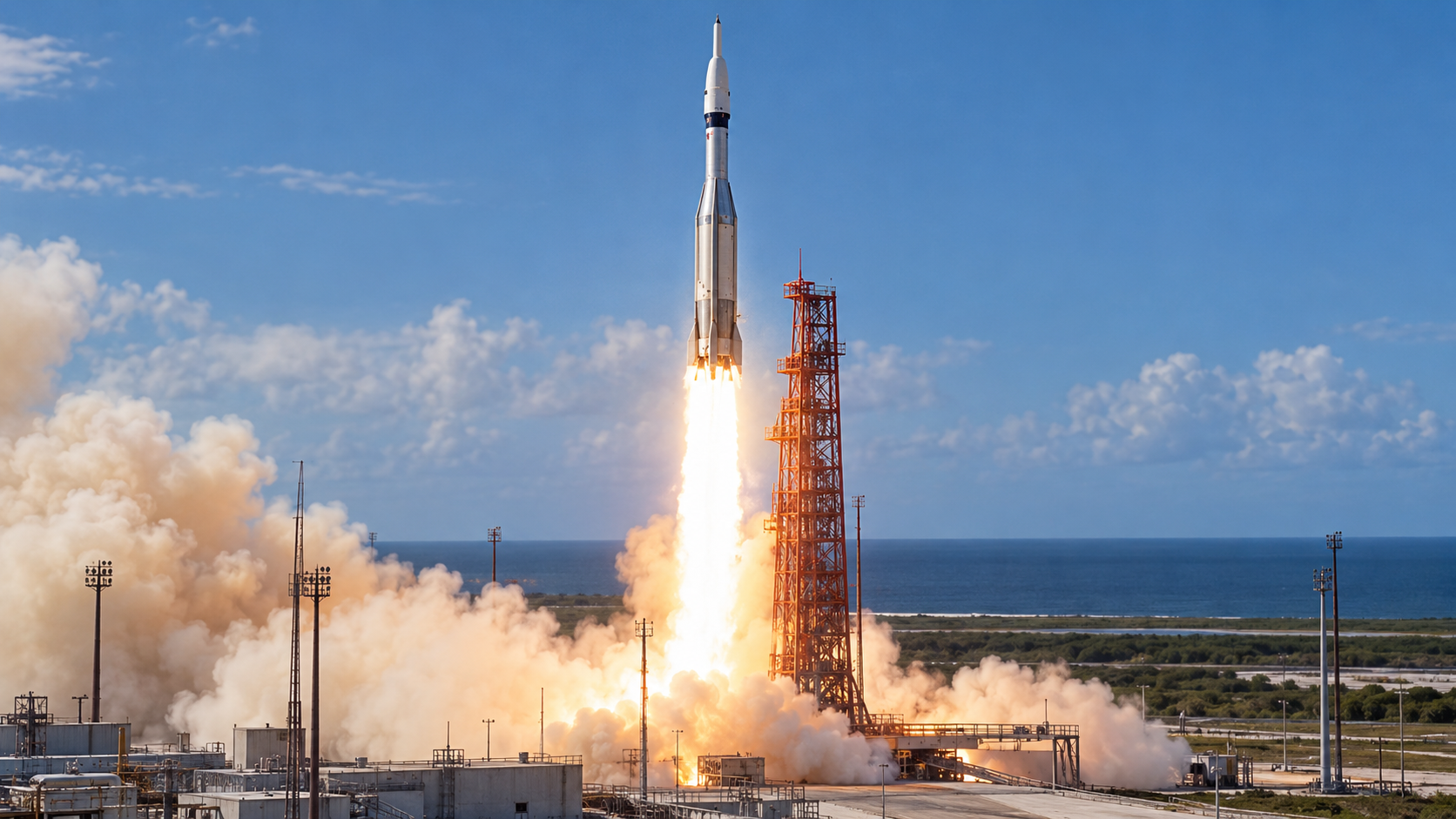
On July 22, 1962, NASA launched Mariner 1 from Cape Canaveral on the first American attempt to send a spacecraft to Venus. Soon after liftoff, its Atlas-Agena rocket began veering from the intended trajectory. A range safety officer transmitted the destruct command about five minutes into flight before the vehicle could threaten populated areas or shipping lanes.
The failure involved both guidance hardware and software. When an antenna problem interrupted reliable tracking data, the onboard system depended on a mathematical guidance expression whose implementation omitted a smoothing instruction. Noisy velocity estimates then produced unnecessary steering corrections that grew into dangerous motion.
The often-repeated description of a single missing hyphen oversimplifies the episode. The underlying issue concerned how a notation mark in the specification represented averaging and how that requirement was encoded. Hardware vulnerability, specification, software, testing, and system behavior interacted rather than one typographical symbol acting alone.
NASA launched the nearly identical Mariner 2 five weeks later, and it completed the first successful planetary flyby. Mariner 1 became an enduring engineering lesson: software can control physical safety, and tiny ambiguities matter most when redundancy, validation, and testing do not contain their effects. Seen across a longer timeline, scientific milestones are junctions rather than isolated beginnings. Earlier experiments, tools, and institutions made the work possible, while later teams tested limits and carried the result into new settings. What survives is a traceable chain of evidence, correction, and application that allows one moment to remain relevant as knowledge and technology continue to change. The anniversary highlights the difference between a first result and a finished understanding. A successful observation can settle one question while opening several harder ones, and even a failed objective can reshape later designs. Preserved data, specimens, photographs, and hardware allow new generations to revisit the work with better tools. Science advances through that continuity rather than stopping on a memorable date. Its calendar date is an entry point, not an endpoint. The people involved worked with the instruments, assumptions, and social conditions of their time, and later research has both extended and corrected their conclusions. Separating what was known that day from what became clear afterward protects the history from myth and shows how cumulative evidence turns an episode into lasting scientific knowledge. For science history, the event also shows how evidence moves from an observation or engineered test into a durable body of knowledge. Instruments supplied measurements, specialists debated interpretation, and later work refined what the first result could mean. Archives preserve the early record while new methods let researchers ask different questions of it. That continuing revision is the process through which a dated milestone remains scientifically useful.
The Atlas-Agena began making incorrect steering movements after launch.
Range safety destroyed it before the trajectory could create a public hazard.
A tracking failure shifted guidance to onboard calculations.
Missing smoothing logic allowed small measurement variations to drive large corrections.
The famous missing-hyphen story compresses a complicated specification failure.
The lesson concerns the complete system of requirements, code, hardware, and tests.
Explore more of "On This Day ..."
Discover more events from the same date across news, politics, technology, sports, and other fields. Each link highlights significant moments that shaped history on different fronts.