

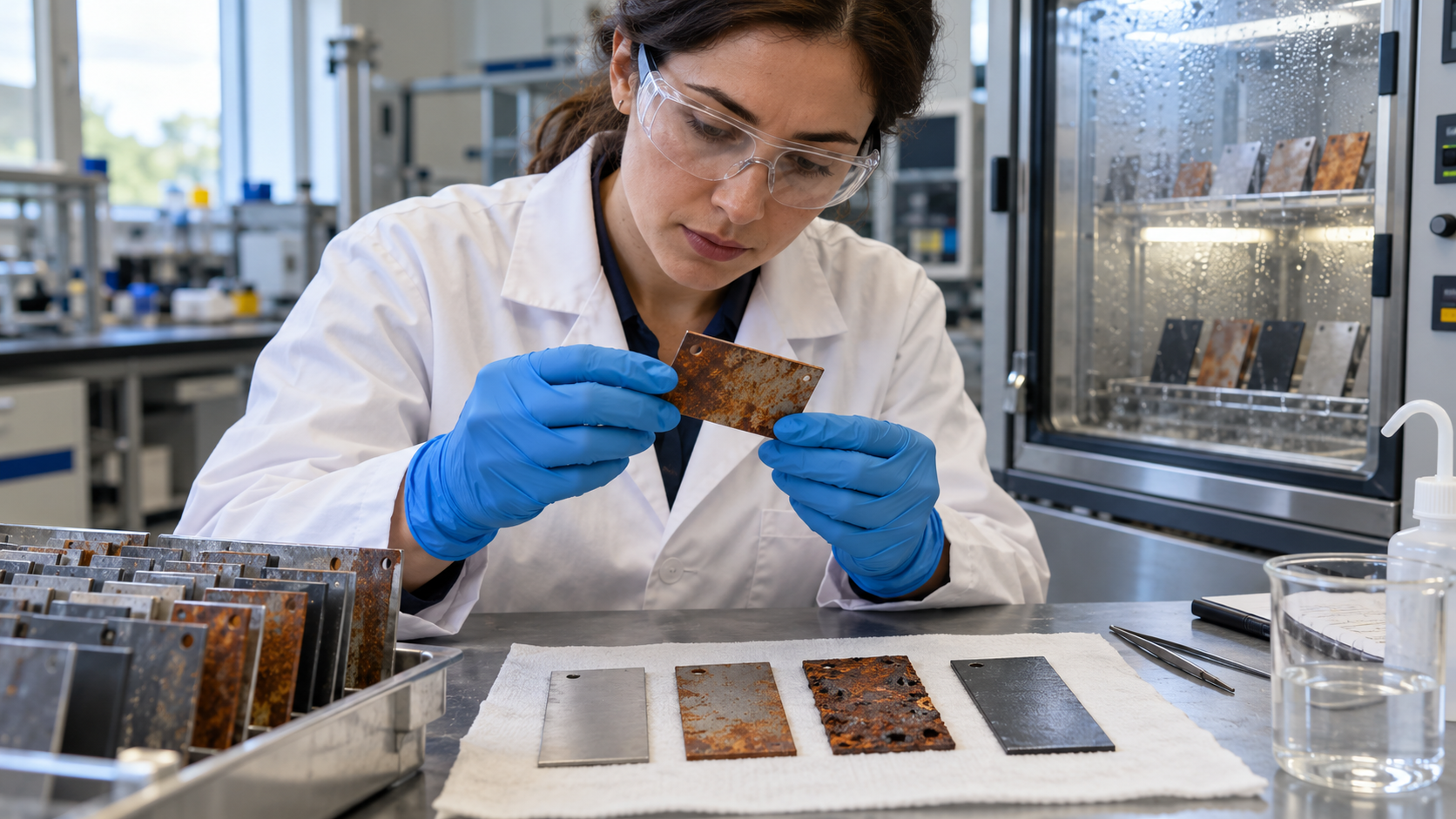
How Iron Rusts Explainer
Rust is a mixture of hydrated iron oxides and related compounds produced when iron or ordinary steel corrodes. The process is electrochemical rather than a single dry reaction. In the presence of a thin water layer, different regions of the metal surface act as tiny anodic and cathodic sites. Electrons move through the metal while ions move through the water, completing a corrosion cell.
At an anodic site, iron atoms lose electrons and enter the water as positively charged ions. Elsewhere, dissolved oxygen gains electrons, commonly producing hydroxide ions in neutral water. Iron ions and hydroxide react and undergo further oxidation and dehydration, forming porous rust products. Because ordinary rust does not seal the surface tightly, water and oxygen can continue reaching fresh metal below.
Surface scratches, differences in oxygen concentration, impurities, stress, and contact with another metal can separate anodic and cathodic regions. Salt speeds many corrosion processes because dissolved ions make the water a better electrical conductor. Chloride can also disrupt protective films and promote concentrated pitting. Warmth and repeated wet-dry cycles often accelerate reaction and movement of corrosion products.
Some metals resist corrosion by forming a thin, adherent passive oxide. Stainless steel uses chromium-rich passivation, while aluminum forms a compact oxide film. Iron rust is generally less protective. Alloy composition, microstructure, pH, oxygen, pollutants, and geometry determine whether attack is uniform, localized in pits, hidden in crevices, or intensified where dissimilar metals touch.
Protection strategies interrupt the electrochemical circuit or control the environment. Paint and plating separate metal from moisture and oxygen, but damage can expose small vulnerable areas. Galvanizing coats steel with zinc, which can corrode preferentially and protect nearby iron. Cathodic protection supplies electrons from a sacrificial anode or external current. Dry storage and salt removal reduce the electrolyte.
Rust color and thickness do not directly reveal how much structural strength remains. Corrosion may hide at joints or beneath coatings, and removing visible rust does not stop the cause if moisture returns. Understanding electron flow, ionic conduction, surface films, and geometry explains why rust appears patchy and why durable protection usually combines material choice, design, coatings, inspection, and environmental control.
Iron oxidizes at anodic sites, releasing electrons into the metal.
Dissolved oxygen is reduced at cathodic sites while ions move through surface water.
Porous hydrated iron oxides expose fresh metal and allow corrosion to continue.
Salt, crevices, oxygen differences, and dissimilar metals can concentrate attack.
Coatings, passivation, galvanizing, and cathodic protection interrupt different steps.
Visible rust is not a reliable measure of hidden section loss or remaining strength.
Explore more "Explainers"
Discover additional explainers across politics, science, business, technology, and other fields. Each explainer breaks down a complex idea into clear, everyday language—helping you better understand how major concepts, systems, and debates shape the world around us.