

On This Day in Science: August 4, 2007
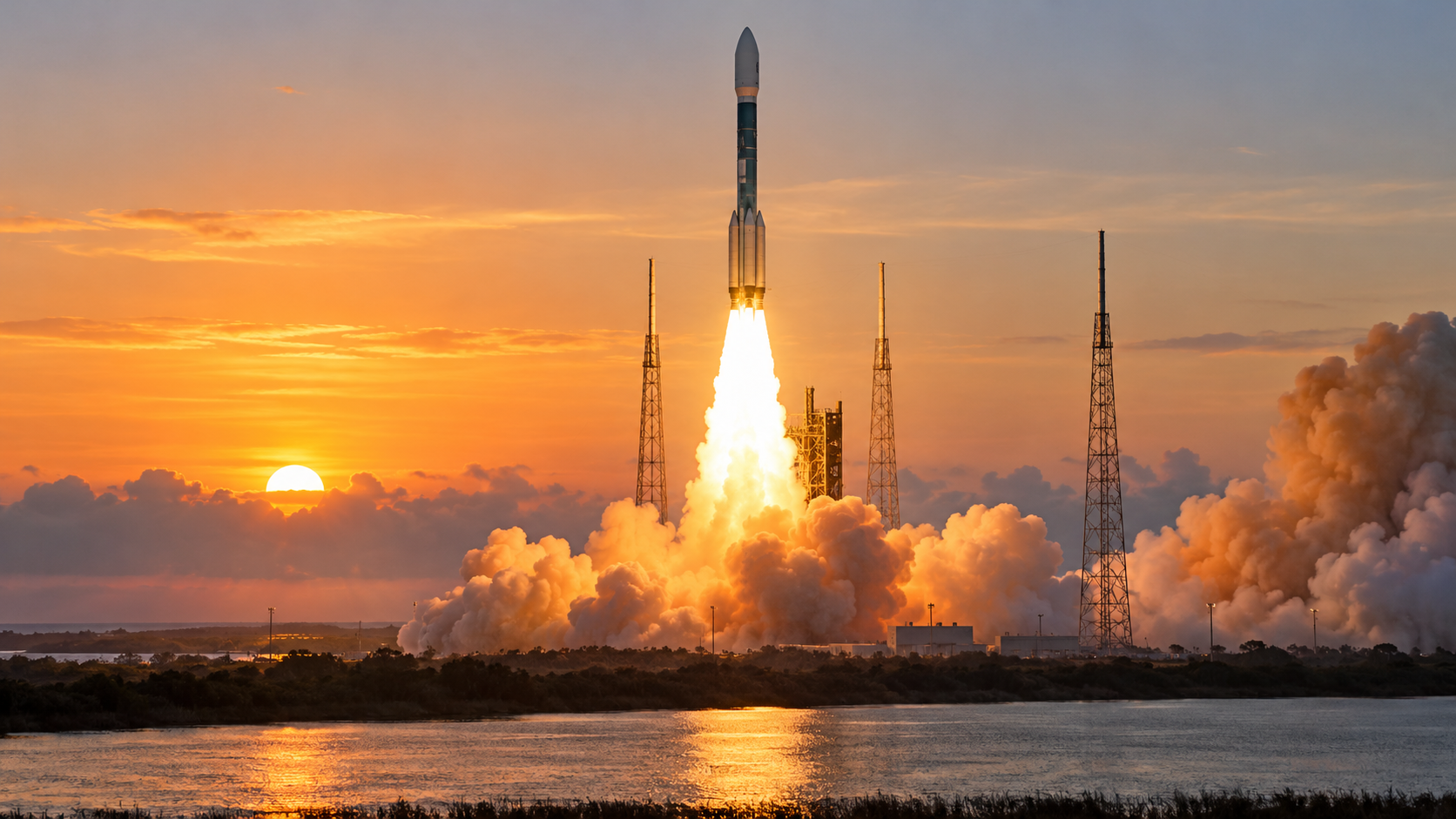
On August 4, 2007, NASA’s Phoenix lander launched from Cape Canaveral aboard a Delta II rocket. The stationary spacecraft was aimed at the northern plains of Mars, where orbital measurements indicated shallow water ice. Its mission combined hardware inherited from a canceled lander with instruments selected to study soil, ice, weather, and habitability.
Phoenix carried a robotic arm capable of digging trenches and delivering samples to onboard laboratories. Microscopes examined grains, an electrochemistry package tested soluble salts, and the Thermal and Evolved Gas Analyzer heated material to identify compounds. Cameras and a Canadian meteorological station documented clouds, temperature, pressure, and wind.
After a 295-day cruise, Phoenix landed safely in Vastitas Borealis on May 25, 2008. Its arm exposed bright material that disappeared by sublimation and confirmed water ice just below the surface. The lander also detected perchlorate salts, which affect both interpretations of Martian chemistry and planning for future exploration.
The launch started a focused investigation of a cold polar environment rather than a mobile traverse. Phoenix worked through the northern summer until declining sunlight and winter weather ended communications, showing how a stationary laboratory could connect orbital evidence to direct chemical measurements. Its calendar date is an entry point, not an endpoint. The people involved worked with the instruments, assumptions, and social conditions of their time, and later research has both extended and corrected their conclusions. Separating what was known that day from what became clear afterward protects the history from myth and shows how cumulative evidence turns an episode into lasting scientific knowledge. For science history, the event also shows how evidence moves from an observation or engineered test into a durable body of knowledge. Instruments supplied measurements, specialists debated interpretation, and later work refined what the first result could mean. Archives preserve the early record while new methods let researchers ask different questions of it. That continuing revision is the process through which a dated milestone remains scientifically useful. Seen across a longer timeline, scientific milestones are junctions rather than isolated beginnings. Earlier experiments, tools, and institutions made the work possible, while later teams tested limits and carried the result into new settings. What survives is a traceable chain of evidence, correction, and application that allows one moment to remain relevant as knowledge and technology continue to change. The anniversary highlights the difference between a first result and a finished understanding. A successful observation can settle one question while opening several harder ones, and even a failed objective can reshape later designs. Preserved data, specimens, photographs, and hardware allow new generations to revisit the work with better tools. Science advances through that continuity rather than stopping on a memorable date.
Orbital neutron data pointed to ice beneath the northern soil.
Phoenix targeted terrain where a robotic arm could reach that boundary.
The lander delivered soil and ice to several compact instruments.
It measured chemistry, grain structure, gases, and daily weather.
Freshly exposed bright material vanished as expected for sublimating ice.
Perchlorate became one of the mission’s most important chemical findings.
Explore more of "On This Day ..."
Discover more events from the same date across news, politics, technology, sports, and other fields. Each link highlights significant moments that shaped history on different fronts.