

How Plants Bend Toward Light Explainer
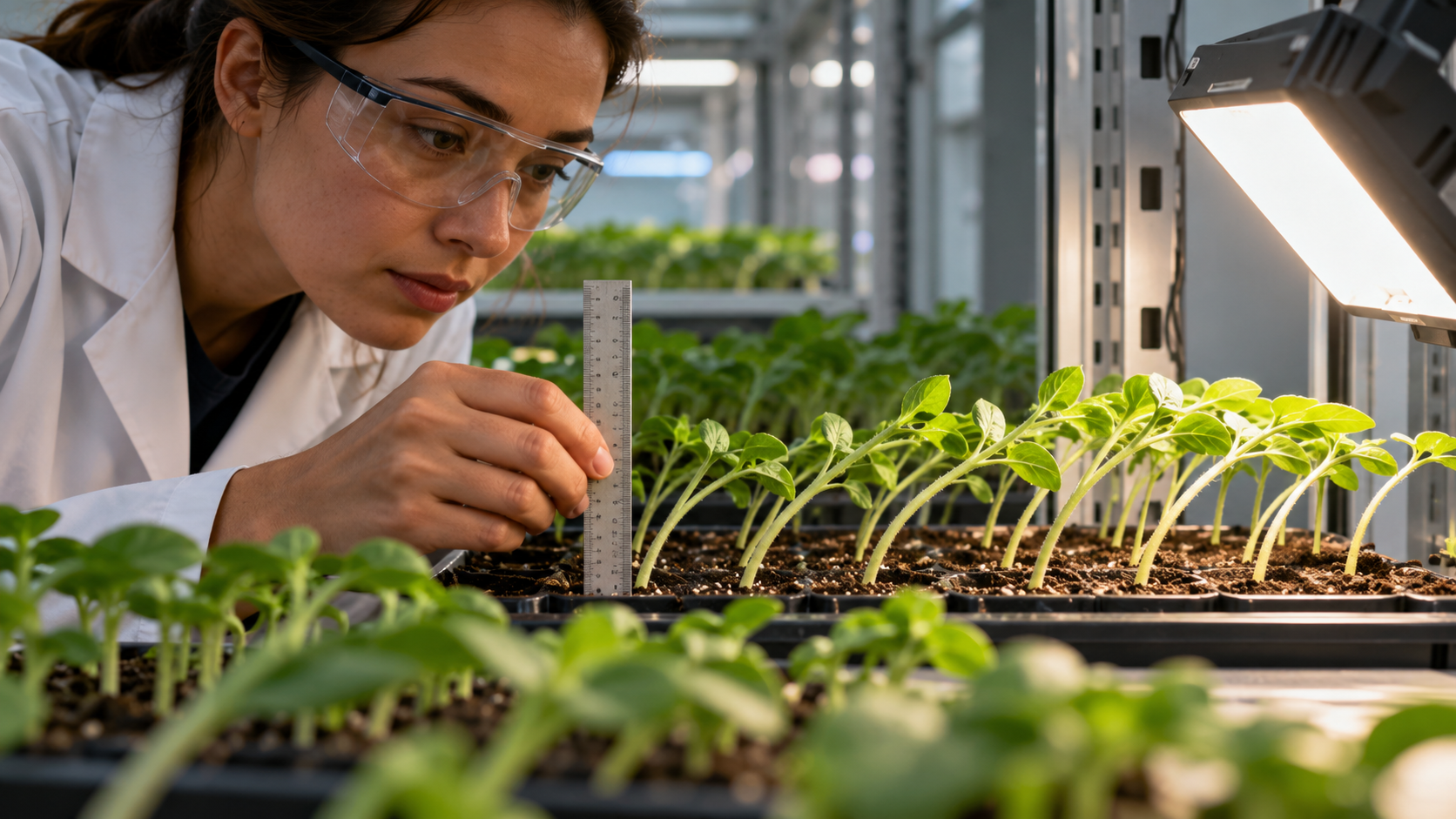
Many young shoots curve toward a one-sided light source, a response called positive phototropism. The plant is not consciously seeking light, and the illuminated side does not simply grow faster. Directional sensing creates an asymmetry in growth regulation, so cells on the shaded side elongate more and the shoot bends toward the source.
Blue-light receptors called phototropins are central to the response. They are activated more strongly on the illuminated side and trigger signaling that alters the position or activity of auxin-transport proteins. The shoot tip and nearby tissues help detect direction, while the bending itself occurs mainly in a lower zone where cells are still capable of substantial elongation.
Auxin moves across and down the shoot, producing a higher effective signal on the shaded side. In shoot cells, auxin promotes proton pumping into the cell wall. The lower wall pH activates proteins and processes that loosen the wall, and internal water pressure then helps the cell expand. Unequal elongation across the stem gradually creates curvature.
Gravity, touch, temperature, circadian timing, and the plant’s previous light exposure all interact with phototropism. Roots can respond differently because auxin concentration and tissue sensitivity differ. Mature woody stems also cannot bend by rapid elongation in the same way as young seedlings, though long-term growth can still change canopy orientation.
Classic experiments that covered or removed coleoptile tips showed that light direction is sensed separately from the growth zone. Modern genetics, fluorescent protein localization, and measurements of hormone transport identified receptors and carriers. Still, auxin is not a single roaming message with a fixed meaning; its effect depends on concentration, transport route, tissue, developmental stage, and other signals.
Phototropism can improve light capture when a seedling emerges under uneven illumination, but growth costs and competition matter. Leaves may also change angle to avoid excessive light or water loss. The response illustrates a general plant strategy: fixed in place, plants convert environmental gradients into local hormone distributions that reshape growth over hours and days.
A young shoot bends because the two sides elongate at different rates.
Phototropins detect directional blue light near the growing shoot tip.
Light-dependent signaling changes the distribution and transport of auxin.
Auxin promotes wall loosening and greater elongation on the shaded side.
Gravity, tissue age, and hormone sensitivity modify the visible response.
Phototropism converts an environmental gradient into patterned plant growth.
Explore more "Explainers"
Discover additional explainers across politics, science, business, technology, and other fields. Each explainer breaks down a complex idea into clear, everyday language—helping you better understand how major concepts, systems, and debates shape the world around us.