

How Bacteria Form Biofilms Explainer
A biofilm is a community of microorganisms attached to a surface or one another and embedded in material they produce. Biofilms form on rocks, plant roots, pipes, medical devices, and living tissues. They are not simply piles of identical dormant cells; they contain spatial structure, flowing fluid, chemical gradients, and subpopulations with different activities.
Formation often begins with reversible contact. Cell appendages, surface chemistry, flow, and conditioning films influence whether attachment persists. Cells then strengthen adhesion and produce an extracellular matrix containing polysaccharides, proteins, lipids, and extracellular DNA in proportions that vary by species and conditions. The matrix holds water and helps anchor the developing community.
As the biofilm grows, channels and clusters create gradients of oxygen, nutrients, acidity, and waste. Cells near the surface can behave differently from those deep inside. Chemical communication called quorum sensing can coordinate some group behaviors once signals accumulate, but it is not a universal master switch and biofilms also form through local mechanical and metabolic interactions.
Matrix and slow growth can make biofilm populations much harder to eliminate than free-floating laboratory cells. Antibiotics may penetrate unevenly, bind matrix components, or act poorly against metabolically inactive cells. Stress responses and persister cells add tolerance. This temporary tolerance differs from genetically inherited resistance, although biofilms can also favor exchange and selection of resistance genes.
Biofilms continually remodel. Cells divide, die, move within the matrix, and release enzymes. Portions disperse when conditions change, allowing colonization elsewhere. Shear force can detach fragments. A mature biofilm is therefore not an endpoint but a changing balance among attachment, growth, matrix production, erosion, and dispersal.
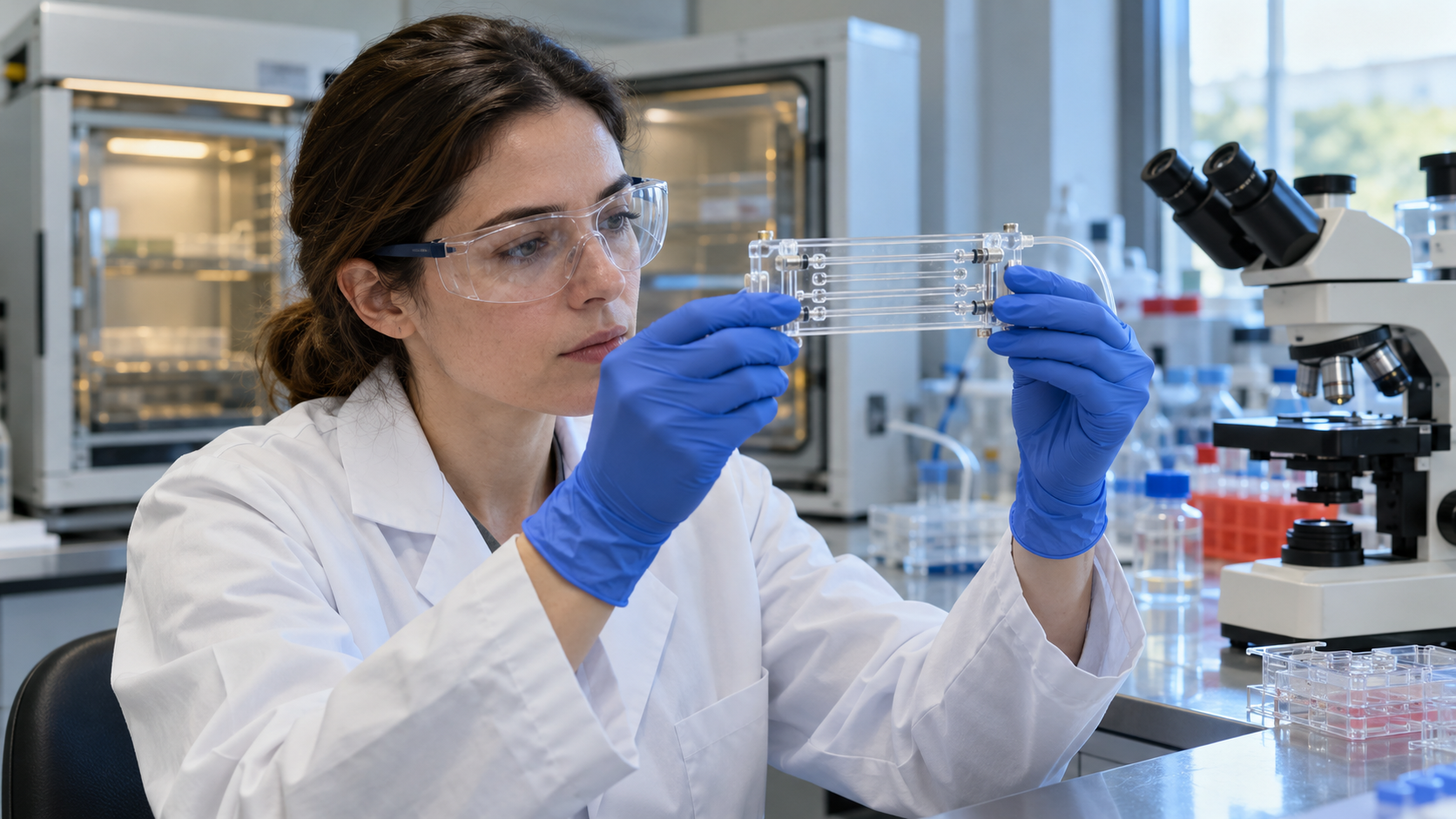
Researchers use microscopy, flow cells, genetic tools, chemical imaging, and real-world sampling because a flat static culture cannot reproduce every environment. Some biofilms support wastewater treatment or healthy microbial communities, while others foul equipment and sustain infection. Effective control may combine surface design, cleaning, matrix disruption, flow management, and targeted antimicrobials.
Initial attachment depends on surfaces, appendages, fluid flow, and chemistry.
Cells secrete a hydrated matrix that anchors and protects the community.
Nutrient and oxygen gradients create distinct physiological zones.
Quorum signals coordinate some behaviors but do not explain every biofilm.
Matrix, slow growth, and persisters create tolerance distinct from resistance.
Growth, erosion, and dispersal make a biofilm a continuously changing system.
Explore more "Explainers"
Discover additional explainers across politics, science, business, technology, and other fields. Each explainer breaks down a complex idea into clear, everyday language—helping you better understand how major concepts, systems, and debates shape the world around us.