

On This Day in Science: December 21, 1968
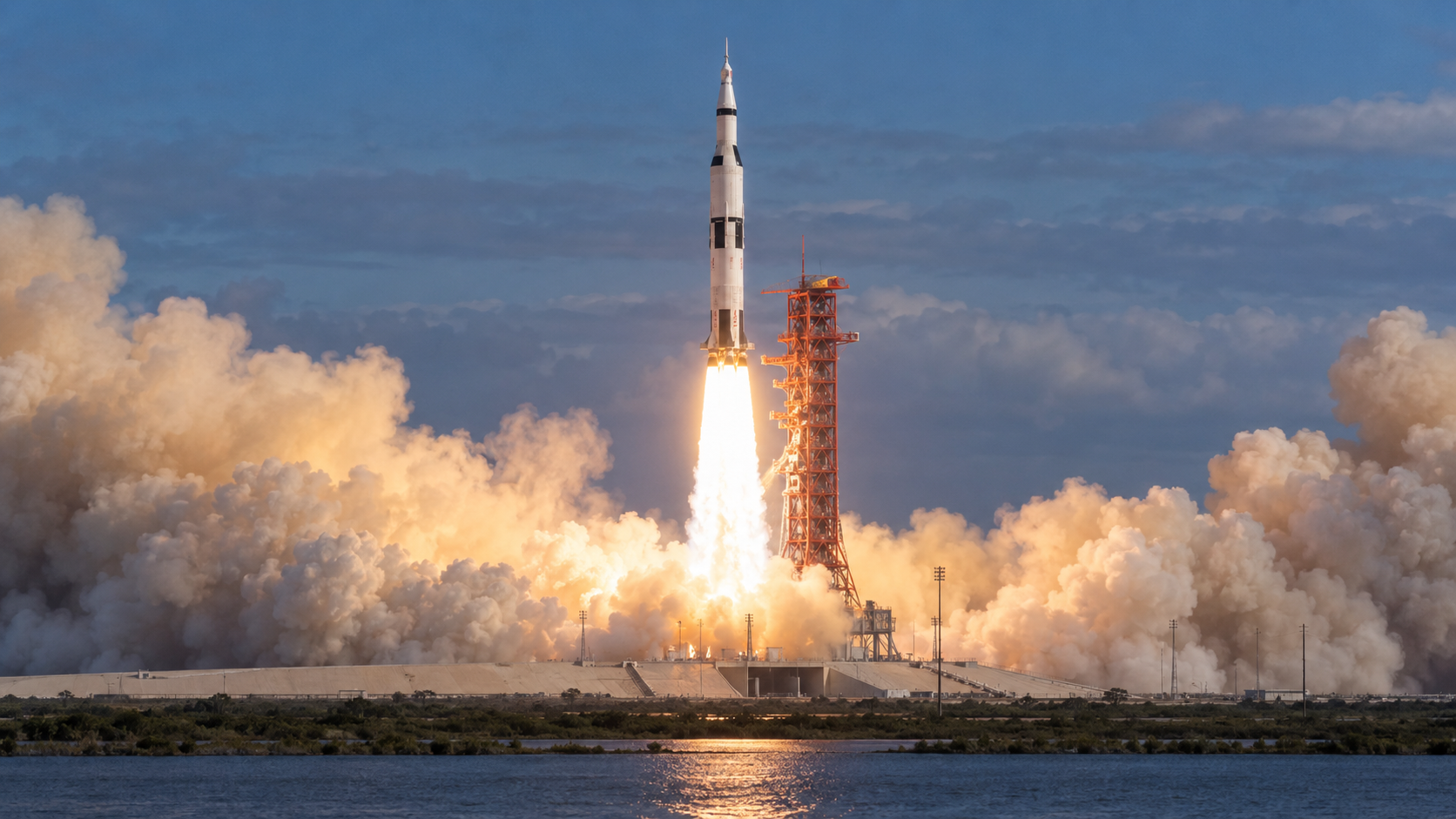
On December 21, 1968, a Saturn V launched Frank Borman, James Lovell, and William Anders from Kennedy Space Center aboard Apollo 8.
The mission was the first crewed flight of the Saturn V and the first time humans traveled beyond low Earth orbit. A translunar injection burn sent the spacecraft toward the Moon.
Apollo 8 entered lunar orbit on December 24, circled ten times, photographed the far side, and broadcast views of Earth rising above the lunar horizon.
The flight tested navigation, communications, life support, and high-speed reentry before the lunar module was ready, clearing crucial steps for Apollo 11. The surviving record remains scientifically valuable. The episode separates a first demonstration from mature understanding. A successful observation or flight can settle one question while exposing harder problems in reliability, interpretation, safety, and scale. Preserved data let later generations revisit the achievement without confusing what was known then with what became clear afterward. Its calendar date is an entry point rather than an endpoint. The people involved worked with the tools, assumptions, institutions, and social conditions of their time. Later research extended some conclusions and corrected others, showing how science advances by keeping evidence open to comparison. What makes the event important is not only priority, but the ability of others to check, repeat, compare, or build on the result. That process can reveal limitations hidden by the excitement of a first success and explains why careful archives and transparent measurements matter. Modern interpretations benefit from evidence the original participants did not possess. New instruments and analytical methods recover additional detail, while historical scholarship clarifies questions of credit, context, and consequence. Holding the original achievement and later corrections together produces the most accurate account. The anniversary also shows why scientific milestones depend on records that later researchers can inspect. Instruments, notebooks, images, specimens, and engineering reports preserve what was measured, what remained uncertain, and how conclusions changed when better methods became available. Placed in a longer timeline, the event was a junction rather than a finished answer. Earlier discoveries and technical work made it possible, while later teams tested its limits and applied the result in new settings. That sequence of evidence and revision turns one date into a durable part of scientific history. The milestone also became part of a continuing research program rather than an isolated success. Later investigators refined the measurements, compared independent evidence, and adapted the underlying methods to different questions. That long afterlife is essential to understanding both the achievement and the limits of what one date can represent.
NASA shifted Apollo 8 from Earth-orbit testing to a lunar mission.
The decision responded to schedule pressure while accepting substantial technical risk.
Earlier Saturn V flights had been uncrewed tests.
Apollo 8 proved the giant rocket could safely send astronauts toward the Moon.
Ground stations and onboard sightings tracked a trajectory across hundreds of thousands of kilometers.
The mission validated procedures later used for landing flights.
Explore more of "On This Day ..."
Discover more events from the same date across news, politics, technology, sports, and other fields. Each link highlights significant moments that shaped history on different fronts.