

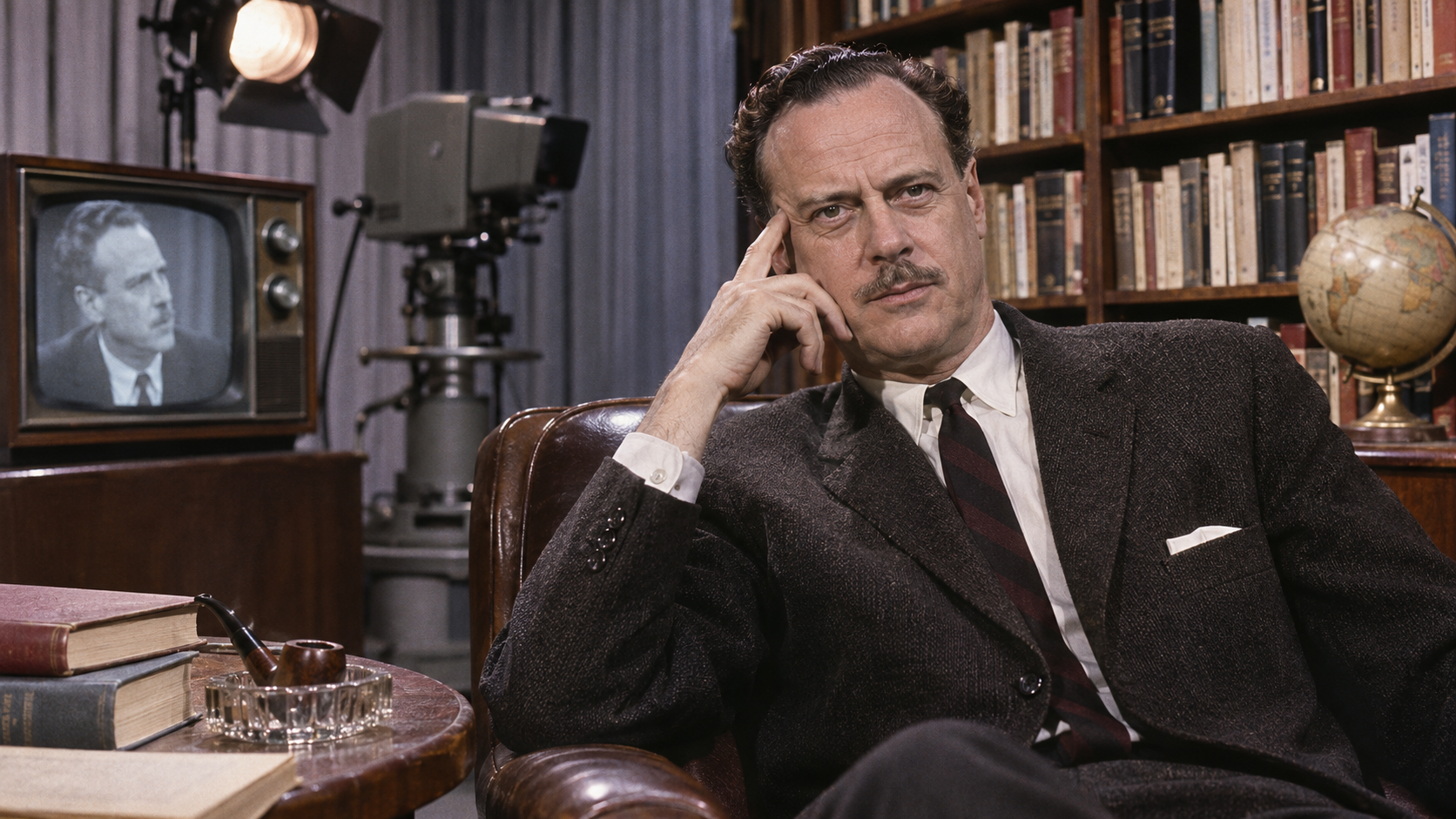
“The medium is the message.”
Marshall McLuhan made this phrase the organizing idea of Understanding Media in 1964. Television was transforming politics, advertising, family life, and news, yet debate often focused only on program content. McLuhan redirected attention to the form itself: every medium reorganizes time, attention, authority, and social relationships before any particular message is considered.
A medium’s effects are built into its speed, scale, sensory demands, and patterns of participation. A printed investigation, a live broadcast, a push alert, and a short social video may report the same event while producing different habits of understanding. The container is not neutral; it helps determine what can be emphasized, remembered, verified, or ignored.
For newsrooms, the insight calls for editorial choices that fit the strengths and risks of each format. Urgency can increase access while reducing context. Visual storytelling can clarify evidence while encouraging emotional shortcuts. Responsible publishing asks not only whether a claim is accurate, but how its delivery changes interpretation.
McLuhan’s sentence is especially useful in an algorithmic media environment. Feeds reward repetition, velocity, and reaction; notifications interrupt; recommendation systems personalize public reality. Media literacy therefore requires examining the architecture around a story—who designed it, what behavior it rewards, and what forms of knowledge it makes difficult to sustain.
Marshall McLuhan made this phrase the organizing idea of Understanding Media in 1964. Television was transforming politics, advertising, family life, and news, yet debate often focused only on program content. McLuhan redirected attention to the form itself: every medium reorganizes time, attention, authority, and social relationships before any particular message is considered.
A medium’s effects are built into its speed, scale, sensory demands, and patterns of participation. A printed investigation, a live broadcast, a push alert, and a short social video may report the same event while producing different habits of understanding. The container is not neutral; it helps determine what can be emphasized, remembered, verified, or ignored.
McLuhan’s sentence is especially useful in an algorithmic media environment. Feeds reward repetition, velocity, and reaction; notifications interrupt; recommendation systems personalize public reality. Media literacy therefore requires examining the architecture around a story—who designed it, what behavior it rewards, and what forms of knowledge it makes difficult to sustain.
Explore more "Quotes of The Day"
Discover more notable quotes from influential voices across politics, science, business, technology, sports, and culture. Each quote offers insight into how ideas, beliefs, and decisions shape the world around us.