

“Is this America, the land of the free and the home of the brave?”
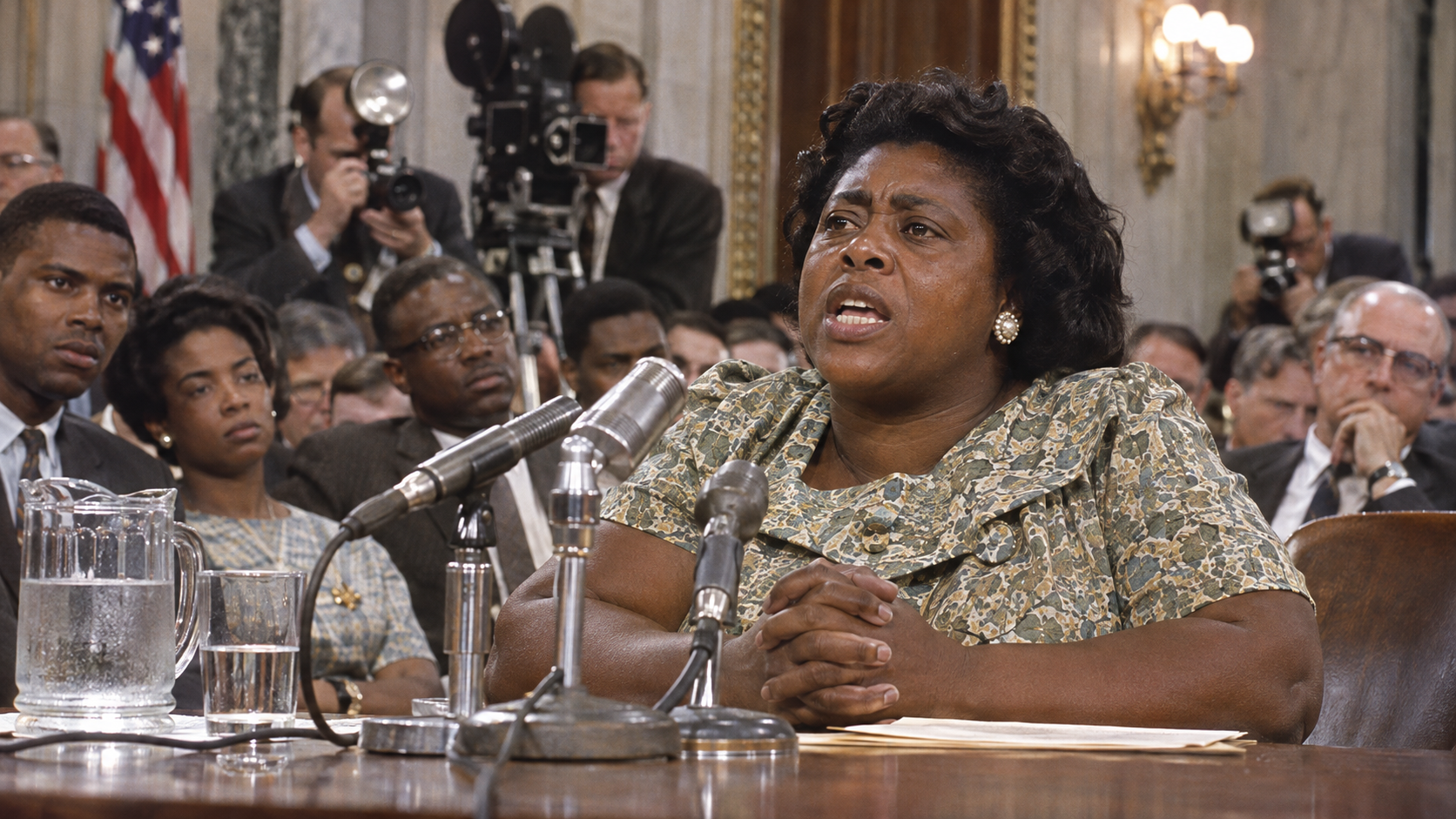
Fannie Lou Hamer asked this question during her nationally significant 1964 testimony about voter suppression and racial violence in Mississippi. Speaking before the Democratic National Convention’s credentials committee, she described retaliation she endured after attempting to register to vote. Her question forced the nation’s patriotic language into direct confrontation with documented experience.
The power of the sentence comes from the gap it exposes between national ideals and institutional practice. Hamer did not reject freedom as an aspiration; she demanded that its promises be tested against who could vote, speak, organize, and live without terror. A rhetorical question became an evidentiary challenge.
Her testimony also demonstrates why first-person accounts matter in journalism and public hearings. Personal experience can reveal consequences hidden by official statistics, but it should be preserved accurately and placed in context. Reporters must verify surrounding facts without flattening a witness’s voice or treating trauma as spectacle.
The question remains useful wherever rights exist on paper but are obstructed in practice. Coverage of elections, policing, employment, education, and public services should compare stated principles with measurable access and outcomes. Hamer’s standard is demanding: democracy must be judged by what people can actually do, not only by what institutions say.
Fannie Lou Hamer asked this question during her nationally significant 1964 testimony about voter suppression and racial violence in Mississippi. Speaking before the Democratic National Convention’s credentials committee, she described retaliation she endured after attempting to register to vote. Her question forced the nation’s patriotic language into direct confrontation with documented experience.
The power of the sentence comes from the gap it exposes between national ideals and institutional practice. Hamer did not reject freedom as an aspiration; she demanded that its promises be tested against who could vote, speak, organize, and live without terror. A rhetorical question became an evidentiary challenge.
The question remains useful wherever rights exist on paper but are obstructed in practice. Coverage of elections, policing, employment, education, and public services should compare stated principles with measurable access and outcomes. Hamer’s standard is demanding: democracy must be judged by what people can actually do, not only by what institutions say.
Explore more "Quotes of The Day"
Discover more notable quotes from influential voices across politics, science, business, technology, sports, and culture. Each quote offers insight into how ideas, beliefs, and decisions shape the world around us.