

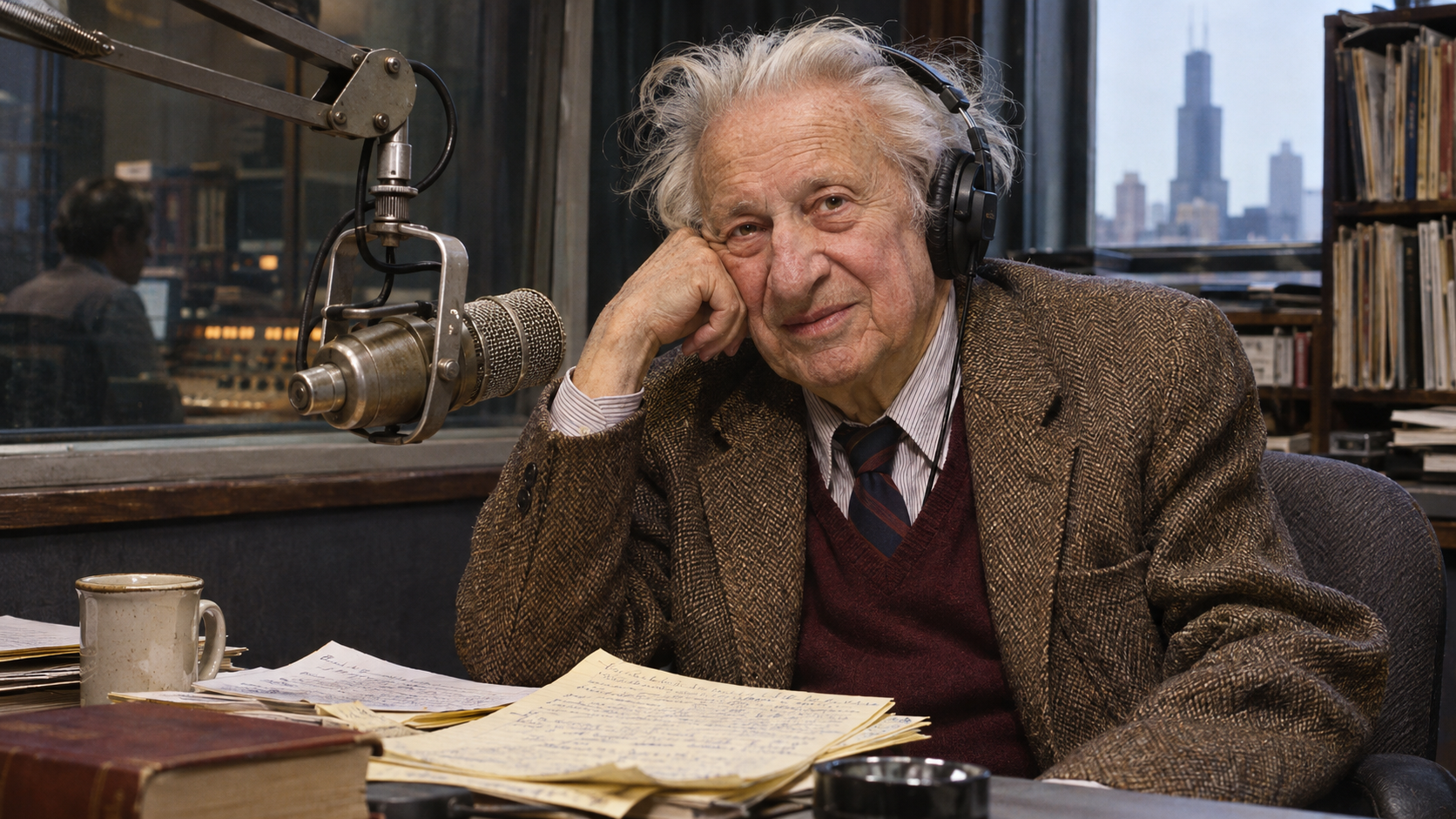
“I want people to talk to one another no matter what their difference of opinion might be.”
Studs Terkel built a body of oral history from sustained conversations with workers, activists, veterans, artists, and people rarely treated as public authorities. Late in his life, he continued to argue for dialogue across disagreement. The quote reflects his faith that listening can reveal experience and complexity that slogans conceal.
Talking across differences is not the same as pretending every claim is equally supported. Dialogue works when participants can answer, question assumptions, and remain accountable to evidence. Terkel’s interviews were generous, but they were also attentive to contradiction, memory, power, and the circumstances shaping a speaker’s account.
Journalism benefits when interviews are treated as encounters rather than quote extraction. Open questions, patient follow-ups, and accurate transcripts allow sources to explain how they reached a belief. Reporters should still verify factual assertions and include people affected by the decisions under discussion.
Polarized platforms reward humiliation and instant certainty. Terkel’s approach offers another model: preserve disagreement while expanding the record of lived experience. Conversation will not resolve every conflict, but it can make public debate more honest by replacing caricatures with voices that can be heard, tested, and understood.
Studs Terkel built a body of oral history from sustained conversations with workers, activists, veterans, artists, and people rarely treated as public authorities. Late in his life, he continued to argue for dialogue across disagreement. The quote reflects his faith that listening can reveal experience and complexity that slogans conceal.
Talking across differences is not the same as pretending every claim is equally supported. Dialogue works when participants can answer, question assumptions, and remain accountable to evidence. Terkel’s interviews were generous, but they were also attentive to contradiction, memory, power, and the circumstances shaping a speaker’s account.
Polarized platforms reward humiliation and instant certainty. Terkel’s approach offers another model: preserve disagreement while expanding the record of lived experience. Conversation will not resolve every conflict, but it can make public debate more honest by replacing caricatures with voices that can be heard, tested, and understood.
Explore more "Quotes of The Day"
Discover more notable quotes from influential voices across politics, science, business, technology, sports, and culture. Each quote offers insight into how ideas, beliefs, and decisions shape the world around us.