

Bruxism Explainer
Bruxism means grinding, clenching or gnashing the teeth. It can happen during waking hours or during sleep, sometimes without the person realizing it. Mild occasional bruxism may not need treatment, while frequent or forceful activity can damage teeth and restorations or leave the jaw tired and painful. The important question is how it is affecting the individual. A partner noticing grinding at night or a dentist spotting wear may provide the first clue that it is happening.
Possible signs include flattened, chipped or sensitive teeth, jaw muscle soreness and headaches. Some people report facial or ear-area pain or disrupted sleep. These findings do not all have the same cause, so they deserve assessment rather than an automatic bruxism label. Tell the dentist when the discomfort occurs and whether someone has heard grinding during sleep. An examination can check the teeth, restorations and jaw muscles while considering other explanations for pain or damage.
Bruxism has several possible contributing factors, and its cause is not always clear. Stress, certain medicines, alcohol, caffeine and smoking may be relevant, as can sleep-related problems. It is not simply a personal failure to relax. Mention prescribed medicines and changes in sleep without stopping treatment independently. If sleep apnoea or another sleep disorder is suspected, further assessment may be appropriate. A plan should address the likely contributors and the effect on teeth, rather than applying the same remedy to everyone.
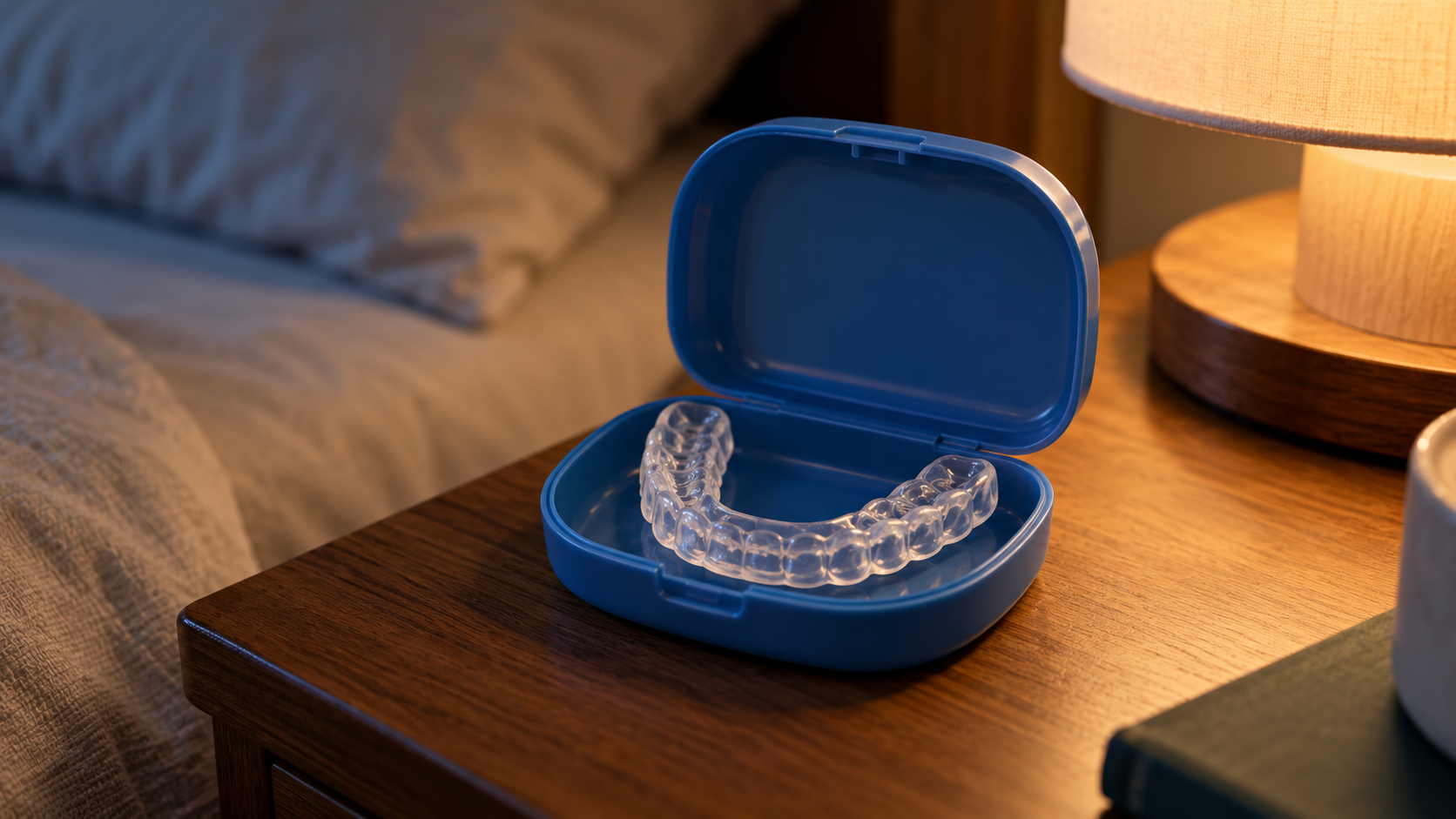
A dentist may recommend a fitted mouthguard or splint to separate and protect the teeth. That protection can be useful even when the appliance does not eliminate every grinding episode. Damaged teeth may also need repair. Behavioural strategies and support for stress or sleep problems can form part of care. Treatment should be reviewed if pain persists or an appliance causes discomfort. Protecting the teeth and understanding the source of symptoms are related goals, but they are not identical.
During the day, some people clench when concentrating or under pressure. Gentle reminders to notice the jaw's resting position may help reduce that habit. A record of when symptoms occur can be useful at a dental appointment. The aim is awareness without repeatedly testing or forcing the jaw, especially if movement already produces pain or fatigue.
Sleep grinding may be noticed by another person rather than the sleeper. It can coexist with disturbed sleep, and selected people need assessment by a sleep specialist. A sleep study can investigate relevant nighttime patterns and other disorders when indicated. Not everyone who grinds needs that test; the decision depends on the history, symptoms and what additional information would change care.
A custom appliance is made to fit over the upper or lower teeth. It creates a protective barrier and may reduce some grinding-related muscle activity, but it should not be assumed to cure every source of jaw pain. Ask how it should fit, when to wear it and how to clean it. Keep review appointments so the dentist can check its condition and the teeth underneath.
An appliance intended for protection should not permanently alter the bite. If it causes pain or new difficulties, stop using it and consult the treating dentist. Appliances have limited evidence for treating some temporomandibular pain problems, even though their tooth-protection role may be useful. Understanding that distinction helps avoid judging the entire treatment by whether every jaw symptom immediately disappears.
Jaw pain can arise from temporomandibular disorders, a group of conditions affecting the joint or muscles involved in jaw movement. Painful clicking, locking or difficulty opening deserves assessment. These conditions are not interchangeable with bruxism, and simply grinding down teeth or permanently changing the bite is not a routine answer. Discuss simpler, reversible approaches and the evidence for any proposed procedure.
Regular dental care, appropriate sleep habits and support for stress can help form a practical plan. Avoid chewing gum or hard foods when they aggravate a painful jaw, and discuss exercises with a qualified professional rather than forcing painful movements. Review medicines with the prescriber if they might contribute. Persistent symptoms need reassessment of the explanation and treatment, while ongoing dental checks help detect wear before greater damage occurs.
Explore more "Explainers"
Discover additional explainers across politics, science, business, technology, and other fields. Each explainer breaks down a complex idea into clear, everyday language—helping you better understand how major concepts, systems, and debates shape the world around us.