

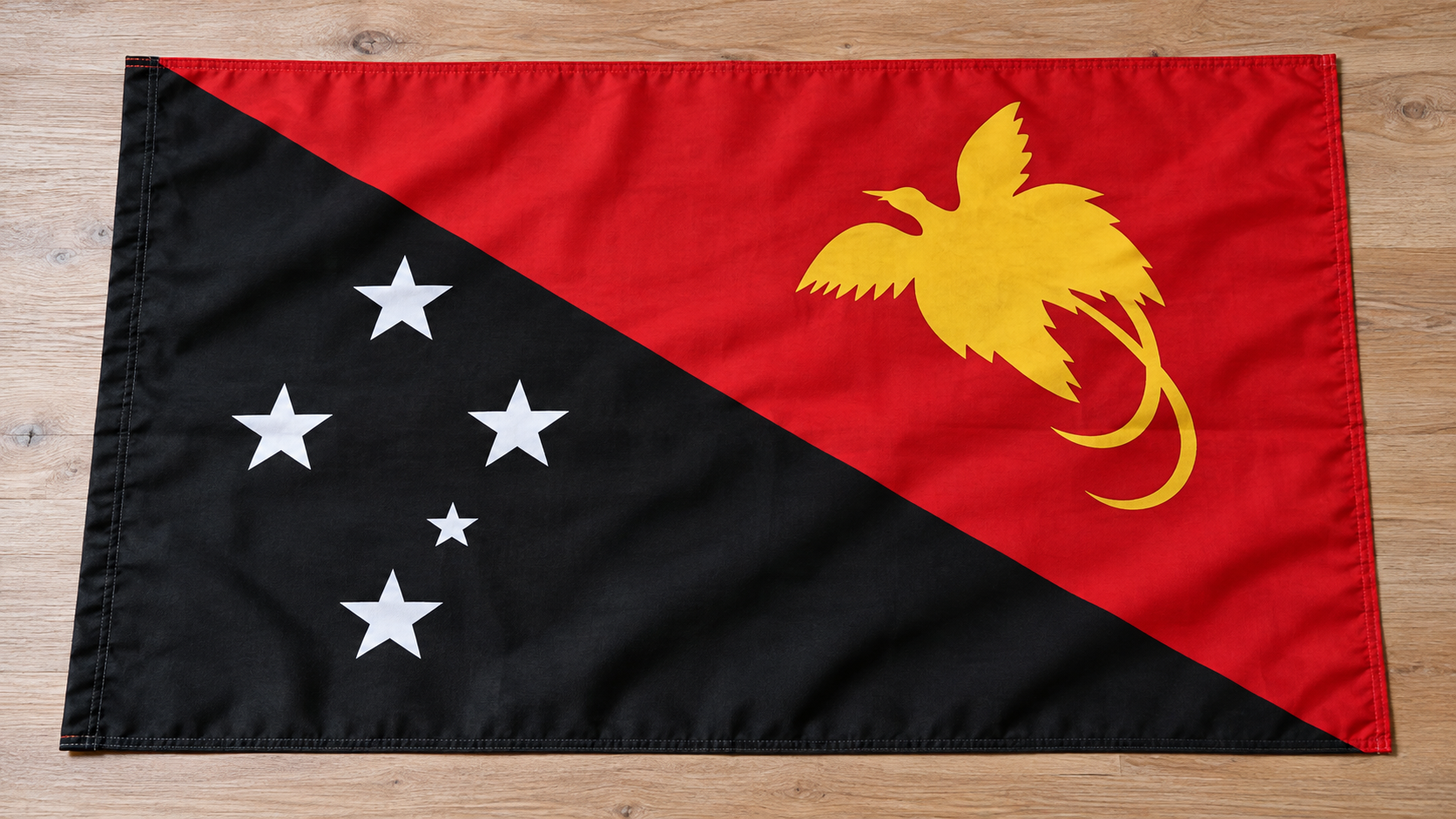
On This Day in Politics: September 16, 1975
On September 16, 1975, Papua New Guinea became independent from Australia, and celebrations in Port Moresby marked the beginning of its life as a sovereign state. Michael Somare, previously chief minister, became the country's first prime minister. Prince Charles represented Queen Elizabeth II, while Australian Prime Minister Gough Whitlam and Governor-General John Kerr attended the principal ceremony. The transfer ended Australian administration and brought a locally developed constitution into operation. It followed an agreed political transition rather than a military expulsion of the administering power, although the unequal colonial relationship remained an essential part of the history behind the celebration.
The country brought together territories with different colonial backgrounds. Papua had passed from British to Australian administration, while northeastern New Guinea had been a German colony before becoming an Australian-administered mandate and later a United Nations trust territory. Australia administered the two together after the Second World War. Their administrative union did not erase the many languages, communities and local identities within them. Political institutions gradually changed: an elected House of Assembly replaced the earlier Legislative Council in 1964, and internal self-government began on December 1, 1973. Those steps gave local leaders experience in government before the final transfer of sovereignty.
Independence changed the source of national authority. Papua New Guinea's constitution established its own institutions and fundamental principles, while Australia ceased exercising the powers of an administering state. The country became a constitutional monarchy within the Commonwealth, retaining Elizabeth II as its monarch in a distinct national capacity. That arrangement should not be confused with continued Australian rule. In his independence address, Whitlam acknowledged the role of Papua New Guinea's elected representatives in choosing independence and developing their constitution. The ceremonies also expressed a desire for continuing friendship. Australia's flag had been lowered the previous day, a separate stage in the sequence leading to the new nation's formal beginning.
The immediate achievement was political sovereignty, not the disappearance of every practical connection with Australia. Whitlam's address committed Australia to continuing assistance and recognized that the new state would make its own international choices. Building national institutions across geographically separated communities remained work for the government and its citizens after the celebrations. Independence did not automatically settle questions of development, representation or the relationship between national unity and local identities. September 16 nevertheless marks a clear constitutional boundary: decisions about the country's future would be made through the institutions of an independent Papua New Guinea. Its significance lies both in the end of a colonial administration and in the responsibility assumed by a new national government.
Papua and New Guinea had different colonial histories before Australia administered them together after the Second World War. An elected House of Assembly began in 1964.
Internal self-government started in December 1973. Independence in September 1975 was a further change in authority, rather than the first creation of local political institutions.
On September 16, Papua New Guinea became sovereign and its constitution took effect. Michael Somare became the first prime minister.
The country retained a constitutional monarchy and Commonwealth membership. Those choices did not preserve Australia's former role as administering power.
Australia and Papua New Guinea continued to have close ties, including assistance and diplomatic relations. Independence allowed the new state to determine its own international position.
The anniversary marks a transfer of constitutional authority. Building institutions and balancing national and local interests continued after the ceremonies.
Explore more of "On This Day ..."
Discover more events from the same date across news, politics, technology, sports, and other fields. Each link highlights significant moments that shaped history on different fronts.