

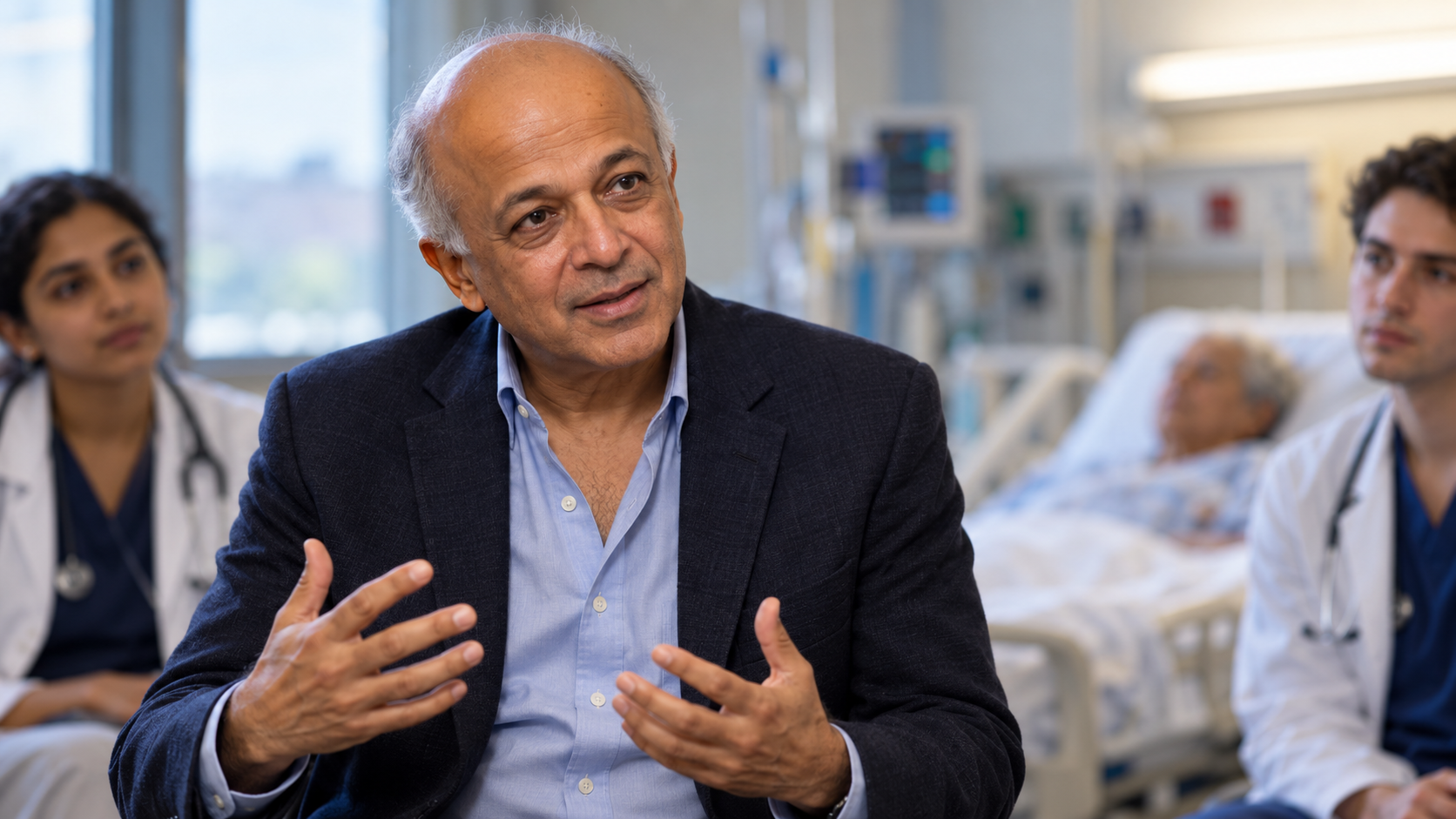
“We’re losing a ritual that I believe is transformative, transcendent, and is at the heart of the patient-physician relationship.”
Abraham Verghese made this argument in his 2011 TEDGlobal talk, “A doctor’s touch.” The Stanford physician described a medical culture in which attention could move toward images and records while the person in the bed became secondary. He did not reject technology; he explicitly situated himself within advanced medical practice. His concern was what disappears when conversation and examination are treated as optional preliminaries to a test. The physical exam can reveal findings, but Verghese also presented it as a ritual through which a clinician demonstrates presence. A later Stanford commencement address returned to the same idea, describing examination as a meaningful threshold that can build a connection between patient and physician.
Calling the encounter a ritual does not make every touch therapeutic or appropriate. Examination requires consent, explanation, privacy, and attention to culture, trauma, disability, and the patient’s preferences. Some visits do not require contact, and telemedicine can provide valuable access when clinician and patient are apart. Verghese’s deeper point concerns disciplined attention. A clinician who looks, listens, and explains what is happening can gather information that a screen alone may not show. The patient also receives evidence that the professional is willing to be present with the reality of illness rather than interact only with its digital representation.
The quote remains relevant as records, decision-support systems, and remote tools occupy more of the clinical visit. Technology can extend expertise and reduce error, but its use should leave room for the patient to speak and for observations to be tested against lived experience. The form of the ritual may change: it might include careful video guidance, a family member’s observation, or a deliberate pause to summarize what has been heard. The standard is not nostalgia for an earlier era. It is whether the encounter communicates attention, obtains useful evidence, and makes the plan understandable. Presence becomes a clinical practice rather than a vague bedside manner. A careful examination can also slow the encounter long enough for a clinician to hear hesitation, see nonverbal clues, and explain the next decision. Those moments often determine whether a patient feels like a participant in care.
Verghese’s TED talk linked physical examination with both diagnostic attention and the patient-physician relationship.
He argued for preserving human presence while continuing to use advanced technology.
An examination must respect privacy, culture, trauma, disability, and the patient’s preferences.
The principle is attentive care, not a requirement that every visit include the same physical ritual.
Records and remote care can improve access while still leaving room for listening and explanation.
A useful encounter connects digital information with the individual person’s experience and concerns.
Explore more "Quotes of The Day"
Discover more notable quotes from influential voices across politics, science, business, technology, sports, and culture. Each quote offers insight into how ideas, beliefs, and decisions shape the world around us.