

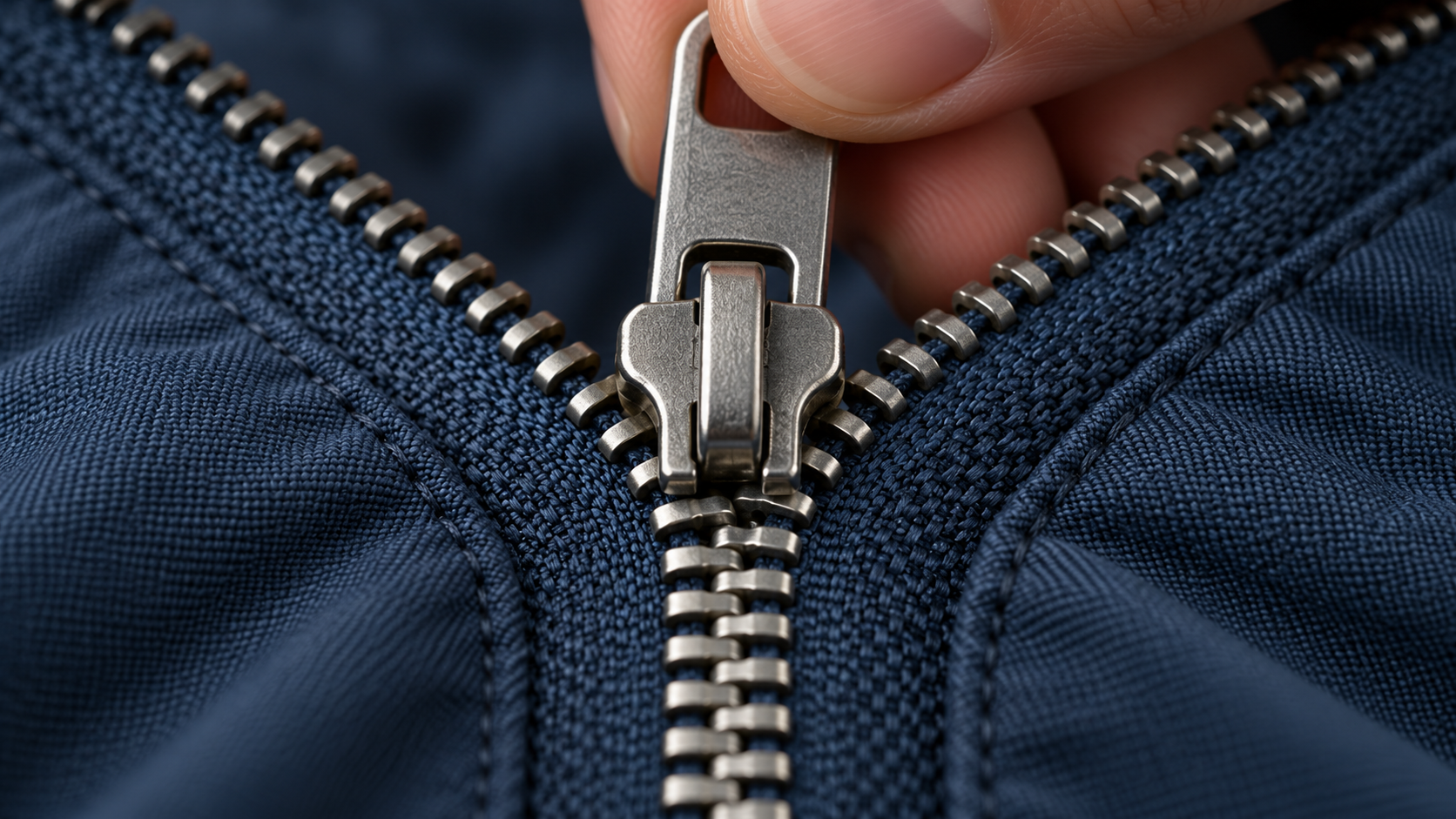
Zipper Mechanism Explainer
A zipper joins two flexible edges by using a slider to guide two rows of shaped elements into an interlocking chain. Those elements may be individual metal or molded-plastic teeth, or they may be formed from continuous coils. Each element is designed to nest with elements on the opposite side. Pulling the slider in the closing direction brings the two rows into its wide end, redirects them through narrowing internal channels, and presses them into the repeating locked pattern. Pulling the other way carries the chain into the narrow end and sends the two rows apart through diverging channels.
The visible teeth are only one part of the system. They are attached to strong woven strips called tapes, which are sewn into a garment, bag, tent, or other product. The slider body contains a Y-shaped passage and is moved with a pull tab. Top stops prevent it from running off the closed end. At the bottom, a closed-end zipper usually has a bottom stop that permanently joins both sides. A separating jacket zipper instead uses a box and insertion pin, allowing one tape to detach completely after the slider reaches the bottom.
Closing depends on alignment. On a separating zipper, the insertion pin must pass fully through the slider and seat in the retaining box before the pull rises. That position lines up the first elements so the slider can merge the rest without twisting. If fabric, thread, or a bent edge enters the channel, the slider may jam because its internal clearance is small. The best first response is to stop pulling, remove tension, move the slider slightly backward, and ease the obstruction away. Forcing the pull can bend the slider, damage teeth, or tear the surrounding tape.
A zipper that closes and then separates behind the slider often has a different problem. Wear or spreading in the slider can keep it from pressing the two rows together far enough to interlock. Missing, deformed, or contaminated elements can also interrupt the chain. A repair technician may replace the slider if the teeth and tape remain sound. Pinching a slider with pliers is risky because too much pressure can make it bind or crack. Replacing a missing bottom component or a damaged stretch of chain is generally a sewing repair rather than a lubrication problem.
Clean movement requires very little material between the parts. Dirt, salt, fibers, and corrosion can increase friction, especially on outdoor gear. Gentle cleaning appropriate to the fabric and zipper material is usually the first step. Any lubricant must be compatible with the textile and used sparingly so it does not attract grit or stain. The pull tab is a lever for normal motion, not a handle for forcing an overloaded bag closed. Reducing tension on the surrounding fabric helps the slider keep both rows at the intended angle.
The zipper works because many small connections share the load along a flexible seam. No single tooth acts like a lock by itself; the alternating geometry of the whole chain resists sideways separation while the slider deliberately changes the path at one moving point. This explains both the zipper’s convenience and its vulnerabilities. Protecting the tape from excessive strain, starting a separating zipper squarely, keeping debris out of the slider, and stopping when movement changes all preserve the precise alignment the mechanism needs.
A zipper slider uses a Y-shaped channel to merge two rows of teeth or coils into an interlocking chain and to split them apart. Key terms include tape, elements, slider, pull tab, top stop, bottom stop, insertion pin, and retaining box.
The insertion pin has to seat fully in the box and slider so the first elements align. Pulling while the two sides are twisted or partly inserted can jam the slider or damage the chain.
The slider may be worn or spread, so it no longer presses the elements fully together. Damaged teeth or coils can cause the same symptom; cleaning alone will not repair missing or deformed parts.
Explore more "Explainers"
Discover additional explainers across politics, science, business, technology, and other fields. Each explainer breaks down a complex idea into clear, everyday language—helping you better understand how major concepts, systems, and debates shape the world around us.