

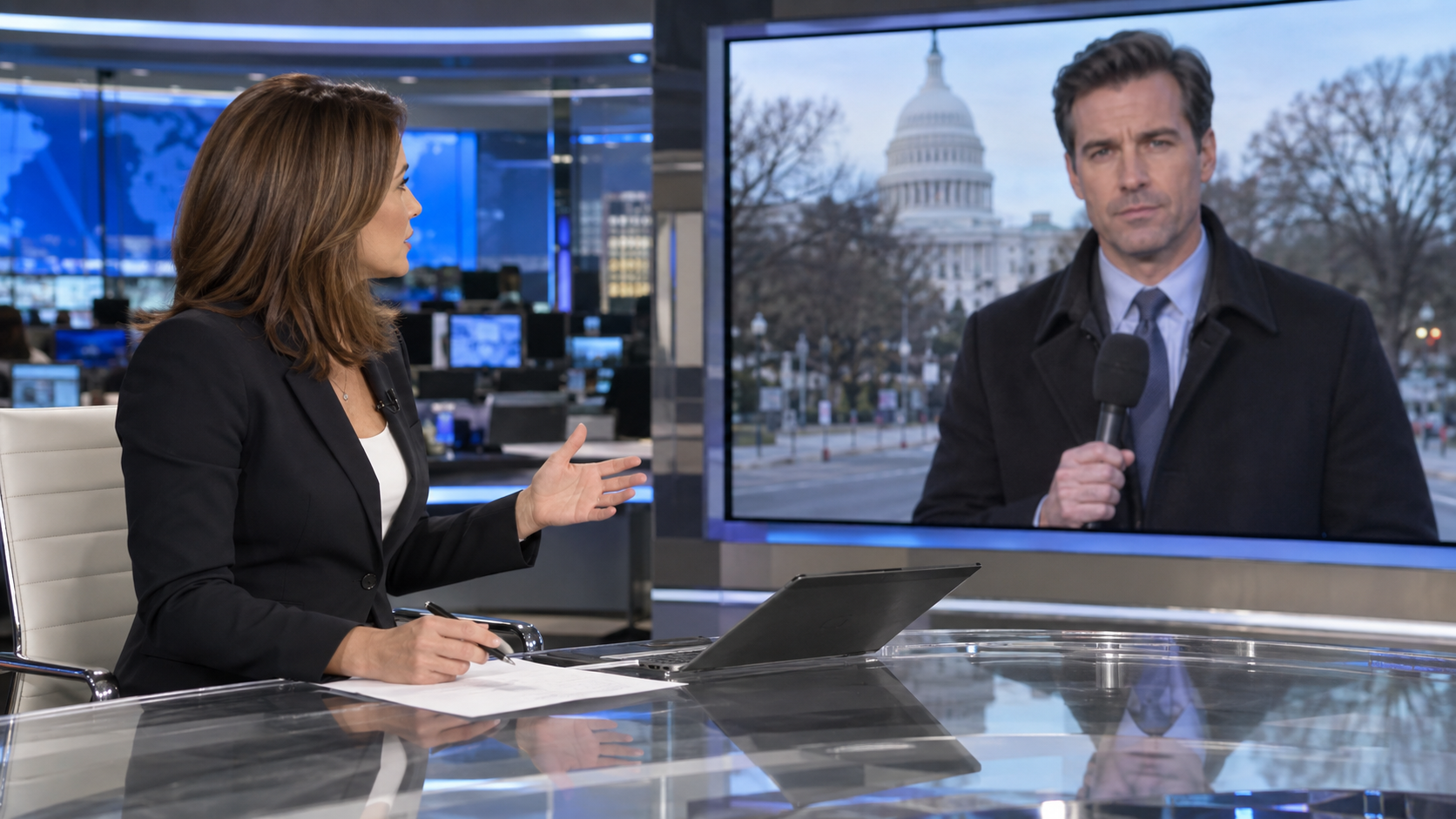
Anchor Toss Explainer
An anchor toss is the handoff from a studio anchor to another journalist, guest, or segment during a broadcast. The anchor introduces what is coming, names the person receiving the handoff, and ends with a clear question or cue. The next speaker then takes over from the field, another part of the studio, or a remote location. A toss is short, but it connects two production elements and tells the audience why the conversation is moving.
The most familiar example occurs before a live report. The anchor summarizes the latest verified facts, identifies the correspondent and location, then asks for an update. The field reporter hears the cue and begins. Visually, the director may switch from the anchor to the reporter, use a split screen, or briefly show both. Tosses also lead to weather, sports, interviews, analysis, and prerecorded packages, depending on the format of the program.
A strong toss adds useful context without stealing the reporter’s opening. Producers coordinate the anchor’s script with the field team so both do not repeat the same sentences. Names, titles, locations, and pronunciations are checked in advance. The final words should make the handoff unmistakable, particularly when satellite or internet transmission introduces a delay. Reporters often receive a return cue through an earpiece, while the control room watches audio levels and confirms that the remote connection is ready.
Live conditions can complicate the exchange. A reporter may not hear the anchor, the picture may freeze, or breaking information may change the planned question. Anchors are prepared to restate the cue, fill briefly, or move to another element. They should not claim that a reporter witnessed something unless that is true, and a dramatic location should not substitute for verified reporting. The toss must also avoid presuming an answer or framing a disputed fact as settled.
The handoff back to the studio is sometimes called a toss back. The reporter finishes with an agreed cue, and the anchor acknowledges the update before continuing. Smooth tosses sound conversational even though they are carefully produced. They help viewers follow who is speaking, where that person is, and what new information to expect. The technique is small but central to live television because it aligns editorial context, human timing, camera changes, and technical communication in a few seconds.
No, but a direct question or unmistakable cue often makes the live handoff clearer.
It is the return handoff from the reporter or guest to the studio anchor.
Coordination prevents repetition and ensures the remote speaker, director, and anchor recognize the same cue.
Explore more "Explainers"
Discover additional explainers across politics, science, business, technology, and other fields. Each explainer breaks down a complex idea into clear, everyday language—helping you better understand how major concepts, systems, and debates shape the world around us.