

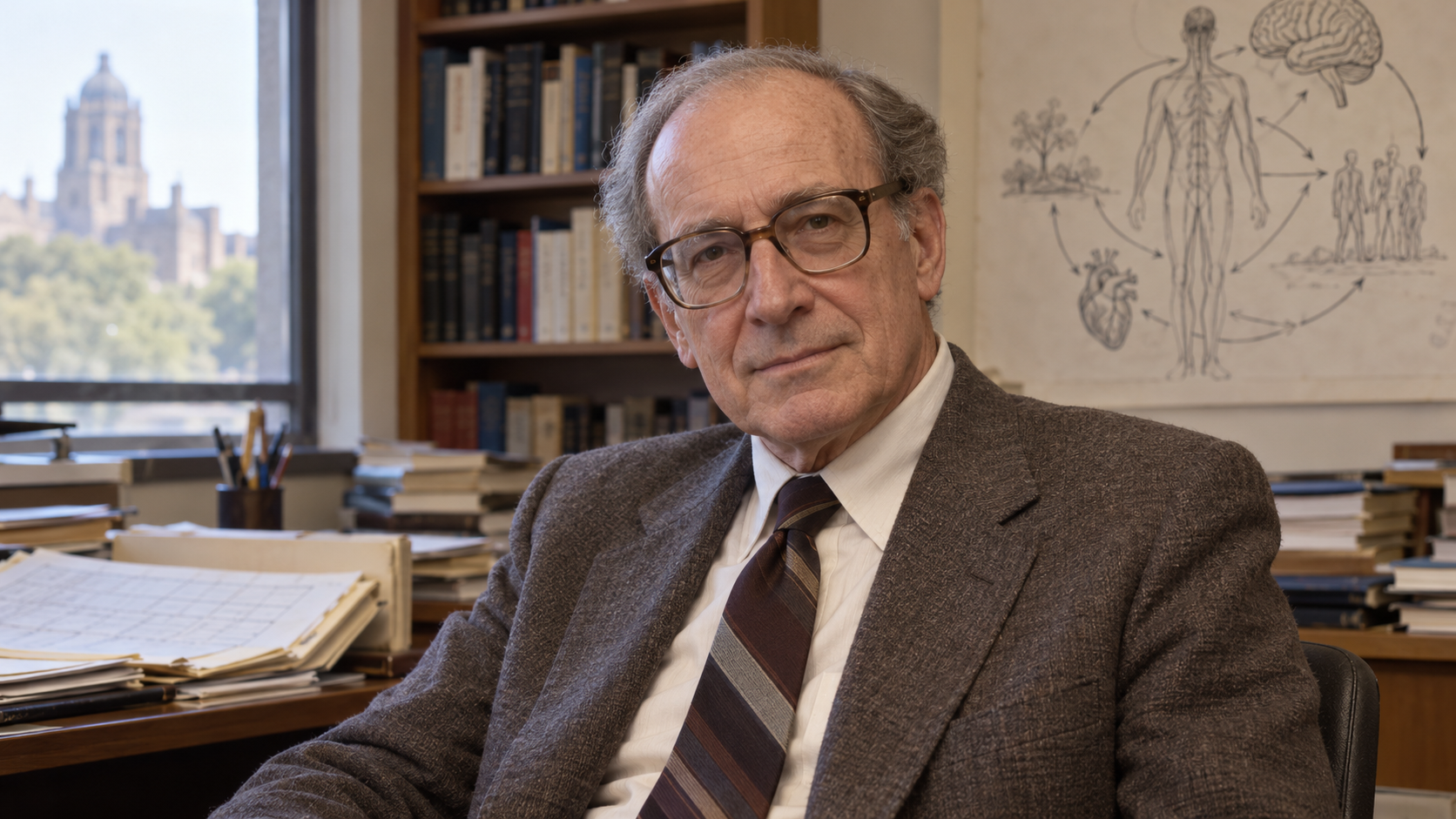
“The dominant model of disease today is biomedical, and it leaves no room within its framework for the social, psychological, and behavioral dimensions of illness.”
George L. Engel wrote these words in a 1977 Science article arguing for what became known as the biopsychosocial model. A psychiatrist and internist at the University of Rochester, Engel was responding to a biomedical framework that sought disease in measurable physical mechanisms while often treating a patient’s experience and surroundings as secondary. He did not reject biology. He argued that biological knowledge becomes clinically incomplete when it is detached from behavior, meaning, relationships, and social context. Illness is lived by a person who must interpret symptoms, decide whether to seek help, follow a plan within daily constraints, and respond emotionally to uncertainty. Those processes can affect both what clinicians learn and what treatment is possible. Engel’s systems language was meant to organize levels of explanation, not to offer a loose collection of causes that could be invoked without evidence.
The model is sometimes reduced to a checklist with three boxes. Engel’s proposal was more integrated: events at one level can influence and be influenced by events at another. A physiological change may alter mood and work; stress or isolation may affect sleep, adherence, and symptom burden; institutional rules may determine whether care is reachable. The approach does not imply that every disease is caused by attitude, or that social explanations should replace laboratory evidence. That misuse can blame patients and delay needed diagnosis. The value lies in asking additional testable questions while preserving the discipline of each field. A broad model must still distinguish strong evidence from speculation. That discipline matters when symptoms are medically unexplained, since uncertainty should invite continued inquiry and compassionate management rather than a premature conclusion that the problem is imaginary.
In practice, Engel’s sentence supports a clinical history that includes what the illness means to the patient and what conditions shape the plan. Can the person afford the medicine, understand the instructions, travel to follow-up, or rely on support at home? What goals and fears should guide a shared decision? These questions do not require every clinician to solve housing, employment, and family conflict during one visit. They require the team to notice relevant factors, connect people with appropriate resources, and avoid designing care for an imaginary patient without obligations or limits. The biomedical model remains indispensable for identifying mechanisms and testing treatments. Engel’s challenge is to place that power inside a fuller account of human life, where successful care depends on more than a correct label. Education built on this model can teach learners to move between molecular mechanism, personal narrative, and social context while stating clearly what each level can and cannot establish.
A strictly biomedical frame can explain mechanisms while overlooking how illness is experienced and managed.
Engel proposed adding psychological, behavioral, and social levels to clinical understanding.
Biology, behavior, relationships, and institutions can interact across levels.
A wider frame must still test claims carefully and must never blame patients for disease.
Meaning, affordability, transportation, support, and daily obligations can determine whether a plan works.
Teams can notice those realities and coordinate help without abandoning biological diagnosis or evidence.
Explore more "Quotes of The Day"
Discover more notable quotes from influential voices across politics, science, business, technology, sports, and culture. Each quote offers insight into how ideas, beliefs, and decisions shape the world around us.