

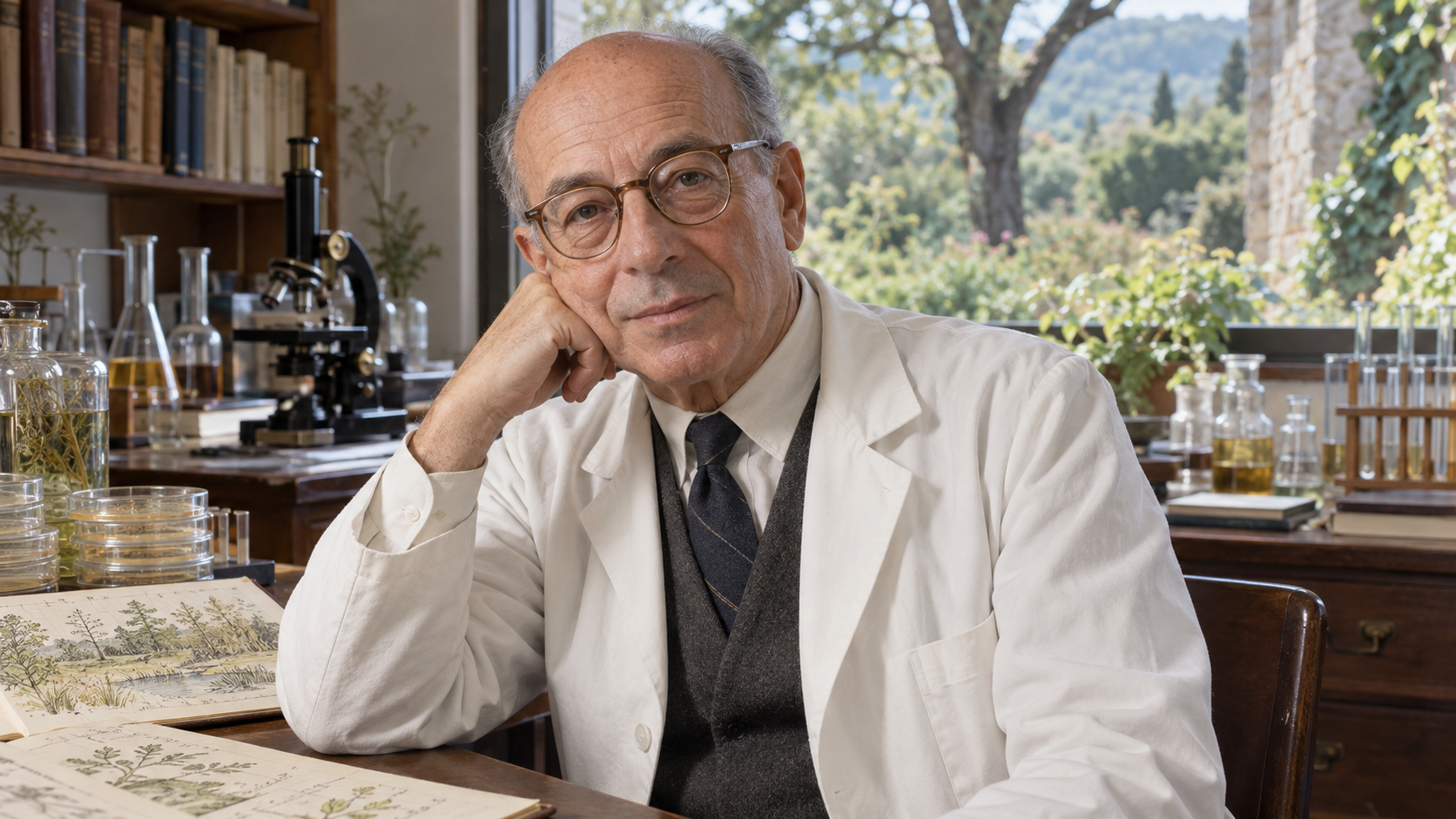
“Complete freedom from disease and from struggle is almost incompatible with the process of living.”
René Dubos wrote this line in The Mirage of Health, a 1959 book that challenged the dream of a future in which science would permanently remove disease, strain, and biological uncertainty. Dubos was a microbiologist whose work increasingly emphasized ecology: organisms live in changing relationships with microbes, environments, and social conditions. From that perspective, health could not be a static possession sealed off from challenge. Life itself involves adaptation, vulnerability, aging, and encounters with new conditions. The quotation did not deny the value of sanitation, medicine, or research. It warned against defining success as a final state in which struggle disappears and no new risk emerges. Dubos’s laboratory work on infectious disease had already shown that the host and environment influence whether exposure becomes illness, complicating simple one-germ, one-outcome stories.
That warning must not become an excuse for preventable suffering. Calling disease part of life can sound cruel when a safe vaccine, clean water, accessible treatment, or better policy could reduce it. Dubos’s ecological argument is strongest when it creates humility, not resignation. Interventions change environments and can produce unexpected effects; pathogens evolve; social arrangements alter exposure; a solution that works in one setting may fail in another. Public health therefore needs sustained observation and adaptation after an apparent victory. The impossibility of perfect health does not reduce the duty to prevent avoidable harm. His later writing extended that sensibility to modern life, where technological gains alter environments and create new patterns of vulnerability alongside benefits.
For individuals, the quote can widen health beyond an all-or-nothing label. A person living with chronic illness or disability may still pursue relationships, work, creativity, and chosen goals, while someone without a diagnosis may face conditions that undermine well-being. This does not erase symptoms or impose optimism. It recognizes function, meaning, and environment as parts of health. For institutions, Dubos’s view favors resilience: systems should detect change, learn from failure, and support people through uncertainty rather than promise permanent control. The mirage is not improvement itself. It is the belief that one technical achievement will end the work. A realistic health ethic celebrates prevention and treatment while staying prepared for the continuing process of living. Preparedness grounded in this view avoids declaring permanent victory and maintains basic capacity after public attention moves to the next problem. It also favors flexible local knowledge over the assumption that one standardized response will perform identically across climates, cultures, and institutions.
Dubos saw organisms adapting within changing biological, physical, and social environments.
That view makes health dynamic rather than a permanent state protected from every challenge.
The impossibility of perfect health never excuses illness that sanitation, treatment, access, or policy can prevent.
It calls for continued observation because interventions and environments can create new conditions.
Health can include function, meaning, adaptation, and chosen goals alongside diagnosis and symptoms.
Resilient systems support those capacities while learning as risks and circumstances change.
Explore more "Quotes of The Day"
Discover more notable quotes from influential voices across politics, science, business, technology, sports, and culture. Each quote offers insight into how ideas, beliefs, and decisions shape the world around us.