

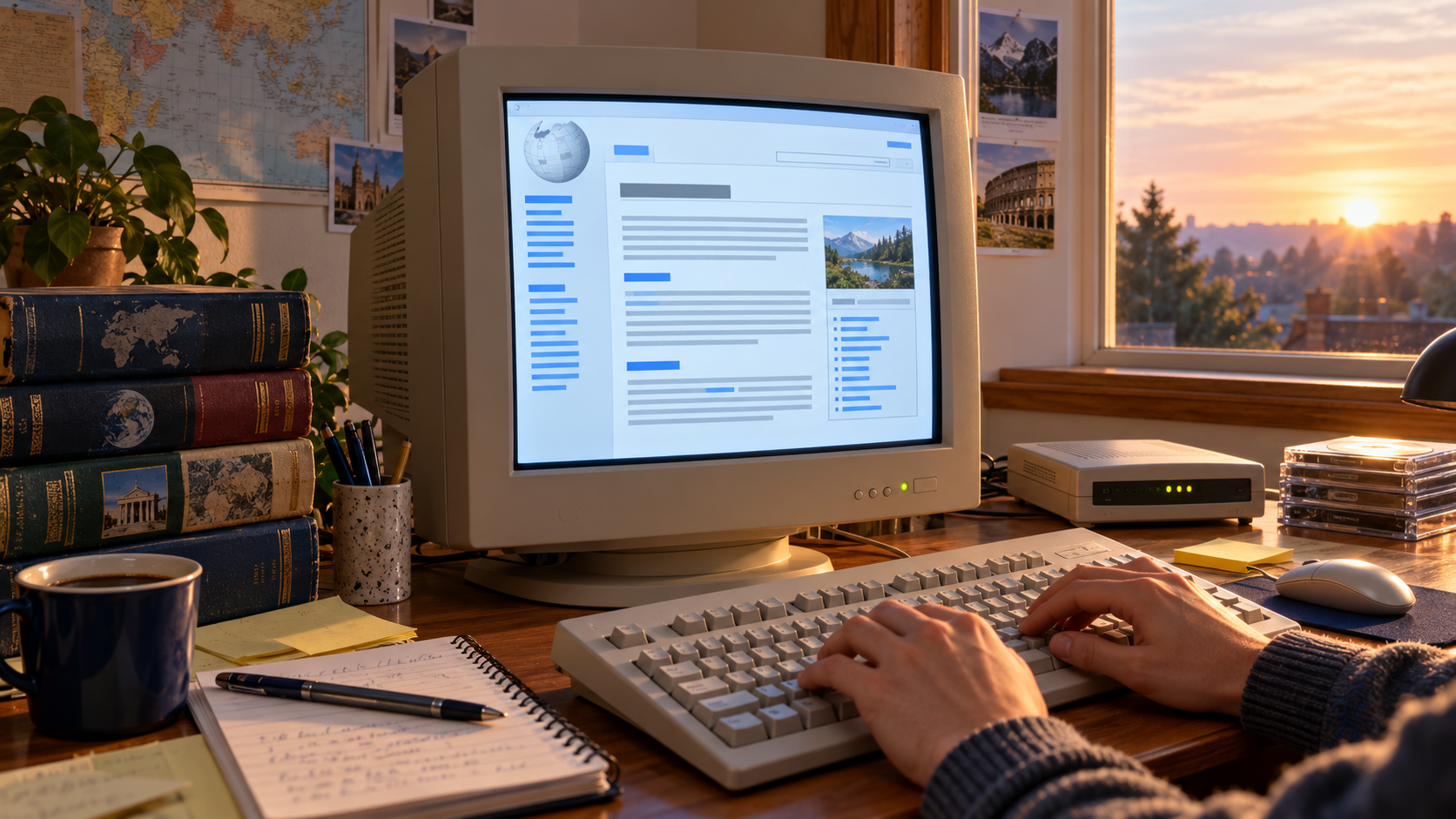
On This Day in Lifestyles: January 15, 2001
On January 15, 2001, Wikipedia went online with a radical invitation: readers could also become editors. Jimmy Wales and Larry Sanger launched the site as a faster, more flexible companion to Nupedia, an expert-written encyclopedia whose formal review process produced articles slowly. Wikipedia used wiki software that allowed people to create and revise pages directly in a web browser. The early site was small, uncertain, and mostly English-language, but its open structure encouraged rapid participation. Instead of waiting for a printed volume or a finished edition, users could watch knowledge grow, change, and argue with itself in public.
The project challenged familiar ideas about authority. Traditional encyclopedias relied on named experts, professional editors, and stable publication cycles. Wikipedia distributed much of that work among volunteers who cited sources, debated wording, corrected errors, reverted vandalism, and developed rules for neutrality and verifiability. Anyone could make a mistake, and organized groups could push biased accounts, so openness did not automatically produce truth. The system’s strength came from transparent histories and repeated review, especially on well-read topics. Its weaknesses were most visible where few editors participated, sources were scarce, or contributors reflected narrow cultural and geographic perspectives.
Wikipedia quickly changed everyday information habits. Students used it to orient themselves before deeper research, travelers checked places and people, families settled questions at the dinner table, and news readers found background during breaking events. Search engines often placed its pages near the top of results, giving the encyclopedia enormous influence over first impressions. Teachers initially warned students away from it, then increasingly taught them to inspect citations, edit histories, and discussion pages. The site demonstrated that information literacy involves judging how knowledge is made, not merely deciding whether one website is allowed.
The encyclopedia grew into hundreds of language editions and one of the web’s most visited reference resources, supported by a nonprofit movement rather than advertising. Its articles are constantly unfinished, which can feel less authoritative than a printed page but also allows rapid correction and coverage of new events. The launch’s lifestyle importance lies in access: a vast reference shelf became available anywhere an Internet connection could reach. It also made the reader responsible. Wikipedia is most useful when treated as a map to evidence rather than the final word—a shared starting point that invites curiosity, verification, and participation in the public life of knowledge.
Wikipedia began as a companion to Nupedia, whose expert review process moved slowly. Wiki software let contributors publish and revise pages directly.
The launch placed editing tools beside the article itself, lowering the barrier between people who consumed information and people who maintained it.
Volunteer communities developed policies around neutral wording, reliable sources, verifiability, conflict resolution, and transparent revision histories.
Openness also permits vandalism, bias, and error. Article quality varies with participation, subject matter, sourcing, and the diversity of the editor community.
The site became a common first stop for background, definitions, biographies, places, current events, and links to deeper sources.
Responsible use means following citations, checking dates and edit histories, and treating a living encyclopedia as a guide to evidence rather than a final authority.
Explore more of “This Day in Lifestyles”
Discover more moments in everyday life, design, education, travel, food, fashion, and culture. Each story connects a calendar date with an event that changed how people lived.