

On This Day in Business: January 13, 1930
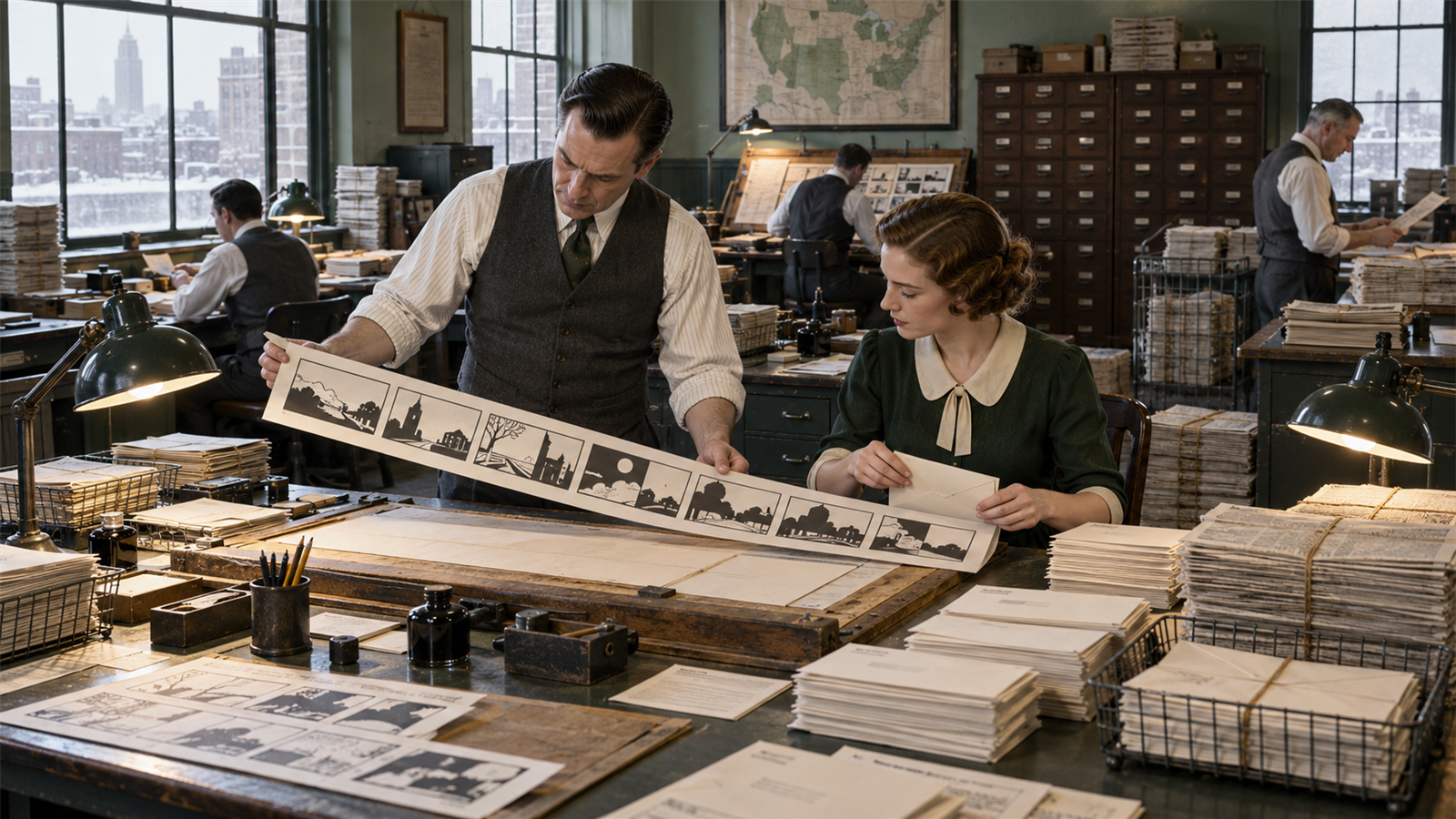
On January 13, 1930, the Mickey Mouse daily comic strip reached newspaper readers for the first time. King Features Syndicate distributed the feature, Walt Disney wrote the early story and animator Ub Iwerks drew the opening installments. The first sequence borrowed its premise from the silent cartoon Plane Crazy: Mickey, inspired by aviator Charles Lindbergh, decides to build an airplane. The launch came less than two years after the character's breakthrough in animated shorts. Moving Mickey from theaters into a recurring newspaper feature gave the Disney studio a new way to enter homes every day, turning a screen personality into a continuously marketed character across another mass medium.
The arrangement illustrates how syndication expanded media businesses before national television. A syndicate sold the same feature to many newspapers, allowing publishers to fill their comics pages while spreading the cost of creative work across multiple markets. King Features executive J. V. Connelly had approached Disney about a strip in 1929, and the studio adapted its character and visual storytelling to the narrow sequence of daily panels. Unlike a film short, the strip had to keep readers returning from one issue to the next. That rhythm created repeated exposure for Mickey and connected local newspaper circulation to the growing value of Disney's intellectual property.
Production changed quickly. Iwerks drew the first 24 strips, after which Win Smith handled the art for several months. Floyd Gottfredson took over in May 1930 and continued working on the feature for 45 years. The early personnel shifts show that the strip became an ongoing operation rather than a one-time promotion. According to the Walt Disney Archives, it appeared in as many as 40 newspapers across nearly two dozen countries by the summer of 1930. At the same time, Mickey merchandise, theater cartoons and local Mickey Mouse Clubs reinforced one another. Each channel helped make the character more familiar and increased the studio's bargaining power with exhibitors, licensees and distributors.
The debut therefore matters as a business milestone in character licensing and cross-media growth. Disney did not invent newspaper syndication, licensed merchandise or animated celebrities, but the company learned to coordinate them around a recognizable property. A reader who encountered Mickey in print could also seek a cartoon, join a club or buy a branded product, while newspaper exposure kept the character present between film releases. The strip's long run also created work and continuity beyond its original creators. January 13 marks the moment a young animation enterprise widened its distribution system, using a daily newspaper product to help turn a popular cartoon figure into the durable commercial foundation of a global entertainment company.
Mickey Mouse had become a film sensation in the late 1920s, while licensed products and local fan clubs were already widening the character's commercial reach.
King Features Syndicate proposed a newspaper feature in 1929, offering Disney access to many local papers through one national distribution relationship.
The daily strip debuted on January 13, 1930, with Walt Disney writing and Ub Iwerks drawing a story about Mickey trying to build an airplane.
A newspaper strip required a continuing sequence of compact episodes, different production deadlines and a reason for readers to return every day.
By summer 1930, the feature appeared in as many as 40 newspapers in nearly two dozen countries, according to the Walt Disney Archives.
The strip helped establish a cross-media model in which films, print, clubs and merchandise reinforced the value of one recognizable entertainment property.
Explore more of "On This Day ..."
Discover more events from the same date across news, politics, technology, sports, and other fields. Each link highlights significant moments that shaped history on different fronts.