

On This Day in Business: January 15, 1967
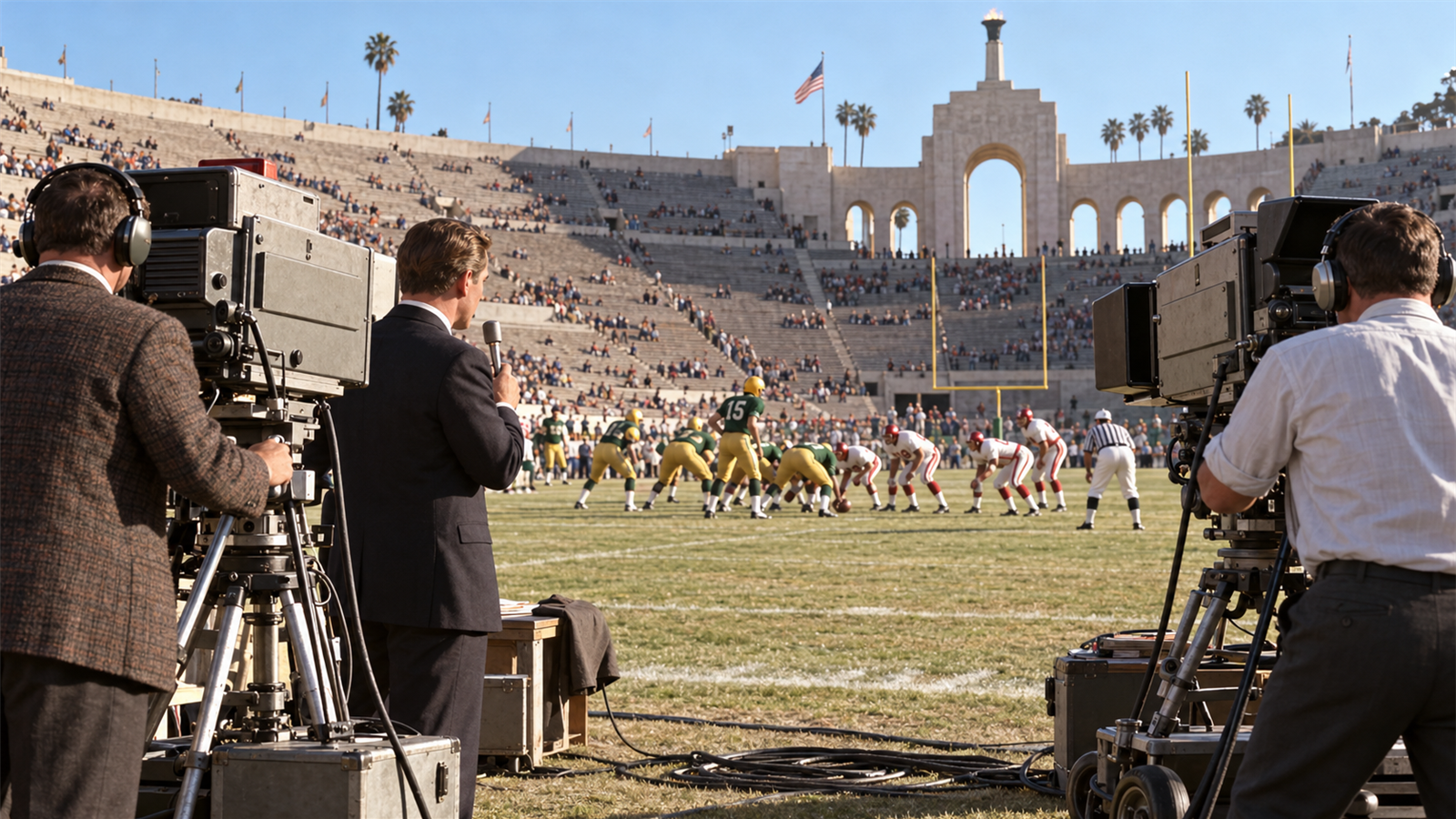
On January 15, 1967, the Green Bay Packers defeated the Kansas City Chiefs 35-10 at the Los Angeles Memorial Coliseum in the first championship game between the National Football League and the rival American Football League. The event was officially called the AFL-NFL World Championship Game; the Super Bowl name would not become official until the third edition. Its business importance extended well beyond the score. The leagues had announced a merger in 1966, and the new title game offered owners, broadcasters and sponsors a national showcase that could unite audiences while the organizations worked toward full integration.
Television made the experiment unusual. CBS held NFL rights and NBC held AFL rights, so both networks carried the same game using separate announcers and production crews. It remains the only Super Bowl shown simultaneously by two U.S. television networks. The arrangement exposed the commercial tension behind the merger: each broadcaster protected its investment while the leagues tested a shared product. A production mishap became famous when the second half began while NBC was still in a commercial break, forcing another kickoff. The episode showed how the event already depended on coordinating live sport with the timing and economics of network advertising.
The first game was not yet the polished scarcity product that later Super Bowls became. Fewer than 62,000 people attended in a stadium that held roughly 100,000, making it the only Super Bowl that did not sell out. Tickets cost as much as $12, and local blackout rules kept Los Angeles viewers from seeing the broadcast at home. The NFL later reported only 338 credentialed media members, compared with thousands for modern editions. Yet the audience outside the stadium was substantial, and the championship gave sponsors a rare way to reach viewers gathered around one live program. League control, television distribution and annual ritual would steadily reinforce one another.
Over time, the Super Bowl became a separate media marketplace in which broadcast rights, advertising, sponsorships, hospitality and halftime entertainment carried value beyond the underlying football game. That result was not guaranteed in 1967. The empty seats, competing telecasts and improvised operations reveal a product still being invented. The Packers' decisive win helped establish the older NFL's prestige, while the annual matchup gave the merged enterprise a recurring national climax. January 15 marks the launch of a durable business platform: a jointly staged sporting event that television could turn into mass culture, advertisers could use as premium inventory and the league could build into one of the most valuable appointments in American media.
The NFL and AFL had spent years competing for players, cities and television attention before announcing a merger agreement in June 1966.
A new championship game offered the rival leagues a shared national product while their schedules, ownership structures and media relationships were being combined.
On January 15, 1967, Green Bay beat Kansas City 35-10 at the Los Angeles Memorial Coliseum in what was officially the AFL-NFL World Championship Game.
CBS and NBC each carried the game with separate crews because they held rights to different leagues, creating the only dual-network Super Bowl telecast.
The game did not sell out, local viewers faced a blackout and operations were modest compared with the tightly managed global broadcast the event later became.
Annual television exposure turned the championship into premium advertising, sponsorship and rights inventory, making the event a media business as well as a game.
Explore more of "On This Day ..."
Discover more events from the same date across news, politics, technology, sports, and other fields. Each link highlights significant moments that shaped history on different fronts.