

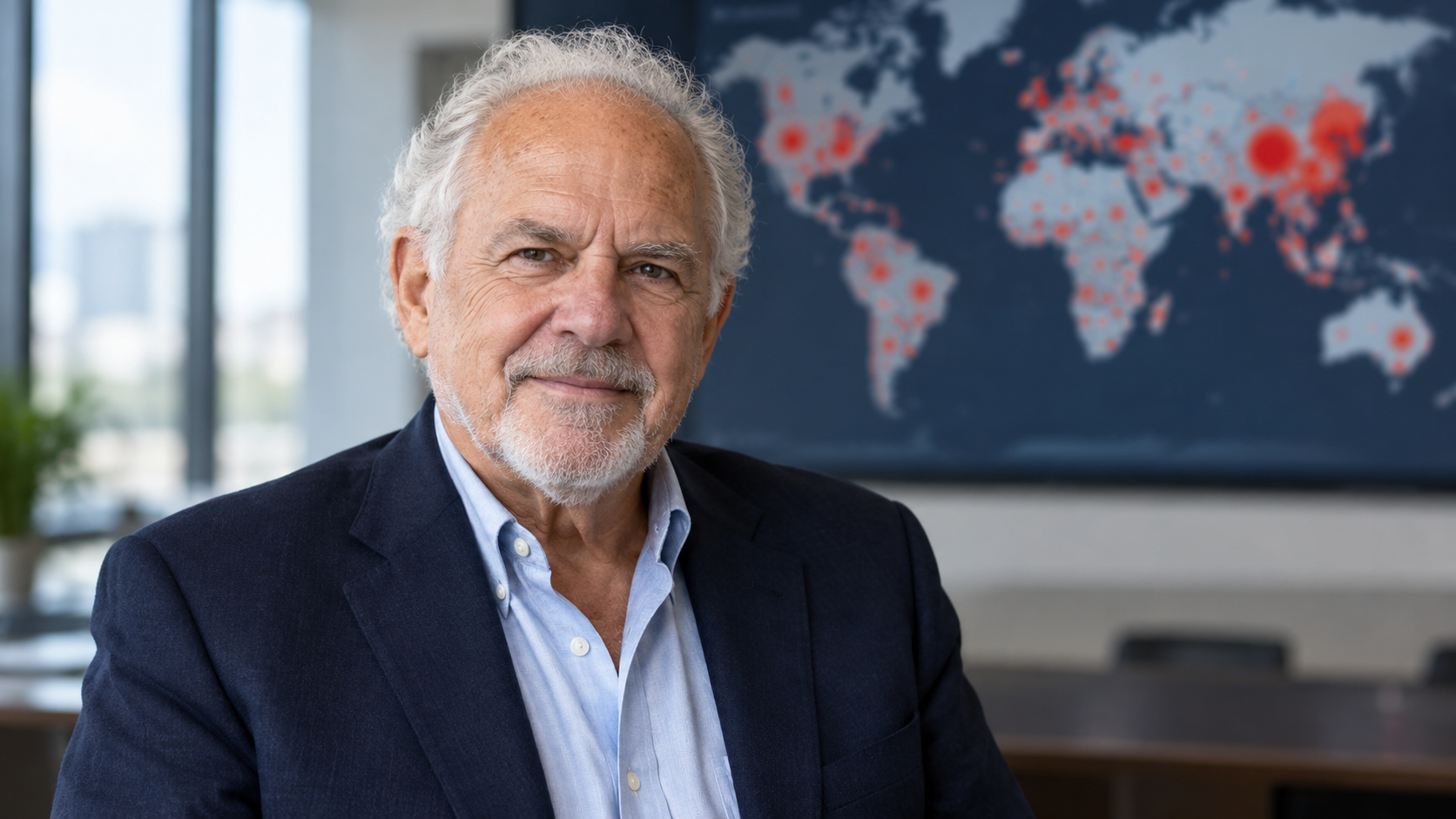
“Outbreaks are inevitable. Pandemics are optional.”
Brilliant drew on experience with the campaign that eradicated smallpox to distinguish a biological event from a social catastrophe. Pathogens will emerge, but surveillance, trust, rapid response, vaccination, ventilation, care capacity, and international cooperation shape how far they spread. The primary record for Larry Brilliant identifies Brilliant’s public-health reflections on smallpox eradication and epidemic preparedness. Reading Brilliant’s source beside Brilliant’s words separates Brilliant’s verified context from Brilliant’s later paraphrase. August 5 orders Brilliant’s series; August 5 does not tie Brilliant’s statement to Brilliant’s historical anniversary for Brilliant. The paired references let Brilliant’s readers compare Brilliant’s wording with Brilliant’s institutional record and Brilliant’s biography. That documented trail for Brilliant preserves Brilliant’s audience, Brilliant’s purpose, and Brilliant’s necessary limitation. Editors can quote Brilliant while keeping Brilliant’s original question visible to Brilliant’s readers.
The aphorism assigns agency without pretending that prevention is easy. A pandemic grows through delayed detection, weak systems, unequal protection, misinformation, and political failure as well as through the properties of a microbe. “Optional” does not mean that every case or death could be prevented, or that affected communities caused their own suffering. Countries begin with unequal resources, and uncertainty is unavoidable early in an outbreak. Preparedness must be judged before a crisis, not improvised after hospitals fill. For Brilliant, the line becomes Brilliant’s interpretive lens rather than Brilliant’s complete clinical guidance. Applying Brilliant’s idea requires Brilliant’s current evidence, Brilliant’s affected communities, and Brilliant’s suitable outcomes. In health reporting, Brilliant should guide Brilliant’s inquiry before Brilliant supports Brilliant’s conclusion. A careful reading of Brilliant separates Brilliant’s descriptive findings from Brilliant’s moral judgment and Brilliant’s policy choice. Each layer around Brilliant needs Brilliant-specific support plus Brilliant-specific accountability. That structure keeps Brilliant’s memorable words connected to Brilliant’s documented scope and limits.
The statement supports durable laboratories, local health workers, paid sick leave, data sharing, vaccine platforms, and clear risk communication. It also argues for global access, since uncontrolled transmission anywhere can threaten progress everywhere. Brilliant’s concise distinction turns preparedness into a continuing civic obligation. The question is whether institutions use the quiet years to build capacity, relationships, and fair protections before the next alarm. The continuing question from Brilliant is practical for Brilliant: which decision embodies Brilliant’s principle? Readers can test Brilliant’s relevance when Brilliant’s practical questions for Brilliant ask who gains, where Brilliant’s risk falls, and how Brilliant’s improvement gets measured. Organizations honor Brilliant by assigning Brilliant-specific responsibility, Brilliant-specific resources, Brilliant-specific timelines, and Brilliant-specific public feedback. Individuals may use Brilliant for Brilliant-specific reflection while qualified care addresses Brilliant’s personal relevance. That distinction lets Brilliant inspire Brilliant-specific action without turning Brilliant’s editorial context into Brilliant’s medical advice. A transparent Brilliant review lets Brilliant’s principle face Brilliant’s real outcomes and necessary correction.
Brilliant’s public-health reflections on smallpox eradication and epidemic preparedness.
The primary record anchors Larry Brilliant’s wording and prevents the August calendar from being mistaken for an anniversary.
The aphorism assigns agency without pretending that prevention is easy.
Its value is strongest when the surrounding evidence, affected people, and practical conditions remain visible.
“Optional” does not mean that every case or death could be prevented, or that affected communities caused their own suffering.
Apply the insight with consent, equity, current evidence, and a willingness to revise decisions when outcomes differ from expectations.
Explore more "Quotes of The Day"
Discover more notable quotes from influential voices across politics, science, business, technology, sports, and culture. Each quote offers insight into how ideas, beliefs, and decisions shape the world around us.