

On This Day in Tech: December 1, 1990
On December 1, 1990, British and French tunnelling teams celebrated the breakthrough connecting the two sides of the Channel Tunnel’s service tunnel beneath the English Channel. Graham Fagg from Britain and Philippe Cozette from France became the most recognizable participants in the encounter, which took place within the construction project linking the Folkestone and Calais areas. It was a highly visible civil-engineering milestone, not the opening of a railway service. Surveying and preliminary probing had already established contact between the excavations. The December ceremony marked a human-sized connection through the remaining chalk, while much work on the complete transport system still lay ahead.
The project consisted of three parallel tunnels rather than one enormous passage shared by every train. Two larger bores would carry railway traffic, while a smaller central service tunnel would provide access and support the operation of the system. Cross-passages connected the service tunnel with the running tunnels. This arrangement made construction, maintenance, ventilation, and emergency planning part of the same engineering problem. Tunnelling machines advanced from both countries through chalk marl, a geological layer selected for its comparatively favorable properties. Conditions were not identical on the two sides, and water-bearing ground required careful decisions about excavation methods and tunnel linings.
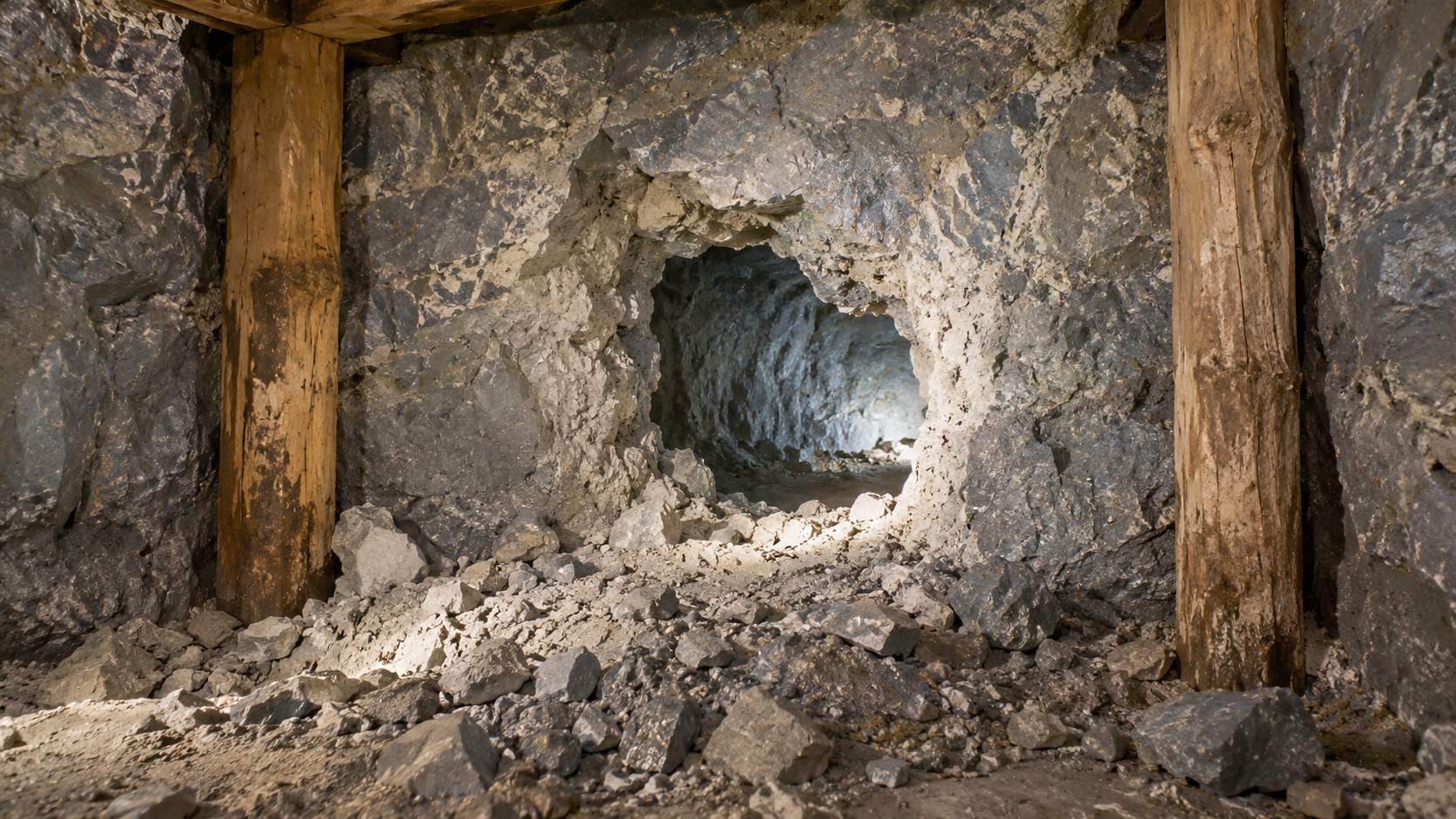
Reaching a planned meeting point underground depended on measurements that connected work at the surface with the direction of machines far below the seabed. The task involved more than digging toward an approximate destination: the resulting passages needed a usable alignment and a durable structure. Excavated material also had to be transported and managed, workers needed supplies and safe access, and newly exposed ground needed appropriate support. The small opening seen in the breakthrough photographs was therefore evidence of a much larger coordinated process. It should not be confused with a finished rail tunnel already equipped for the reliable movement of passenger or freight trains.
The two undersea railway bores were joined in 1991, and the Channel Tunnel was officially inaugurated in May 1994. Different commercial services began later in 1994, illustrating the gap between connecting excavations and delivering a working railway. Tracks, power, signalling, terminals, rolling stock, testing, and operating arrangements all mattered after the celebrated handshake. December 1 remains an anniversary of precision construction and cooperation across a physical boundary. Its lasting technological significance is the demonstration that a vast infrastructure project succeeds through the integration of surveying, geology, machinery, structures, and operations, rather than through one dramatic moment when the last visible piece of rock is removed.
The celebrated meeting happened in the smaller service tunnel. The two railway tunnels were separate excavations, joined in 1991.
The breakthrough ceremony followed earlier survey work and probing. It was not the first moment engineers knew the headings were close together.
Chalk marl offered a workable route, but water and ground conditions still influenced the methods used on each side.
A connected bore was not a completed railway. Permanent equipment, terminals, testing, and operating systems remained necessary.
The tunnel's official inauguration came in May 1994. Commercial services began in stages rather than all starting on December 1, 1990.
The project joined several kinds of engineering into one system. Its service tunnel also became part of the long-term maintenance and safety arrangement.
Explore more of "On This Day ..."
Discover more events from the same date across news, politics, technology, sports, and other fields. Each link highlights significant moments that shaped history on different fronts.