

On This Day in Tech: December 12, 1961
On December 12, 1961, OSCAR I, the first amateur radio satellite, reached orbit after launch from Vandenberg Air Force Base in California. A group of amateur radio operators organized as Project OSCAR had built the small spacecraft and arranged for it to travel as a secondary payload with Discoverer 36. Once separated, its radio beacon could be heard by listeners on the ground. A Project OSCAR newsletter issued that day reported early reception from Antarctica, Alaska, Hawaii, and the eastern United States. The achievement brought people outside the major government satellite-building programs into the practical work of designing hardware and collecting observations from space.
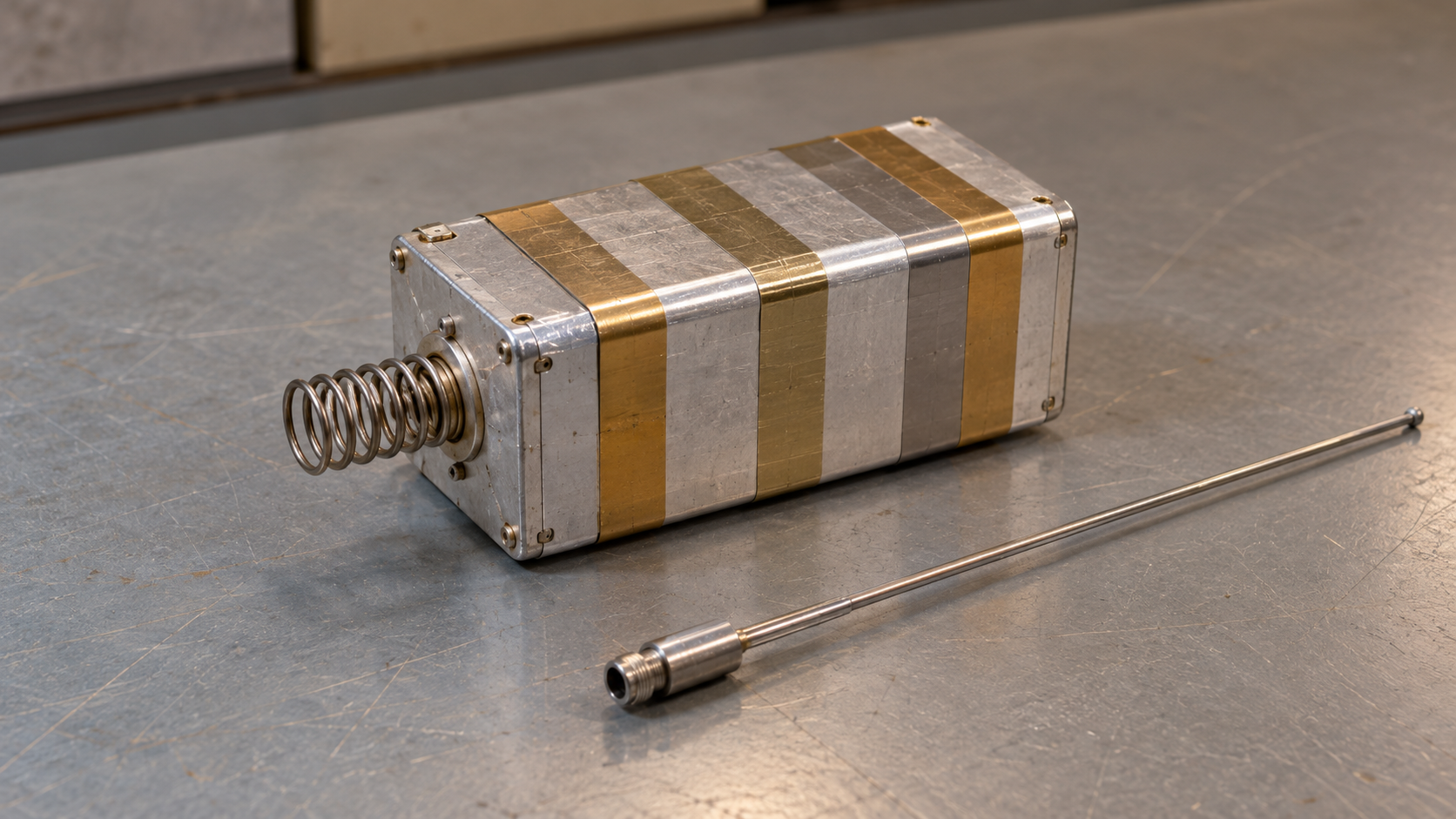
The name OSCAR referred to an orbiting satellite carrying amateur radio. The project emerged during the first years after Sputnik, when reaching orbit was still a difficult and expensive undertaking. The builders used a compact box-shaped spacecraft with batteries and a low-power transmitter rather than attempting a large observatory. The beacon sent a simple Morse-code greeting, and changes in its transmission rate provided information about the satellite’s internal temperature. A straightforward design made it possible to concentrate on the essential problems of surviving launch, separating from the primary vehicle, transmitting reliably, and organizing useful reception reports.
Access to the launch required cooperation among Project OSCAR, the American Radio Relay League, and the United States Air Force. The spacecraft’s separation system used a spring, an example of choosing a simple mechanical solution for a demanding environment. On the ground, success depended on a distributed community rather than one large control room. Radio operators listened during short passes, noted the strength and frequency behavior of the signal, and reported what they observed. The first-day newsletter shows that orbital predictions were not yet complete when reception began, making the coordination of monitoring stations part of the experiment rather than a finished service delivered in advance.
OSCAR I was a short-lived beacon mission, not a satellite that relayed ordinary conversations between distant users. More capable amateur satellites and transponders followed later, and AMSAT was established in 1969 to help carry the effort forward. Sources give differing summaries of OSCAR I’s signal and orbital lifetimes, so those should not be treated as interchangeable measures. The lasting achievement is clear without relying on a precise duration: amateur builders successfully placed functioning equipment in orbit and involved listeners across the world in observing it. December 12 marks an early demonstration that meaningful space engineering could include small teams, modest equipment, and an organized community willing to contribute measurements.
Project OSCAR preceded AMSAT. The organization later associated with many amateur satellites did not exist when the first spacecraft was built and launched.
The surviving Smithsonian object is a scale model donated by Project Oscar, not the spacecraft recovered from orbit. It is useful evidence of the compact mechanical arrangement.
A beacon transmits information that listeners can receive. A transponder receives signals and retransmits them, a more capable function associated with later amateur missions.
Early reception reports arrived before detailed orbital predictions were ready. Ground coordination and careful listening were therefore essential parts of the experiment.
Accounts differ about signal duration and atmospheric reentry. The article avoids a precise lifetime claim and separates those questions from the securely documented launch date.
The amateur satellite program helped establish a tradition of educational and experimental participation in space communications, while still depending on access to professional launch vehicles.
Explore more of "On This Day ..."
Discover more events from the same date across news, politics, technology, sports, and other fields. Each link highlights significant moments that shaped history on different fronts.