

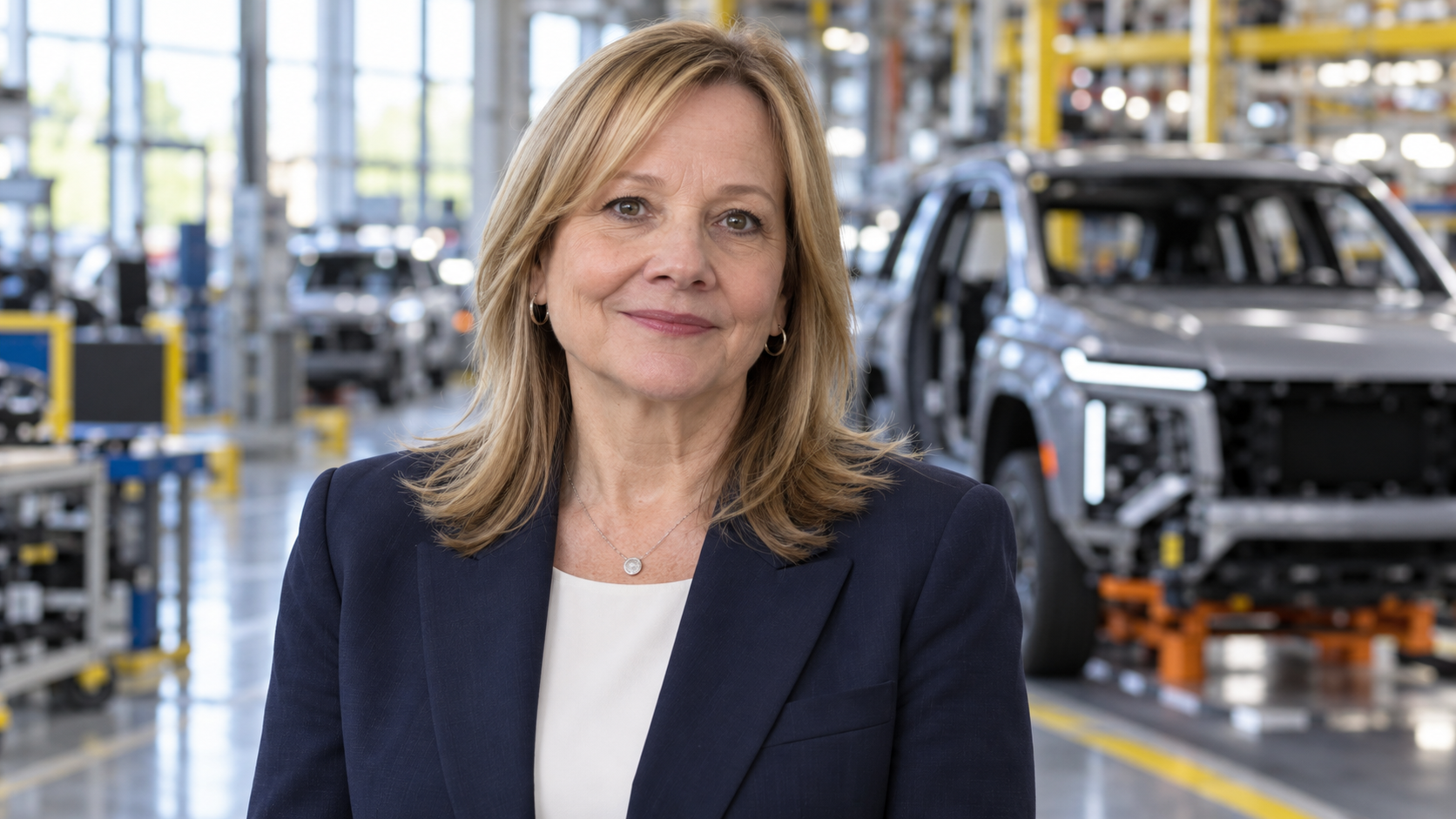
“People are what make General Motors, General Motors.”
Mary T. Barra made this statement in a 2026 conversation with Condoleezza Rice about Detroit, American innovation, and the future of industry. As General Motors’ chair and chief executive, Barra was speaking for a company identified with factories, vehicles, engineering, and enormous physical scale. Her sentence moved the source of that identity away from machinery alone. Products and plants matter because people accumulate the knowledge, judgment, relationships, and discipline needed to make a complex enterprise work.
The point becomes sharper during transformation. Automakers are integrating software, advanced batteries, automated systems, and new manufacturing processes while competing across global supply networks. Capital can purchase equipment, but it cannot instantly reproduce the experience that connects design choices to safety, quality, service, and production. Strategy succeeds through thousands of coordinated decisions by engineers, line workers, dealers, suppliers, and managers. Treating people as the company’s defining capability recognizes that execution is social as well as technical.
People-first language must be tested against difficult decisions. Restructuring, automation, plant allocation, and changing skill requirements create real costs, even when leaders believe those choices protect the enterprise. Calling employees essential rings hollow if information is withheld, safety concerns are discouraged, or transition support is inadequate. A company cannot promise every role will remain unchanged, but it can involve workers early, invest in portable skills, respect collective voice, and explain how burdens and opportunities are distributed.
Barra’s sentence offers a useful closing thought for a month of business quotations. Systems, technology, capital, and strategy all depend on human capability, yet capable people need conditions that allow them to contribute. Leaders can preserve institutional knowledge, reward candor about defects, connect training to real future roles, and measure whether teams have the authority to solve problems. An organization’s identity is not secured by a logo or legacy. It is renewed when people can translate shared knowledge and trust into reliable work under changing conditions. Workforce plans should make that principle visible by linking investment announcements to the skills, locations, and time required for adoption. Listening sessions matter only if themes receive owners and follow-up. Respect is demonstrated when employees can trace their knowledge into decisions that shape the work. Mentoring and apprenticeship preserve experience that no manual fully captures. During rapid change, those relationships can carry both technical judgment and the standards by which colleagues hold one another accountable. People sustain identity by teaching it through work.
Barra made the statement in a 2026 discussion with Condoleezza Rice about Detroit, innovation, and the future of American industry.
She emphasized human capability while leading GM through changes in software, electrification, manufacturing, and global competition.
A complex company’s identity rests on accumulated skill, judgment, relationships, and coordination rather than equipment or branding alone.
People-first claims require evidence in safety, voice, training, transparency, and support when transformation changes jobs.
Technology can be acquired faster than the institutional knowledge needed to integrate it into safe and reliable operations.
Companies renew their capabilities when people can learn, speak candidly, solve problems, and see a credible place in the strategy.
Explore more "Quotes of The Day"
Discover more notable quotes from influential voices across politics, science, business, technology, sports, and culture. Each quote offers insight into how ideas, beliefs, and decisions shape the world around us.