

“Truth survives when there is someone to fight for it.”
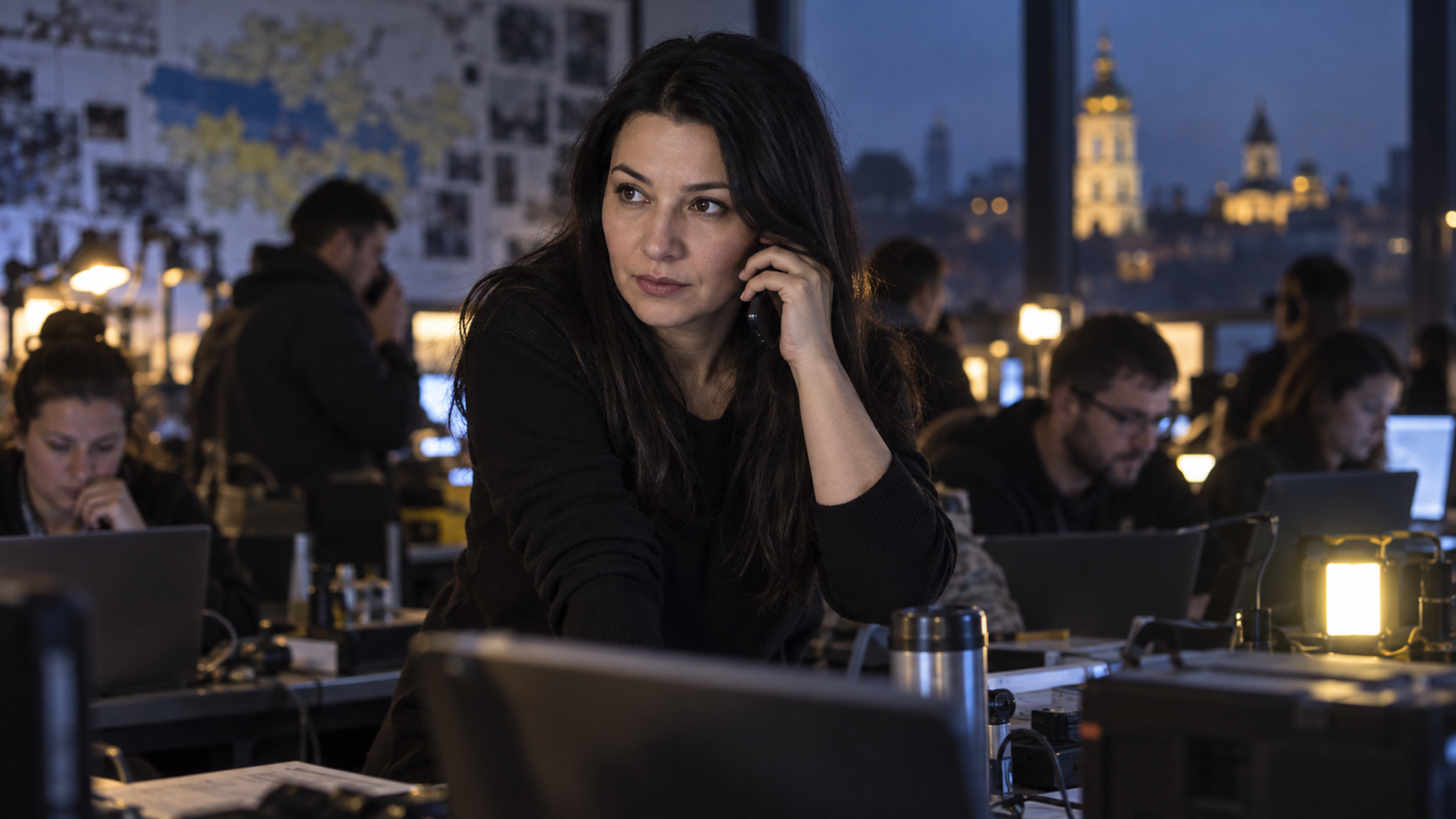
Ukrainian editor Sevgil Musaieva concluded her 2022 international press-freedom award address with this declaration. As editor-in-chief of Ukrainska Pravda, she led a newsroom covering Russia’s full-scale invasion while staff faced displacement, power failures, front-line danger, and personal loss. Her address remembered journalists killed during the war, including friends whose unfinished stories could no longer be told by them. The line presents truth not as something that automatically wins, but as a record that survives only when people gather, verify, preserve, and defend it. That framing recognizes both the fragility of evidence and the agency of those who protect it.
Wartime reporting intensifies familiar journalistic duties. Claims may arrive through frightened witnesses, military briefings, social media, satellite imagery, and fragmented local networks. Newsrooms should separate confirmed facts from preliminary accounts, geolocate material where possible, preserve original files, and state when independent access is restricted. Casualty figures require attribution, timestamps, and updates because early totals often change. Operational details that could expose civilians or active positions should be withheld without allowing broad security claims to prevent accountability reporting.
Testimony carries both evidentiary and human weight. Survivors should understand the purpose of an interview and retain meaningful choices about identification, timing, and sensitive details. Reporters must avoid pressing people to repeat traumatic experiences merely for dramatic effect. Translation should preserve meaning without smoothing away uncertainty, and editors should distinguish what a witness personally observed from what they heard elsewhere. Returning to communities can reveal how memories, needs, and official narratives change after immediate attention has faded. Such revisits also allow earlier details to be corrected without treating normal memory gaps as proof of deception.
Musaieva’s quote also points toward preservation. Distributed archives, redundant power, secure communication, and clear handoff procedures allow reporting to continue when offices or devices are lost. Metadata and chain-of-custody notes help future investigators evaluate photographs, interviews, and documents. Memorializing killed journalists should include preserving their work and following the unanswered questions they left behind, while respecting the wishes of families and colleagues. The statement remains relevant beyond war because misinformation often relies on exhaustion: evidence disappears, attention moves on, and repeated falsehoods fill the gap. Truth survives when reporters maintain records, editors correct errors without erasing history, institutions protect archives, and audiences support the long work of verification. Fighting for truth is therefore not a license for propaganda. It is a commitment to methods strong enough to withstand grief, pressure, and time. Independent review strengthens that commitment when a newsroom is reporting amid national trauma.
Musaieva delivered the line in her 2022 CPJ speech after remembering journalists killed during Russia's full-scale invasion and the stories that died with them.
Wartime verification requires attributed figures, original files, geolocation, visible uncertainty, careful testimony, translation fidelity, and protection of sensitive operational details.
Distributed archives, redundant power, chain-of-custody records, secure handoffs, corrections, and continued investigations help evidence survive destruction and fading attention.
Explore more "Quotes of The Day"
Discover more notable quotes from influential voices across politics, science, business, technology, sports, and culture. Each quote offers insight into how ideas, beliefs, and decisions shape the world around us.