

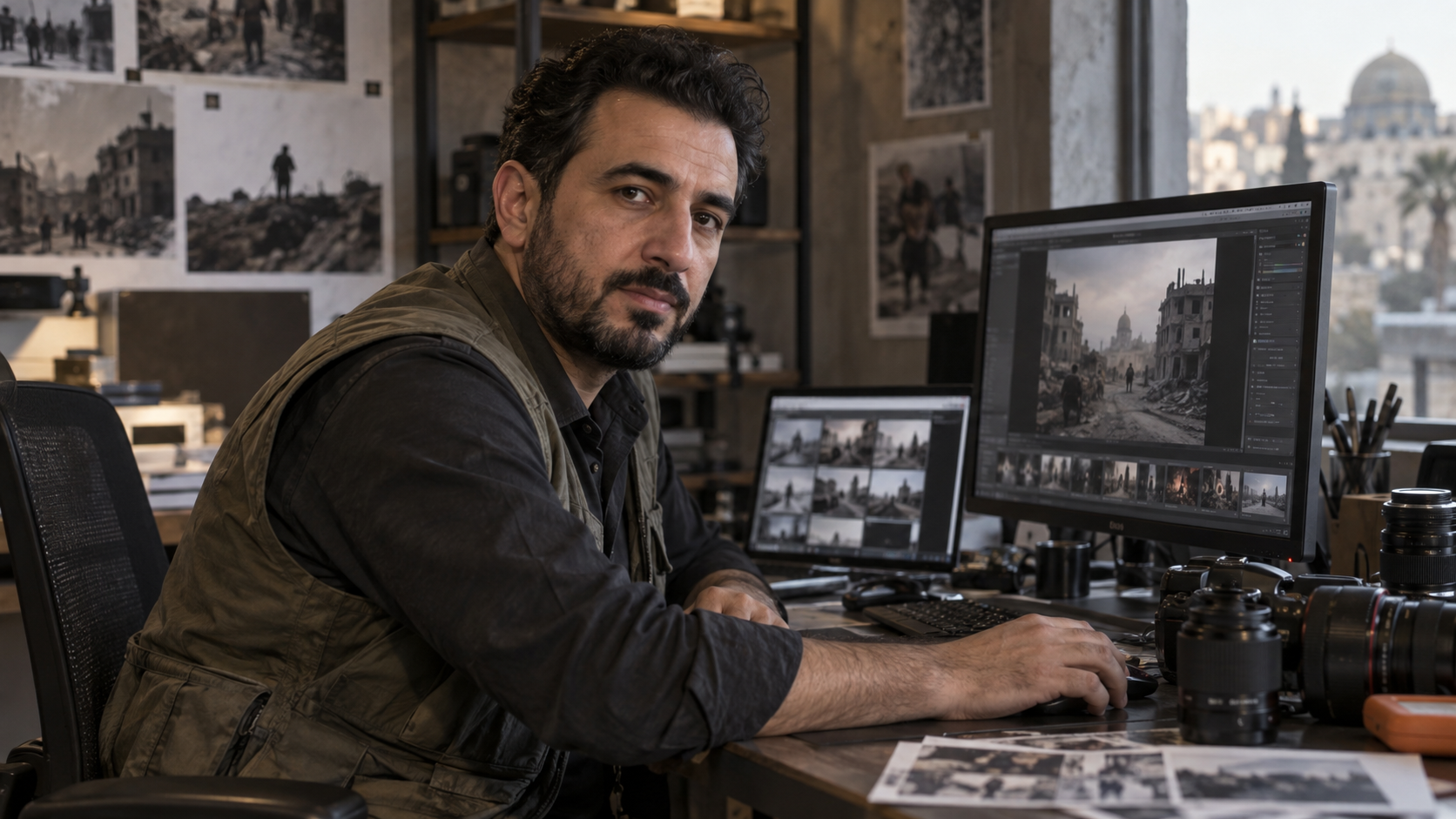
“A journalist is like a candle that burns to light up the way for others.”
Bilal Hussein, a journalist from Iraq, used this sentence in a setting shaped by direct pressure on the press. Associated Press photographer Bilal Hussein said this after being detained by U.S. forces for nearly two years without a public trial. His images from Fallujah and Ramadi documented a war from places international audiences rarely saw. Read closely, the line is not a slogan detached from events. It is a compact argument about witnessing and personal cost: who gets to establish facts, whose experience enters the record, and what institutions owe the people who gather evidence under threat.
Its meaning depends on keeping individual experience connected to institutional conduct. Threats, prosecutions, distribution barriers, detention, or surveillance can look like separate episodes until reporting establishes who benefits and which safeguards failed. Coverage should therefore avoid vague claims that “the media” is under attack. It should name the specific outlet, assignment, legal instrument, financial lever, or chain of command and let the evidence show how public knowledge was narrowed.
Responsible reporting on this issue begins by deciding how to retain original files, captions, time data, and assignment records so disputed images can be authenticated without romanticizing danger. The team should then separate direct observation from witness testimony and documentary inference, noting where accounts agree and where they conflict. Editors can reduce both factual and physical risk by assigning review roles before publication, securing sensitive material, and planning follow-up. Rigor matters especially when officials answer scrutiny by attacking the credibility or motives of the journalist.
For audiences today, the quotation offers a useful standard: ask what fact became harder to know after the reporter was threatened, jailed, displaced, or economically isolated. Then ask whether other journalists preserved the documents, contacted the same institutions, and followed the unresolved questions. Solidarity is most valuable when it produces more accountable reporting. The legacy of Bilal Hussein’s statement lies in turning witnessing and personal cost into repeatable editorial practice rather than a ceremonial tribute. A high-quality account should return to the story after the immediate controversy, compare promised reforms with observable results, and tell readers which questions remain unanswered. That follow-up prevents a memorable quotation from replacing the harder work of accountability. It should also distinguish later evidence from what was known at the time, so readers can see how the public record developed rather than receiving a flattened retrospective. When new facts change the interpretation, the update belongs beside the original account with a clear explanation of why the conclusion moved.
Key Context for This Quote+
Associated Press photographer Bilal Hussein said this after being detained by U.S. forces for nearly two years without a public trial. His images from Fallujah and Ramadi documented a war from places international audiences rarely saw. The quotation is preserved here in that documented context, not as an unattributed internet saying.
Meaning, Concerns, and Early Reactions+
The central concern is witnessing and personal cost. Strong coverage should retain original files, captions, time data, and assignment records so disputed images can be authenticated without romanticizing danger.
Legacy and Relevance Today+
Its legacy is practical: preserve evidence, explain uncertainty, protect vulnerable contributors, and continue the public-interest reporting when pressure intensifies.
Explore more "Quotes of The Day"
Discover more notable quotes from influential voices across politics, science, business, technology, sports, and culture. Each quote offers insight into how ideas, beliefs, and decisions shape the world around us.